

Alcohol Free Red Wine UK: A Complete Guide for 2026
You know the moment. The guests are due soon, the cheeseboard looks good, and then someone asks what they can drink if they're avoiding alcohol. You want something that feels grown-up and thoughtful, not an afterthought, and that's exactly where alcohol free red wine UK shoppers are finding more options that suit a vegan table.
For plant-based entertaining, the sweet spot is a drink that feels at home beside vegan cheese, crackers, chutney, and a few savoury bites. Alcohol-free red wine can do that job well, especially when you understand what the label means and how to pair it with different cheese styles.
Table of Contents
- Why Alcohol Free Red Wine Belongs on Your Vegan Cheeseboard
- What Is Alcohol Free Red Wine and How Is It Made
- Navigating UK Alcohol Free Wine Labelling and Regulations
- Where to Buy Alcohol Free Red Wine in the UK
- Tips for Choosing, Storing, and Serving Alcohol Free Red Wine
- Pairing Alcohol Free Red Wine with Vegan Cheeses
- Enhancing Your Plant-Based Entertaining with Saporia
Why Alcohol Free Red Wine Belongs on Your Vegan Cheeseboard
A good vegan gathering often starts with one simple aim, everyone should feel included at the table. That becomes trickier when some guests are avoiding alcohol for health, pregnancy, religion, medication, or personal preference, while others still want the feel of a proper wine-and-cheese moment.
That's where alcohol-free red wine earns its place. It gives you the mood of a shared bottle without turning the evening into a compromise, and it works especially well when you're building a board around plant-based cheese, crackers, chutneys, and olives.
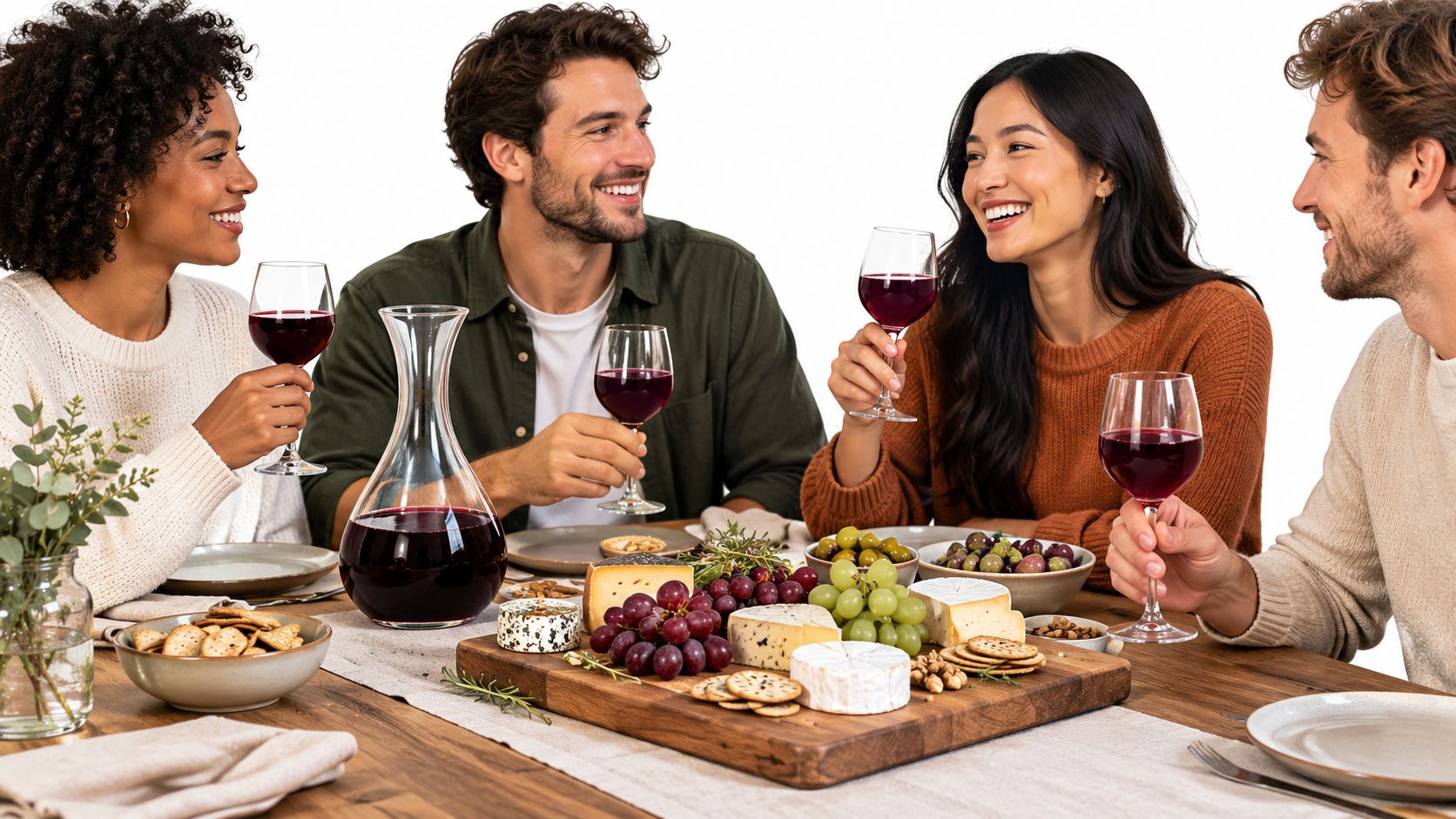
The bigger shift matters too. UK data shows no-alcohol wine has been growing faster than low-alcohol wine, and that points towards a clear preference for drinks with the alcohol removed entirely rather than only reduced. In other words, this isn't just a niche for abstainers, it's becoming part of normal entertaining.
Practical rule: if you're serving vegan cheese, think in terms of balance. You want acidity, fruit, texture, and a few salty or sweet sides on the board so the drink has something to play against.
What Is Alcohol Free Red Wine and How Is It Made
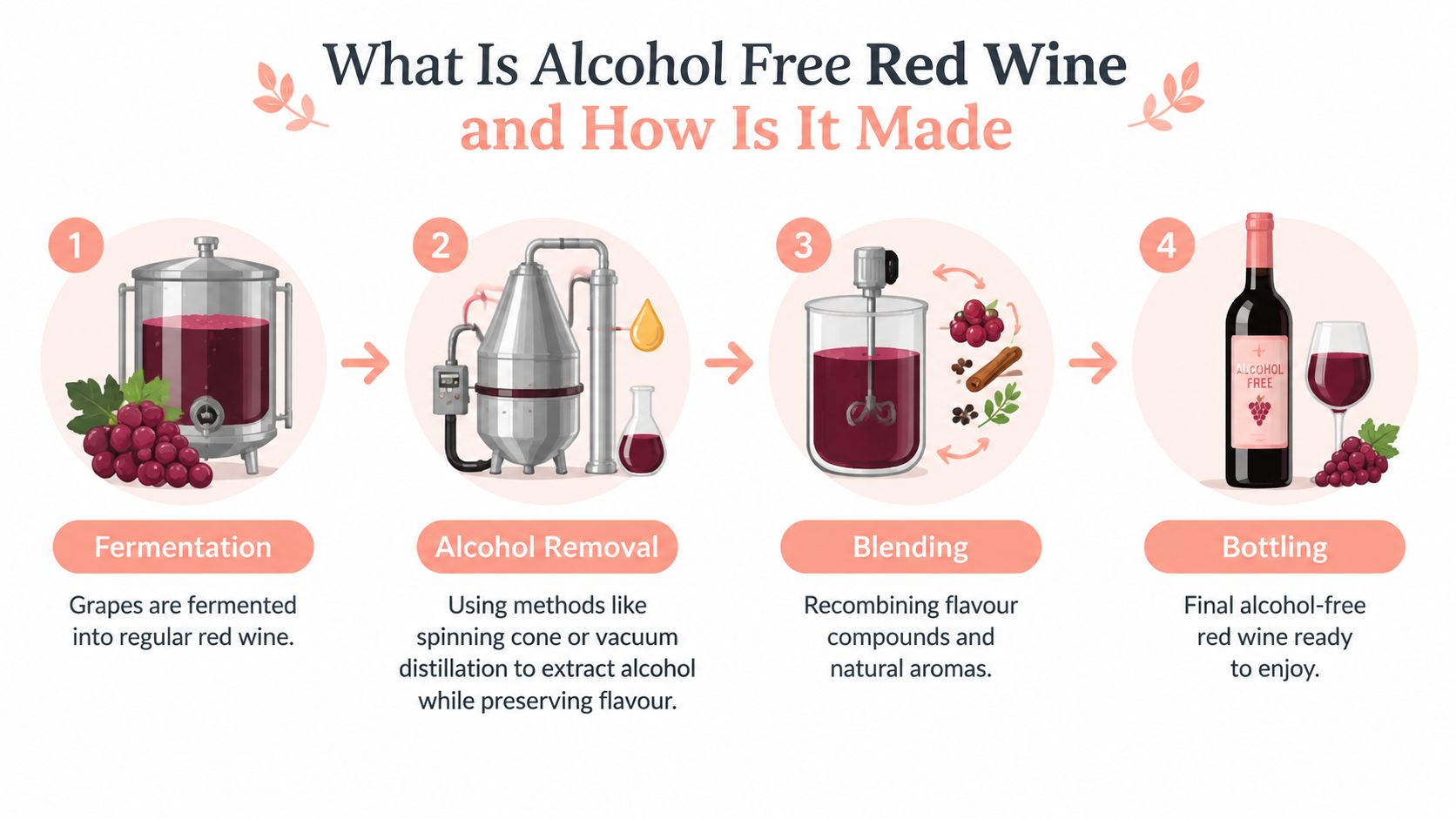
At its simplest, alcohol-free red wine starts as regular red wine, then most or all of the alcohol is removed. The aim is to keep as much flavour as possible while changing the finished drink enough that it fits the no-alcohol category.
How producers remove the alcohol
Two common methods do most of the work. Vacuum distillation gently lowers the boiling point of alcohol so it can evaporate at a lower temperature, which helps protect aroma and flavour. Reverse osmosis pushes the wine through a membrane that separates smaller alcohol and water molecules from larger flavour compounds, after which the liquid is rebuilt.
That's why two bottles in the same category can taste quite different. One may feel lighter and fruitier, another may hold on to a little more structure, but both have usually been shaped by the same basic challenge, how to keep the wine-like character once the alcohol is gone.
For a plain-language explanation of how modern de-alcoholised wines are handled in production, the note on quilceda creek blending non alcoholic is a useful companion read.
What that means for taste
The de-alcoholisation process can soften tannin and change mouthfeel. That's why some alcohol-free reds seem rounder and fruit-forward, while others feel a touch thinner or less savoury than conventional red wine.
The key thing is not to expect a perfect duplicate. Expect a different style of red wine experience, one that often works best with food rather than as a solo glass on its own.
Navigating UK Alcohol Free Wine Labelling and Regulations
UK labelling rules matter because the words on the bottle are doing real work. A drink marked alcohol-free has a strict legal threshold, and that matters if you're choosing for pregnancy, recovery, religion, medication, or simple personal preference.
Here's the clearest way to read the shelf.
| Descriptor | Maximum ABV | Key Characteristic |
|---|---|---|
| Alcohol-free | 0.05% ABV | Alcohol has been extracted, and the label should show the ABV or say it contains no alcohol |
| De-alcoholised | Up to 0.5% ABV | Alcohol has been removed, but the product sits above the stricter alcohol-free threshold |
| Low alcohol | 1.2% ABV or below | A broader category with a higher limit than alcohol-free |
A second point is easy to miss. Drinks with 1.2% ABV or less must provide nutritional information and an ingredients list, which helps shoppers check suitability for vegan, allergy, or other free-from needs. That extra detail can be useful when you're comparing bottles online or in store.
A bottle described as alcohol-free is not automatically the same as zero alcohol in the everyday sense. The legal limit is 0.05% ABV, so reading the descriptor and the ABV together is the safest habit.
The government guidance also says that products from which alcohol has been removed cannot be marketed as wine. You'll often see wording such as wine-based drink or a similar description instead, and that's a clue that the labelling is being handled correctly.
Where to Buy Alcohol Free Red Wine in the UK
Shopping channels matter because the experience can be quite different from one place to another. Supermarkets are convenient, especially if you want to pick something up alongside the rest of your dinner ingredients, and they often carry familiar mainstream labels.
Specialist online retailers usually give you more context. You're more likely to find flavour notes, pairing guidance, and a broader range of plant-based-friendly options, which is helpful when you're planning a cheeseboard rather than just buying a bottle in isolation.
Choosing the right shopping route
Independent delis and wine merchants can be excellent if you enjoy asking questions and discovering bottles that aren't in every major chain. They're often the best place to look when you want something a bit more curated for entertaining.
If you're already assembling a vegan spread, it can also make sense to buy drinks from the same place you source your cheese, crackers, chutneys, and olives. A single order saves time and keeps the pairings more coherent.
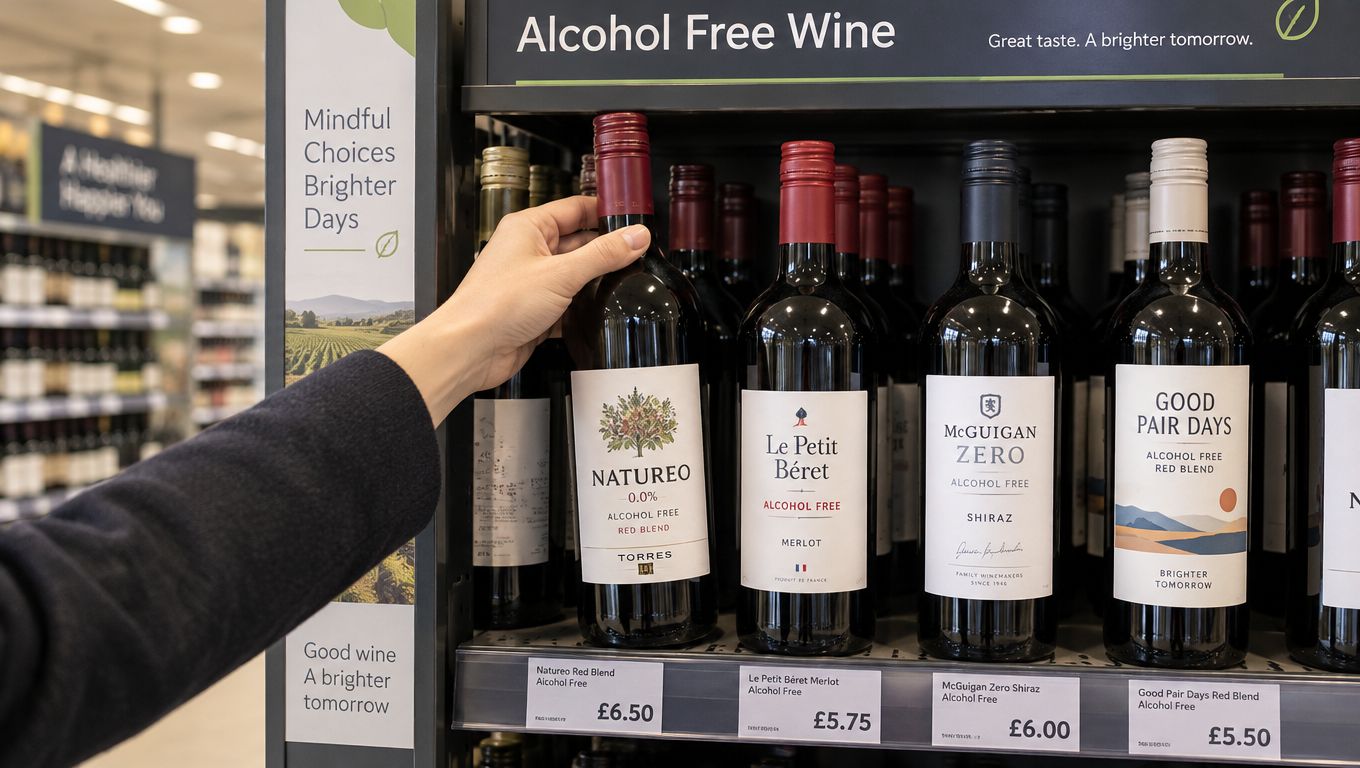
For a simple example of how a specialist retailer presents no-alcohol drinks alongside deli items, see this alcohol-free lager listing. Even when you're buying red wine elsewhere, that kind of category presentation helps show how drinks can sit naturally inside a broader food-led shop.
Tips for Choosing, Storing, and Serving Alcohol Free Red Wine
The best bottle for you depends on what you want it to do. Some alcohol-free reds lean fruitier and lighter, while others try to keep more grip and savoury depth, so it helps to match the style to the meal rather than buying blindly.
Choosing with food in mind
If the wine is going with a cheeseboard, choose with the strongest item on the board in mind. A softer red can suit creamy vegan cheese, while a firmer, more structured bottle usually has a better chance of standing up to something sharper or more intensely flavoured.
Storage is straightforward. Keep the bottle somewhere cool and dark, away from heat and sunlight, and treat it much like regular wine. Once opened, it's best to refrigerate it and finish it within a few days so the flavour stays fresher.
Serving without overthinking it
Temperature makes a real difference. Some people prefer alcohol-free red slightly chilled because it can feel fresher and more food-friendly, while others like it closer to room temperature for a fuller impression.
Serve it the way your food needs it to behave, not the way a vague rule book says red wine should always be served.
That's the useful mindset here. Try it with the meal, make a small note of what works, and let the bottle earn its spot through the whole table experience rather than by variety name alone.
Pairing Alcohol Free Red Wine with Vegan Cheeses
Pairing works best when you stop looking for an exact mirror of traditional wine and cheese rules. Alcohol-free red wine often brings fruit, acidity, and a softer frame, which can be lovely with plant-based cheese because many vegan styles already lean creamy, nutty, tangy, or savoury in different ways.
Matching style to cheese texture
A lighter, fruitier red is usually a good match for soft, creamy cheeses because it cuts through richness without overpowering it. A more structured bottle can work better with a tangier feta-style cheese or a nut-based blue, where you need a little more backbone in the glass.
Think of the board as a set of contrasts. If the cheese is mellow, add something bright. If the cheese is salty, add a little sweetness. If the wine feels light, build a board that gives it more shape through texture and seasoning.
For a neat example of how a curated cheese selection can support this kind of pairing, the La Fauxmagerie bundle is a useful reference point for building around different flavour intensities.
A simple vegan board formula
- Start with one soft cheese: choose a creamy style to give the board a smooth anchor.
- Add one bolder cheese: a sharper or more savoury option gives the wine something to meet.
- Bring in contrast: use crackers, chutney, olives, or pickles for crunch, sweetness, and salt.
- Leave space for the wine: alcohol-free red often shows best when the board isn't overloaded with too many competing flavours.
A board like that feels generous without becoming chaotic. It also gives guests room to try different combinations and notice how the wine changes beside each bite.
Enhancing Your Plant-Based Entertaining with Saporia
The nicest thing about this category is how naturally it fits into plant-based entertaining. A good alcohol-free red can make a vegan cheeseboard feel complete, especially when you're serving a mix of creamy, tangy, and savoury flavours rather than trying to recreate a fully conventional wine night.
That's where a well-chosen deli spread helps. Saporia's range is built around artisan vegan cheese, cheese bundles, crackers, chutneys, olives, and other deli items, so you can put together a more polished table without having to source everything separately. If you like your gatherings to feel considered, the combination matters as much as any single bottle.
For hosting inspiration beyond the plate, the guide to recipes and decor for aperitivo hour is a handy reference for the mood and styling side of entertaining. Keep that idea in mind when you're building your own table, because the best alcohol-free setups usually feel relaxed, generous, and easy to move around.
You can also browse Saporia's current range at Saporia when you're ready to pull together a cheeseboard that works for mixed drink preferences. A thoughtful vegan spread, with the right no-alcohol red at the centre, makes it much easier to host with confidence.
If you'd like to build a more elegant vegan cheeseboard for your next gathering, explore the artisan cheeses, crackers, chutneys, and deli favourites at Saporia. It's an easy way to bring together food and drink that feel inclusive, polished, and genuinely enjoyable.