

Best Vegan Cheeses UK: A Complete Guide
You're standing in a UK supermarket's dairy-free aisle, holding two nearly identical blocks and wondering which one will melt, taste good, and survive a cheeseboard. One promises stretch, another claims a mature flavour, and a third looks suspiciously like a wax candle. If you've previously encountered rubbery slices, overpowering coconut notes or a texture that bears little resemblance to cheese, your hesitation is justified.
The best vegan cheeses in the UK aren't necessarily the ones that win a generic taste-test ranking. The right choice depends on the job. A pizza needs a cheese that melts cleanly, a dinner-party board needs cultured complexity, and a gift needs attractive presentation alongside dependable flavour. This guide helps you choose by occasion, texture, ingredients and availability, with practical advice from a vegan cheesemonger's point of view.
Table of Contents
- Why Finding Great Vegan Cheese Feels So Hard
- The UK Vegan Cheese Market Has Changed Dramatically
- How to Spot Quality in Plant-Based Cheese
- Choosing the Right Vegan Cheese for Every Occasion
- Building a Vegan Cheeseboard That Actually Works
- Storage and Serving Tips for Maximum Flavour
- Where to Buy Artisan Vegan Cheese in the UK
- Your Next Steps to Better Plant-Based Cheese
Why Finding Great Vegan Cheese Feels So Hard
You are choosing cheese for a toastie, a dinner-party board or a dairy-free guest, yet the packet gives little help beyond flavour labels. Two blocks can look similar and behave completely differently under heat or beside crackers. That uncertainty is reasonable: vegan cheese is made for distinct jobs, and no single style handles all of them well.
Early dairy-free cheese prioritised stability, affordability and straightforward allergen-free formulation. Products built around starches, refined oils and flavourings became common, while fermentation, ageing and layered savouriness appeared less often. Those limitations still influence the supermarket shelf.
A cheese formulated to grate, melt and slice may perform acceptably in one use and disappoint in another. A firm cheddar-style block can work in a sandwich but taste flat on a cheeseboard. A soft cultured round may be excellent cold yet lose its shape in a toastie.
Practical rule: Don't ask whether a vegan cheese is good in the abstract. Ask what you want it to do.
Your audience matters too. Some shoppers are committed vegans; others are lactose-free, flexitarian, reducing dairy or buying for guests with different dietary needs. Independent consumer data found that 7% of UK households bought vegan cheese, although vegans represented 0.8% of the population in the referenced survey. That gap points to trial beyond strict vegan shoppers. The referenced UK consumer discussion also records UK vegans rising from 150,000 in 2014 to 600,000 in 2019, with later commentary placing the plant-based population at around 2.5 million.
Choose by use rather than a single “best overall” verdict. A melting mozzarella-style cheese, spreadable blue, mature wheel and everyday sandwich slice each earn their place in a different setting. Match the style to the occasion, then check ingredients, texture and UK availability before buying.
The UK Vegan Cheese Market Has Changed Dramatically
The UK plant-based cheese market now offers far more than emergency substitutes. One market study valued it at USD 214.3 million in 2024 and projected USD 713.9 million by 2035, with an 11.56% CAGR between 2025 and 2035. A separate UK estimate placed the market at USD 193.5 million in 2023, rising to USD 437.3 million by 2030. The estimates use different methods, but both point to rapid expansion. Spherical Insights' UK vegan cheese market analysis identifies mozzarella as the largest revenue-generating segment in 2023 and ricotta as the fastest-growing.
For shoppers, that growth means a wider choice of formats. You can buy products designed for melting, spreading, slicing, grating or serving cold, rather than forcing one block to cover every occasion. The useful question is now practical: which style belongs in the sandwich, on the cheeseboard or in the gift box?
UK Vegan Cheese Market Evolution
| Era | Typical base ingredients | Production methods | Common styles available | Quality benchmark |
|---|---|---|---|---|
| Earlier mainstream phase | Coconut oil, starches and refined plant ingredients | Formulation for stability and slicing | Blocks, slices and basic shreds | Convenience and meltability |
| Developing specialist phase | Cashew, almond, soya and oat bases | Culturing and recipe-led maturation | Spreads, mozzarella-style and feta-style products | Better texture and clearer use cases |
| Current artisan direction | Nut and cereal bases selected for the style | Fermentation, brining, rind development and ageing | Camembert-style rounds, blue styles, mature wheels and ricotta-style formats | Complexity, texture integrity and provenance |
Retail buying habits show the same shift. BBC reporting in 2022 noted that a major UK supermarket had seen sales of vegan substitute cheeses grow by nearly a third over the previous year. Plant-based cheese had moved into ordinary supermarket shopping, while specialist makers continued to develop more distinctive deli styles.
Recent sales data points to the importance of convenient formats. UK plant-based cheese sales across six categories were worth £848 million in 2025. Soft and snacking cheese contributed £14.0 million and recorded 12.6% unit-sales growth. The Good Food Institute Europe's plant-based sales data supports a clear buying lesson: formats suited to lunchboxes, quick meals and casual snacking still matter.
Artisan production adds choice without making supermarket cheese irrelevant. Specialist makers use culturing, brining, rind development and ageing with cashew, almond or oat bases to create products with their own flavour and texture. For a cheeseboard or gift, look for those slower, more expressive styles. For toasties and weekday meals, choose a format built for reliable melting and easy use.
How to Spot Quality in Plant-Based Cheese
Choosing a vegan cheese starts with the occasion and ends with the label. A cultured cashew or almond base often brings more body and savoury depth than a recipe led by starch and coconut oil. Judge that base against the style, though. A spread, melting slice and aged wheel need different qualities.
Read the production details before the marketing language. Live cultures, fermentation, maturation, brining, natural rind and ageing give useful clues about flavour and texture. A short ingredient list does not automatically mean a better cheese, while a long list of stabilisers, flavourings and processing aids deserves closer inspection.
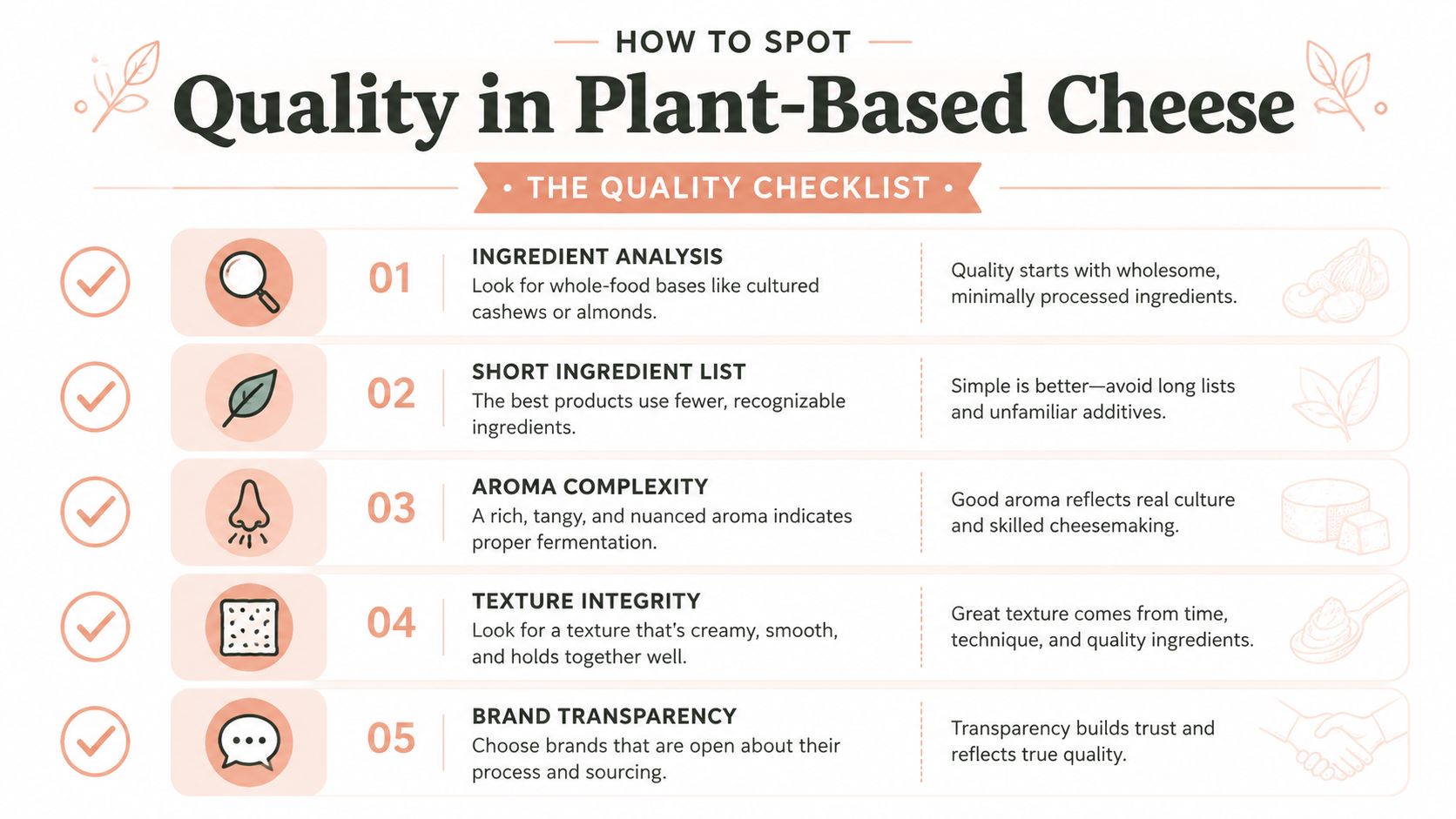
The quality checklist
1. Start with the base. Cultured cashew and almond cheeses can develop a rich, rounded texture. Soya-based recipes often offer a clean, sliceable profile. Coconut-heavy formulas can be creamy, but they need careful flavour balancing so the fat does not dominate.
2. Test the texture against the style. A camembert-style cheese should have a soft centre and purposeful rind. An aged wheel should cut neatly. A cheddar alternative should slice or grate without collapsing into a greasy paste. For a toastie or pizza, check that the product is made to soften or stretch rather than just calling itself cheddar-style.
3. Look for aroma complexity. Cultured cheese should offer more than the smell of plain oil and starch. Savoury, tangy, nutty, smoky or earthy notes should match the style described on the pack.
4. Check the production story. Hand-ladling, small-batch production, rind development and maturation suggest deliberate cheesemaking rather than a generic substitute. These details cannot guarantee your preferred flavour, but they help you choose a more characterful option for a board or gift.
5. Ask a precise question. A specialist cheesemonger or clear product page should explain the base ingredients, fermentation approach, intended use and storage requirements. Ask whether the cheese melts, slices, crumbles or works best at room temperature. “It tastes like dairy cheese” gives you no useful buying guidance.
Nutrition also belongs on the checklist. An independent analysis found that almost 60% of plant-based cheeses were high in saturated fat, while only 15% were low in sodium. Cashew-only products more often had the highest protein and lowest sodium and saturated fat. Coconut-oil formulas were more likely to be high in saturated fat and sodium. The nutritional analysis of plant-based cheeses supports a practical rule: compare the base ingredients and nutrition panel instead of treating every dairy-free cheese as nutritionally equivalent.
Check allergen information with equal care. UK guidance says a vegan label means no animal-origin ingredients were intentionally used, but it does not guarantee the absence of cross-contamination. Businesses should identify relevant risks with precautionary wording such as “may contain”. The UK Government's vegan food labelling guidance matters especially when you avoid milk or manage other allergies.
Choosing the Right Vegan Cheese for Every Occasion
The most useful way to shop is to begin with the plate. A melting cheese needs the right starch and moisture balance, a cheeseboard cheese needs structure and flavour development, and a sandwich cheese needs clean slicing without overpowering everything around it.
For melting and baking
Choose a mozzarella-style or cheddar-style product specifically formulated for heat. Cashew-based mozzarella can provide a creamy, rounded melt, while starch-supported styles are often better at creating stretch. Coconut-oil cheddar alternatives can brown and soften effectively, but they may taste richer and more pronounced than you want in a delicate dish.
Use these for toasties, pizza, pasta bakes, lasagne and loaded potatoes. Don't expect a hard aged wheel to melt like a dairy cheddar. Its job may be to shave, crumble or serve at room temperature, not disappear into a sauce.
For sandwiches and snacking
A smoked style works well with pickle, mustard, crisp apple and sturdy bread. A spreadable cheese suits bagels, crackers and packed lunches, while soya-based slices often offer a relatively clean, even texture. Nut-based cheeses tend to feel denser and more indulgent, which makes them useful when you want a substantial bite.
For a more distinctive option, a spreadable blue such as this blue-style vegan cheese brings gentle sharpness to crackers, pear and toasted walnuts. Keep the accompaniments simple so the blue character remains clear.
For entertaining and gifting
A cultured camembert-style round, blue-style cheese or aged wheel belongs on a board rather than buried in a toastie. These are the products to choose when you want guests to taste fermentation, rind and maturation, not only salt and fat.
| Cheese style | Best base ingredient | Ideal occasion | UK brand example |
|---|---|---|---|
| Mozzarella-style | Cashew or a starch-balanced plant base | Pizza, toasties and pasta bakes | Specialist mozzarella-style makers |
| Cheddar-style block | Coconut-oil or nut-based formulation, depending on texture | Sandwiches, grating and everyday cooking | Mainstream and artisan UK makers |
| Cream cheese spread | Soya, cashew or blended plant base | Bagels, dips and quick lunches | Specialist spread producers |
| Smoked style | Nut, soya or blended base | Snacking, sandwiches and picnic food | Artisan smoked-cheese makers |
| Camembert-style | Cultured cashew | Dinner parties and cheeseboards | Small-batch cultured producers |
| Blue style | Cultured nut or blended base | Strong-flavour boards and gifting | Specialist blue-style makers |
| Aged wheel | Nut-based or carefully matured plant base | Tasting, entertaining and special occasions | Artisan UK cheesemakers |
The strongest choice is the one designed for your occasion. That's the difference between buying a cheese that performs and buying one that merely looks familiar.
Building a Vegan Cheeseboard That Actually Works
A memorable plant-based cheeseboard needs contrast, not a pile of similar beige blocks. Select three to five cheeses across different textures and intensities, then arrange them so guests can move from gentle to bold.
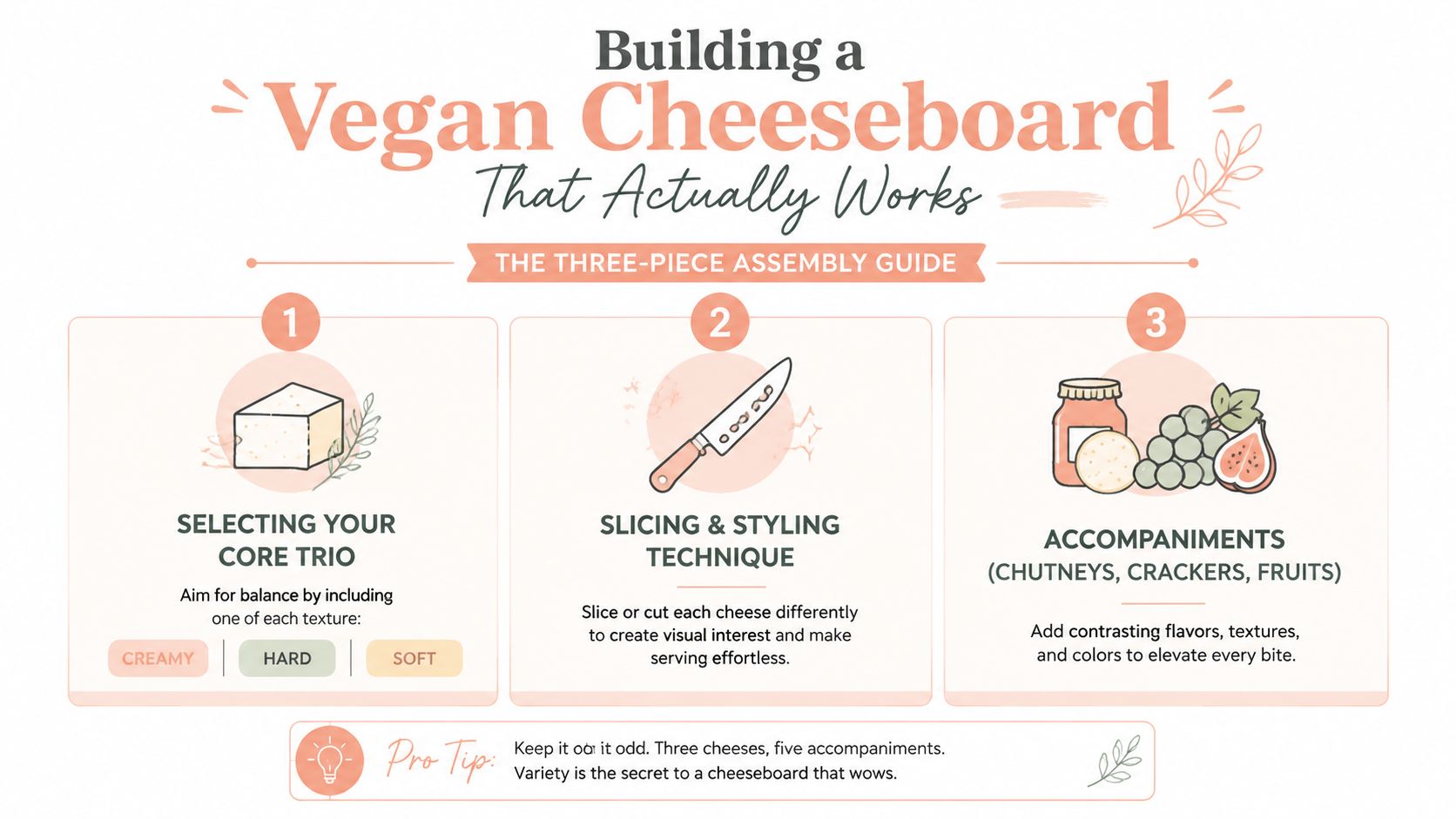
Start with a core trio
Begin with a creamy or spreadable cheese, add a firm aged or smoked option, then finish with a blue-style or washed-rind cheese. A cashew-based brie-style round gives people an approachable opening, a smoked block adds savoury depth, and a bold blue supplies the memorable final bite.
If you're serving guests who are new to dairy-free cheese, don't lead with the strongest style. Put the mildest cheese where people naturally start, then let the board build in flavour.
Add sweet, salty and crisp elements
The accompaniments should refresh the palate and give each cheese a different context. A quince preserve, such as this fruit accompaniment for cheese, works beautifully with a firm, mature style. Fig chutney suits blue cheese, while a sharp pickle can cut through a creamy spread.
Choose crisp crackers with enough structure for soft cheese, then add:
- Fresh fruit: Grapes, pear and apple bring moisture and acidity.
- Salty accents: Olives and pickles stop the board tasting too sweet.
- Nutty crunch: Candied walnuts or toasted nuts complement cultured nut cheeses.
- A darker finish: Small pieces of dark chocolate work well beside bold, earthy styles.
Plate for movement
Cut firm cheeses into slices or wedges before guests arrive, but leave soft rounds mostly intact so they retain their character. Give each style its own knife where possible, label the cheeses and keep allergen information visible rather than relying on guests to ask.
For a small gathering, three contrasting cheeses and a modest selection of accompaniments will feel generous. For a larger buffet, expand the variety rather than making every portion oversized. The important principle is balance: every guest should find an easy entry point, a useful everyday flavour and something more adventurous.
Serving insight: A board feels abundant when it offers different experiences, not when every cheese is cut into the same shape.
Saporia's wider deli range can help complete the board with plant-based crackers, chutneys, olives and pickles, so you can plan pairings alongside the cheeses instead of assembling the accompaniments as an afterthought.
Storage and Serving Tips for Maximum Flavour
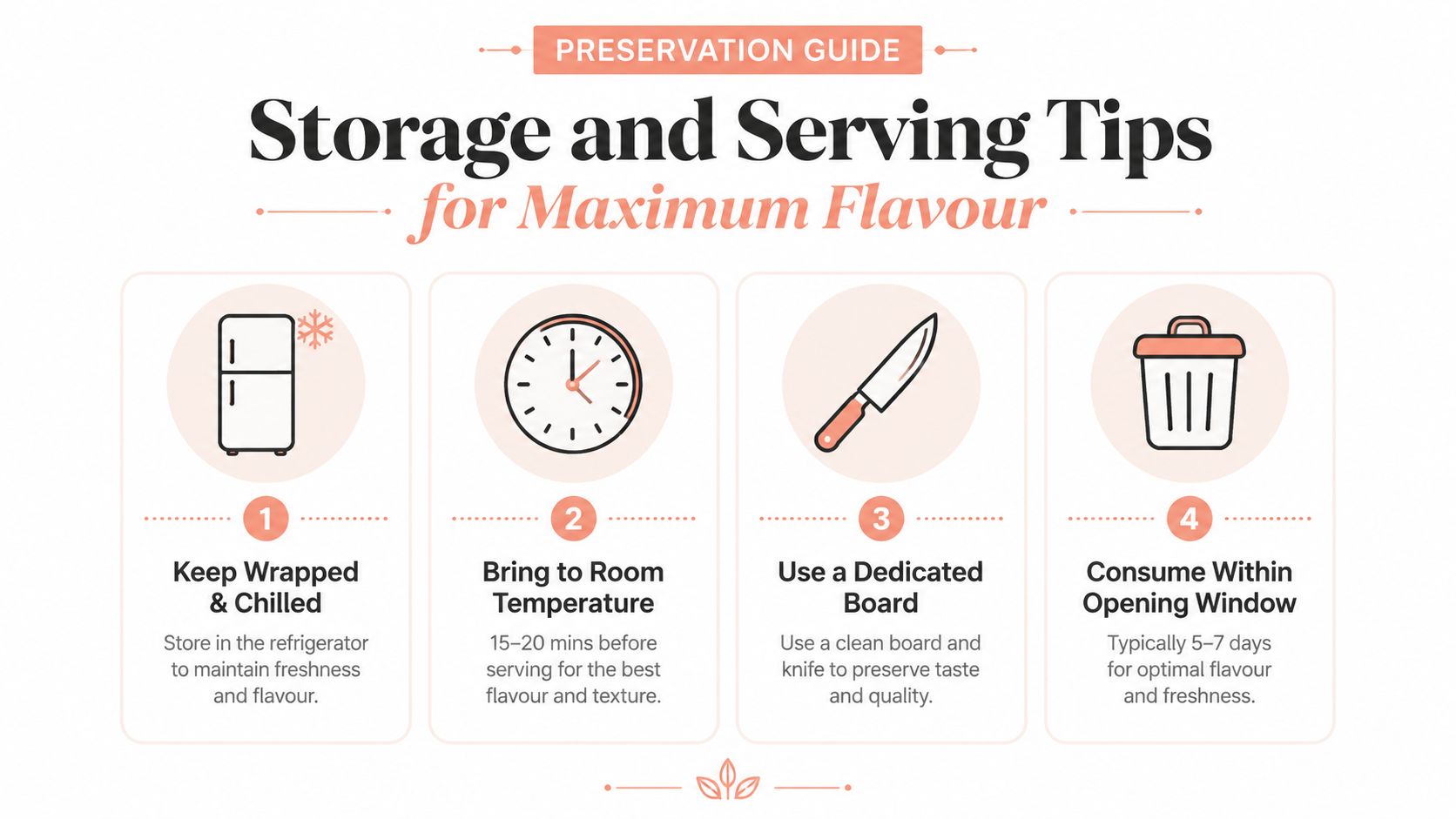
Artisan vegan cheese needs considerate handling. Keep chilled products in the refrigerator and follow the maker's storage instructions, especially when the cheese has a living rind or a fresh, spreadable texture.
For many styles, breathable wax paper or the original wrapping is preferable to tight cling film. Cling film can trap moisture against the surface, which may soften the texture or encourage spoilage. Place wrapped cheese in a clean container if your refrigerator is busy, but don't seal a ripening rind so tightly that air can't circulate.
Give the cheese time to open
Soft-ripened and aged varieties usually taste more expressive after a short rest outside the refrigerator. Allow roughly 20 to 30 minutes before serving when the product instructions support it. The fats soften, the aroma becomes easier to read and the texture feels less compressed.
Fresh spreads don't need the same treatment. Serve them cool enough to hold their shape, particularly if they're going onto a warm table or buffet.
Cut according to texture
Use a clean, sharp knife for firm wheels and a thin blade for soft cheeses. Wipe the knife between styles so a strong blue doesn't dominate a mild spread. For delicate blue cheeses, press down cleanly rather than sawing, which can cause crumbling. For soft brie-style cheeses, chill the knife briefly and cut with a smooth motion to avoid smearing the centre.
Freezing is a judgement call. Hard and semi-hard styles generally tolerate freezing better than soft fresh cheeses, which can lose their original texture after thawing. If you freeze a suitable firm style, wrap it well, thaw it gradually in the refrigerator and use it in cooking if the texture changes.
Opened artisan cheeses won't all keep for the same length of time. Follow the package guidance, inspect the surface and trust your senses. Sour or rancid odours, unexpected mould, excessive wetness or a bitter, paint-like flavour are clear reasons to discard the product. Never taste a cheese to test whether it has spoiled if the appearance or smell already seems wrong.
Where to Buy Artisan Vegan Cheese in the UK
Supermarkets are useful for convenience, but they aren't built to explain the difference between a melting block, a cultured wheel and a spreadable blue. Their ranges usually prioritise products with broad appeal, straightforward handling and dependable distribution. That makes them practical, but it can leave shoppers with little guidance about provenance, maturation or the best serving occasion.
A specialist vegan cheesemonger takes the opposite approach. The range is organised around styles, makers and experiences, giving you access to cheeses that may be produced in small batches or made for a specific use. You can ask whether a wheel is best for a dinner party, whether a spread will travel well, or which accompaniments will balance a strong flavour.
What specialist sourcing adds
A curated retailer can offer:
- A broader style mix: Cultured rounds, blue-style cheeses, smoked blocks, feta-style products and cooking formats.
- Better product context: Ingredient information, serving suggestions and clearer descriptions of texture.
- Useful bundles: Mixed selections for tasting, gifting or building a board without researching every item separately.
- Personal advice: Recommendations based on allergies, guest preferences, cooking plans or budget.
- Complementary food: Crackers, chutneys, sauces, spreads, olives, pickles, chocolate and drinks in one shop.
Saporia is a UK-based vegan cheesemonger and deli with an online marketplace, curated plant-based cheeses, complementary pantry products and in-person tasting experiences. Its range includes specialist cheeses and themed selections, while this curated vegan cheese bundle offers a straightforward way to sample a coordinated selection.
Check the retailer before ordering
A reliable online cheese retailer should explain how chilled products are packed and delivered, provide ingredient and allergen information, and make availability clear. Look for descriptions that tell you whether a cheese is soft, sliceable, crumbly, spreadable or intended for melting.
Specialist buying also makes gifting easier. A bundle can give a recipient several textures to explore, while a gift card avoids guessing about allergies or preferred flavours. For regular discovery, tasting events or seasonal selections offer more education than repeatedly buying the same supermarket block.
The point isn't to abandon supermarkets. It's to use them for convenience and specialist retailers for discovery, advice and occasion-led buying. That combination gives you a much better chance of finding cheese that suits the meal in front of you.
Your Next Steps to Better Plant-Based Cheese
Choose by purpose first. For a toastie or pasta bake, buy a product made to melt. For a cheeseboard, look for culturing, maturation and a texture that can stand alone. For gifting, choose a varied bundle with enough contrast to make the tasting feel intentional.
Read the ingredient list, check allergen guidance and pay attention to storage instructions. The UK Trading Standards guidance notes that there's no legal definition for “vegan” or “plant-based” food in the UK, and that “vegan” is voluntary information that must not mislead shoppers about suitability. It also states that there's currently no threshold requirement for animal-derived products in vegan foods. The Trading Standards policy paper is a useful reminder to look beyond the front label.
Try a curated bundle, pair each cheese with a different cracker or chutney, and keep notes on the textures you enjoy. If you're planning drinks alongside a board, Allied Drinks Systems' guide to vegan-friendly drink options offers useful ideas for serving plant-based guests throughout the year.
Saporia brings together artisan vegan cheese, cheese bundles and deli accompaniments for boards, gifting and everyday meals. Visit Saporia to browse the current range and start building a plant-based cheese selection that suits your next occasion.