

Dairy Free Feta Guide Flavour Pairings and Uses
You've laid out tomatoes, cucumber, olives and warm pitta for a quick Mediterranean-style lunch, then reach for the feta. The problem is that someone at the table avoids dairy, or you're planning a completely plant-based board, and the familiar salty white block suddenly needs a substitute.
That's where dairy-free feta comes in. It can bring the briny flavour and crumbly finish you want, but it doesn't always behave like dairy feta, particularly in a hot pan. This guide will help you understand the difference, choose a style that suits your meal, and use it confidently in salads, mezze, cheeseboards and everyday cooking. You can also browse Saporia's vegan deli selection for plant-based cheeses and accompaniments suited to relaxed entertaining.
Table of Contents
- Introduction to Dairy Free Feta and Why It Matters Now
- What Dairy Free Feta Is and How It Differs From Dairy Feta
- How Dairy Free Feta Is Made and Common Ingredient Bases
- Style Texture and Taste Variations You Will Find in the UK
- How to Choose Store and Handle Dairy Free Feta at Home
- Serving Ideas Pairings and Easy Recipe Inspiration
- Discover Saporia Artisan Options and Tasting Experiences
Introduction to Dairy Free Feta and Why It Matters Now
Dairy-free shopping has moved well beyond a specialist corner of the supermarket. UK Kantar reporting put the dairy-free category at £923.5 million in take-home sales, with year-on-year growth of 4.9%, and found that about two-thirds of the population bought from the category, although only around one-quarter of people had a dietary requirement that strictly required dairy-free products. Read the UK category reporting.
That matters when you see feta-style alternatives appearing in deli counters, free-from aisles and foodservice dishes. Dairy-free feta is no longer just an answer for one dietary need. People use it for family meals, packed lunches, plant-based dinner parties and cheeseboards where several guests want the same food on the table.
The same reporting noted that dairy-free spreads were bought by more than 24% of UK households, up 11% from 2021, showing how free-from products can become part of ordinary shopping habits rather than occasional specialist purchases. The same UK report gives useful context for why a feta-style product can sit comfortably beside everyday vegan cheese and deli foods.
A dairy-free feta alternative is designed to echo feta's most recognisable qualities: saltiness, acidity, a pale appearance and a texture that can be cut or crumbled. It isn't identical to dairy feta, and that's not a flaw. The useful question is whether the product works for the job you have in mind.
Practical rule: Choose dairy-free feta by the meal, not just by the name on the pack.
You'll find the clearest difference when heat enters the picture. A block that crumbles beautifully over a salad may soften, oil out or remain intact in the oven instead of browning and stretching. Once you know why, choosing the right style becomes much easier.
What Dairy Free Feta Is and How It Differs From Dairy Feta
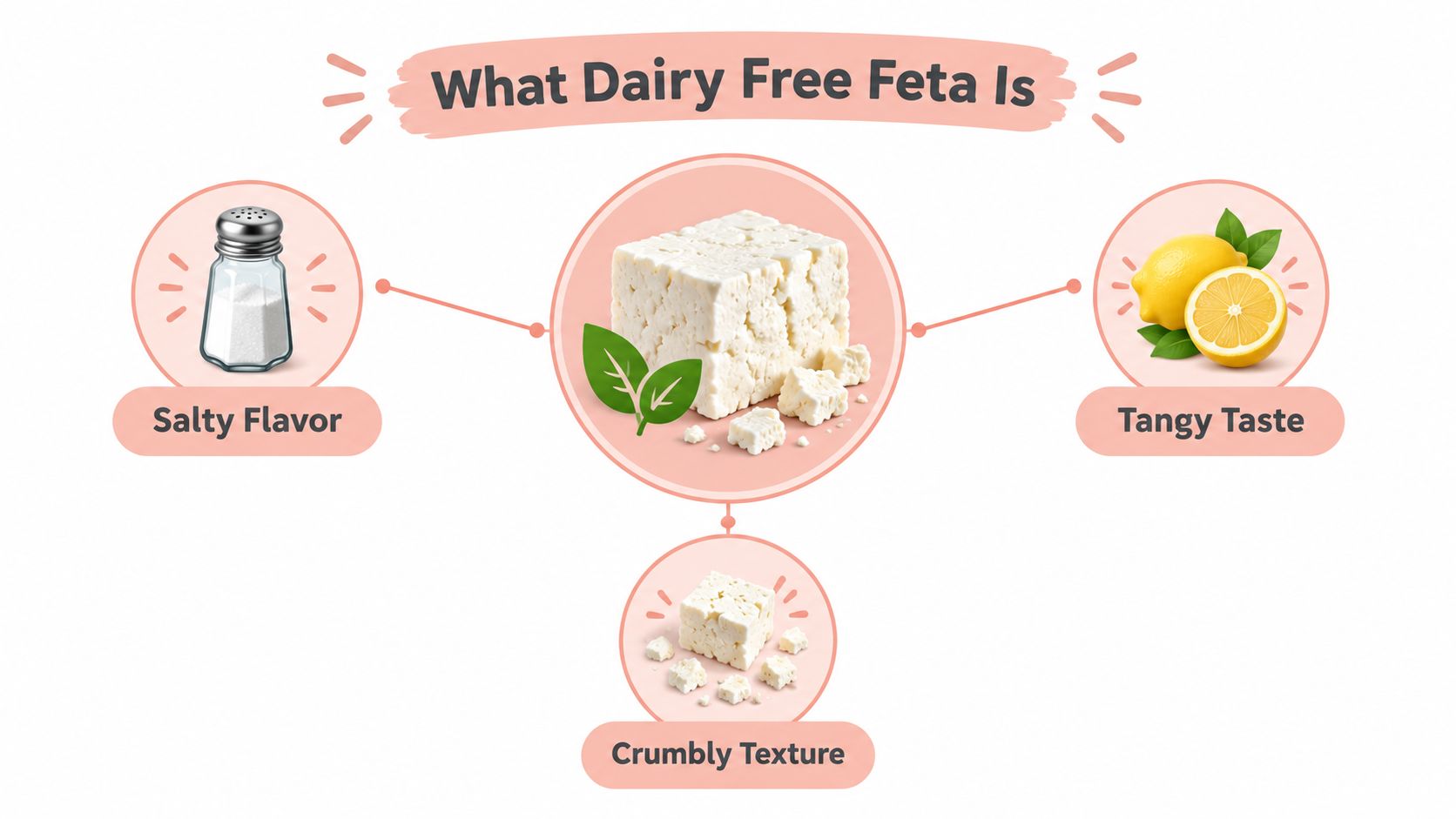
Think of dairy feta as a particular musical performance, and dairy-free feta as an arrangement built around the same memorable notes. The alternative aims for the salty, tangy and crumbly character associated with feta, but uses plant-based ingredients instead of milk.
A typical commercial block can use water, coconut oil, starch, salt, acidity regulators, flavourings, olive extract and vitamin B12. UK government guidance on vegan food labelling helps explain how products can present a familiar white, sliceable profile without animal ingredients.
The useful sensory translation
On the plate, good dairy-free feta should give you a briny lift, a clean acidic note and enough structure to break into rough pieces. Some versions feel firm and dry at the edge, while others are softer and creamier, more like a spreadable block that can be spooned or gently folded through food.
Traditional dairy feta gets its structure from milk proteins and the way those proteins form a curd. Many plant-based alternatives instead build structure from fats, starches, nuts, cultures and seasoning. That difference explains why a dairy-free block may crumble under a fork but won't necessarily stretch over a hot dish.
The label also matters. UK law has no legal definition of vegan food, but a product labelled vegan must not be misleading, must not intentionally use ingredients of animal origin, and should make identified cross-contamination risks clear. This practical explanation of vegan labelling is useful if you're buying for someone with strict requirements.
What it can and cannot copy
Dairy-free feta can work brilliantly in cold applications where salt, tang and texture do most of the flavour work. It's particularly natural in tomato salads, mezze, grain bowls and finishing applications.
It's less predictable as a direct replacement in dishes that depend on dairy feta browning, stretching or holding a firm shape under sustained heat. That doesn't make it unsuitable for cooking. It means you'll often get the best result by adding it near the end, using it as a topping, or choosing a recipe where melting isn't the main event.
How Dairy Free Feta Is Made and Common Ingredient Bases
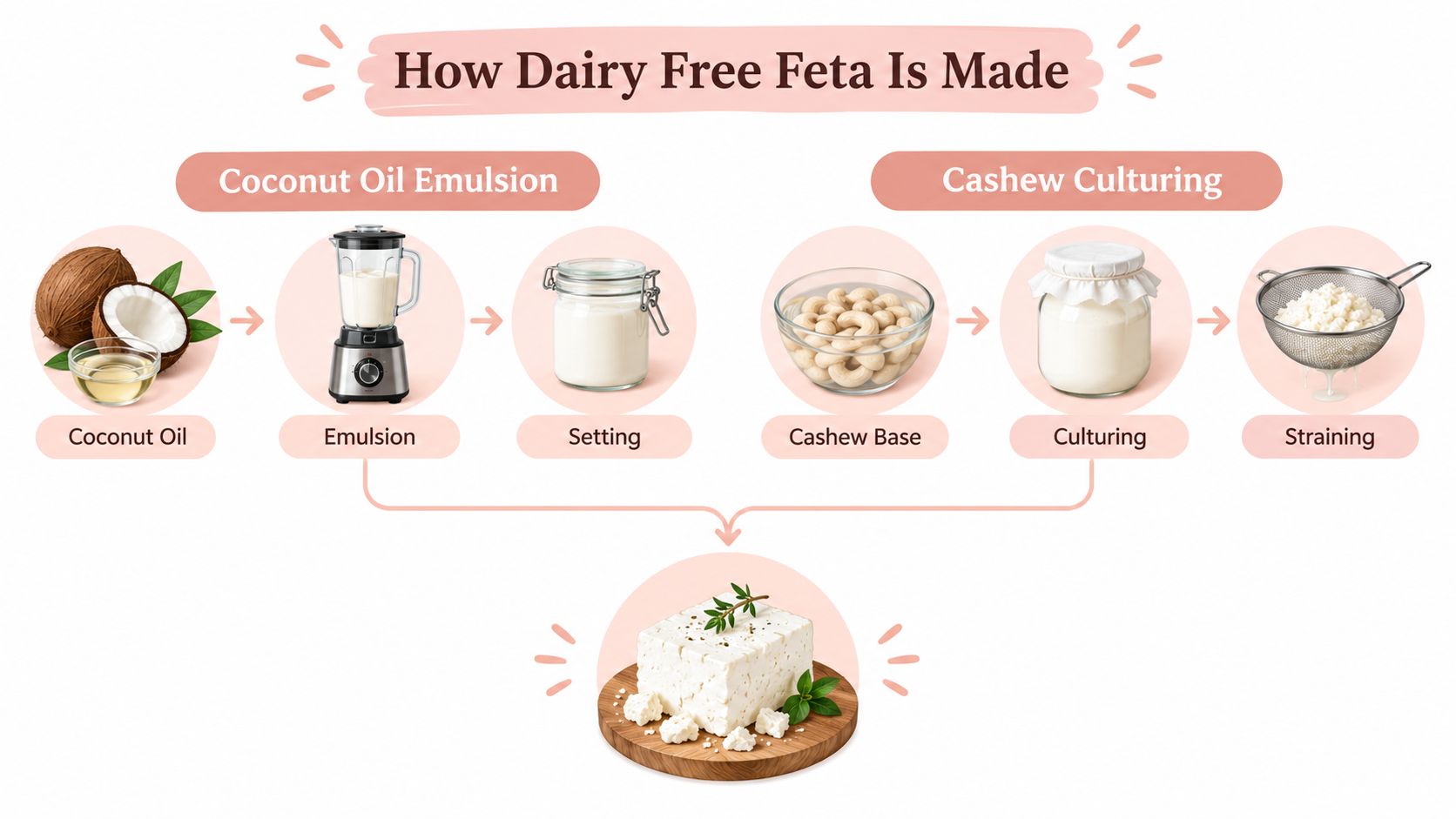
A homemade dairy-free feta may begin with soaked cashews, coconut oil, water, salt and acidity. Commercial versions use the same basic idea, building a feta-style texture from fats, starches, nuts, cultures and seasoning rather than a milk curd. The base matters because it affects whether the finished block slices cleanly, crumbles over a salad or softens in a warm dish.
Coconut oil and starch based blocks
A coconut-oil-led recipe uses fat for richness and mouthfeel. Starch helps the mixture set, while water, salt, acidity regulators and flavourings shape the taste. Chilled, the fat firms up, giving the block a clean cut and a neat break, much like a cold, set spread rather than a dairy curd.
A typical supermarket feta-style alternative provides 305 kcal, 29g fat, 26g saturated fat, 11g carbohydrate, 0g protein and 1.7g salt per 100g, alongside vitamin B12 at 2.5 micrograms per 100g, listed as 100% RI. See the listed nutritional information.
The practical result is a product that usually suits cold use best. It can be crumbled over tomatoes, folded through grains or scattered across a finished dish, but it is less likely to brown or stretch like dairy feta. Its saturated-fat content also makes portion size relevant if it appears regularly on your plate.
Nut based and cultured styles
Nut-based feta uses ingredients such as almonds or cashews for body and natural richness. Fine processing can create a smooth base with small points of crumble, while cultured ingredients add a deeper, more developed tang. These recipes may feel denser and more substantial, so they can work well when you want a topping that stays present rather than melting away.
The figures also vary between styles. One coconut-oil-style block provides 280 kcal, 25.5g fat, 10.3g saturated fat, 3.8g carbohydrate, 7.2g protein and 2.63g salt per 100g. A nut-based style provides 364 kcal, 33g fat, 14g saturated fat, 8g carbohydrate, 8g protein and 2g salt per 100g. The UK product comparison illustrates why two feta-style products can have different eating and cooking qualities.
Use the ingredient list as a performance clue:
- Coconut oil and starch: expect a firm chilled bite and a clean crumble.
- Nuts or cultured ingredients: look for a fuller, sometimes denser texture and more layered acidity.
- Olive extract or brine-inspired seasoning: expect a stronger savoury, Mediterranean direction.
- Vitamin B12 fortification: useful when comparing labels, but it does not predict whether the block will melt or crumble.
- Gluten-free or soy-free wording: helpful for allergen-conscious households and shared serving boards. Check the current pack for exact allergen information.
In Europe, 59% of feta- and mozzarella-type plant-based cheese launches since 2018 contained less than 1% protein, according to Innova Market Insights as cited in Cargill's plant-based cheese report. The report places Europe's plant-based cheese market at 28,000 tonnes in 2019, 48,000 tonnes in 2023, and forecasts 62,000 tonnes in 2026. This helps explain the emphasis on fat, cultures, starch and seasoning: manufacturers are recreating feta's salty, tangy eating experience rather than copying dairy protein alone.
Style Texture and Taste Variations You Will Find in the UK
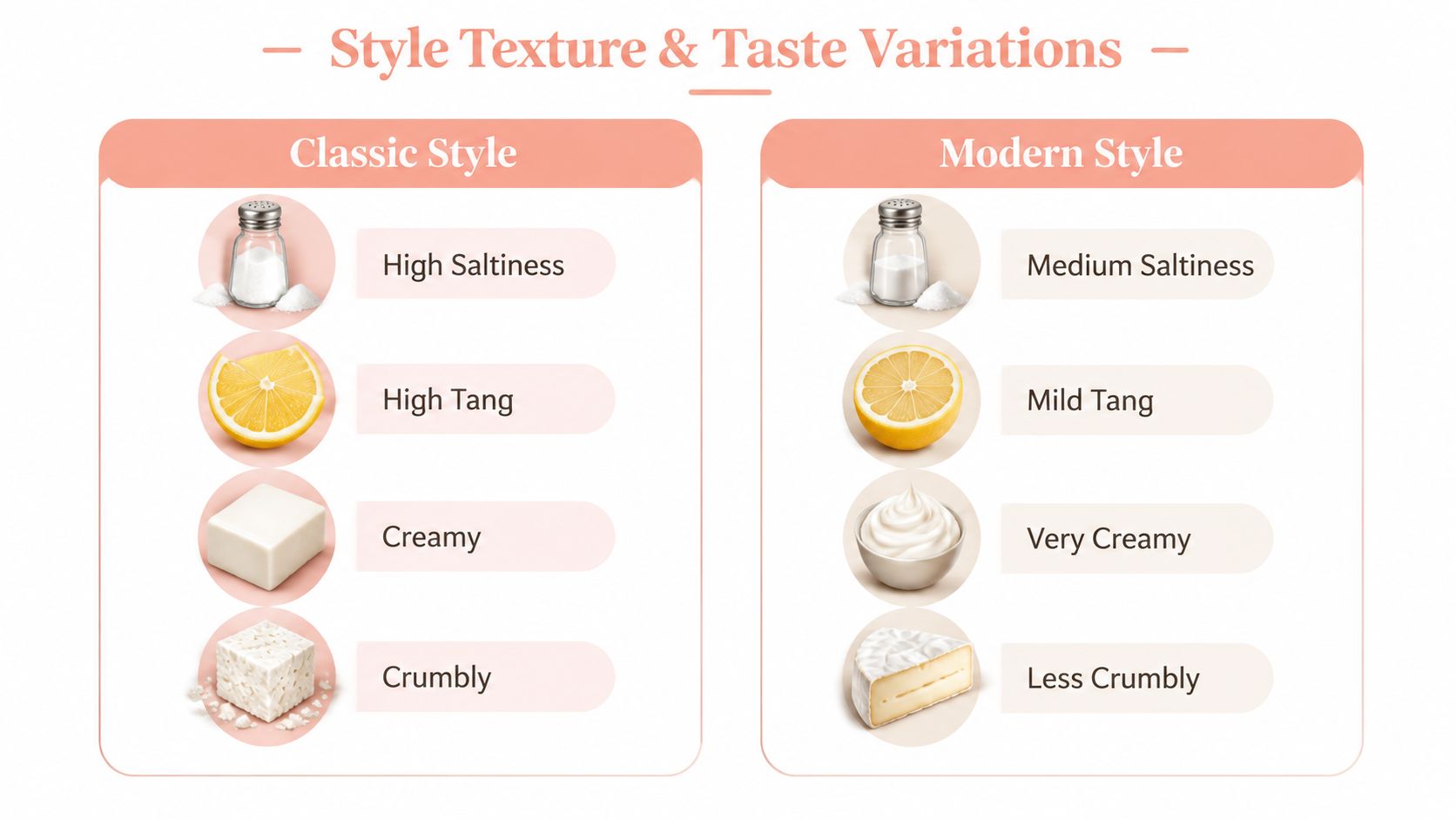
Two feta-style blocks can look almost identical in their packaging and still feel completely different when you cut them. One may break into dry, craggy pieces, while another yields softly under a knife and leaves a creamy smear on the board.
Salt is the first difference people notice. A briny style suits juicy tomatoes, cucumber and olives because the salt sharpens mild ingredients. A gentler style may work better with roasted vegetables, fruit, fresh herbs or a sweeter chutney, where a heavy salty note could dominate.
Tang changes the personality too. Lemon-like acidity feels bright and clean, while cultured or fermented notes can taste deeper and more savoury. Creaminess affects how the product spreads, and crumble tells you whether it's likely to scatter neatly over a salad or collapse into a softer topping.
Use the base as your shopping shortcut
The table below offers a practical starting point. Product recipes vary, so use it alongside the label and the texture you want.
| Formulation Base | Typical Texture and Flavour | Best Use Case |
|---|---|---|
| Coconut oil and starch | Firm when chilled, salty, clean-tasting and easy to cube or crumble | Greek-style salads, mezze and cold boards |
| Nut-based | Richer, often slightly grainy or naturally crumbly, with a fuller mouthfeel | Salads, grain bowls, pasta finishes and spreads |
| Cultured plant-based base | Tangier and more savoury, with texture ranging from soft to sliceable | Artisan boards, bread, herbs and roasted vegetables |
| Higher-protein plant-based base | Denser and more substantial, with a potentially firmer bite | Cubes, meal bowls and recipes where the topping needs structure |
Mintel's UK cheese market coverage reported that vegan claims appeared on 9% of UK cheese launches in 2023, showing that plant-based cheese has become a meaningful part of the wider cheese category. A UK recipe and cheese guide summarises that market finding.
For a curated feta-style option, you can explore Saporia's Haverstock White Feta. Look for the style that matches your planned use rather than assuming every feta alternative is interchangeable.
Match texture to the occasion
For a crisp salad, choose a block that breaks into visible pieces. For a dip or whipped topping, softness may be an advantage. If you're preparing a board, a firmer edge makes serving easier, while a creamy centre gives guests something to spread on a cracker.
How to Choose Store and Handle Dairy Free Feta at Home
Start at the back of the pack, not the front. The name tells you the intended style, but the ingredients, allergen statement, nutrition panel, fortification details and use-by date tell you more about how it will suit your household.
A coconut-oil-led product may be useful when you want a firm chilled block. A nut-based product may offer a richer, more substantial texture, but it won't suit guests with the relevant nut allergy. Soy-free and gluten-free requirements also need separate checks because dairy-free doesn't automatically mean free from every other allergen.
A simple buying checklist
- Read the allergen panel: Check for nuts, soya and cereals, and consider shared-facility warnings where relevant.
- Check the texture you need: Select a sliceable block for cubes, a crumbly style for salads, or a softer product for spreading.
- Look for fortification: Vitamin B12 may appear on the label, but it doesn't predict taste or cooking behaviour.
- Check the date: Buy the freshest pack that fits your plans, particularly for a gathering.
- Consider the recipe: If the feta will be heated, choose a product you're happy to use as a topping rather than expecting a dairy-style melt.
Chilling and portioning
Keep the product chilled according to its packaging. If it comes in brine or oil, retain that liquid and keep the pieces covered. It helps protect the surface from drying and preserves the flavour the producer intended.
Use a clean knife and lift out only what you need. Cut cubes with a gentle sawing motion rather than pressing hard, especially when the block is soft. For crumbling, use your fingers or the edge of a fork and stop as soon as you have the pieces you want.
If the pack doesn't provide specific storage instructions, follow the manufacturer's guidance rather than relying on a generic rule. For entertaining, portion the feta into a small serving dish and return the main container to the fridge, so it spends less time at room temperature.
You can browse Saporia's vegan cheese range or explore cheese bundles when you want to compare styles alongside board accompaniments.
Serving Ideas Pairings and Easy Recipe Inspiration
Dairy-free feta earns its place most easily in cold dishes. Crumble it over tomatoes, cucumber, olives and herbs, then add a little olive oil and acidity. The cheese supplies the salty, tangy punctuation, while the vegetables provide freshness and crunch.
For a grain bowl, combine it with roasted peppers, chickpeas, grains, toasted seeds and a spoonful of herby sauce. For roasted vegetables, add the feta after cooking so it keeps its shape and contrast. A warm tray of squash, courgette or aubergine benefits from a cool, creamy topping rather than a cheese that disappears completely.
Build a board with contrast
A good plant-based cheeseboard needs more than cheese. Put the feta-style pieces beside crisp plant-based crackers, then add something sweet, something sharp and something briny.
Try this combination:
- Salty: feta-style cubes and olives.
- Sharp: pickles or a bright chutney.
- Sweet: fruit or a mellow preserve.
- Fresh: grapes, cucumber, tomatoes or herbs.
- Crunchy: crackers, toasted seeds or nuts, provided they suit your guests.
A soft spread can balance a firmer feta-style block, while a smoked or cultured cheese can add depth without making the board taste uniformly salty. Browse Saporia's chutneys, olives and pickles for simple ways to create those contrasts.
Use heat with a lighter touch
Many dairy-free feta alternatives won't brown, stretch or melt like dairy feta. A high-fat, low-protein structure may soften while remaining visibly intact, so treat it as a finishing ingredient.
Scatter it over a pasta dish just before serving, fold it through warm grains, or place it on top of roasted vegetables after they leave the oven. For a savoury bake, crumble it across the surface towards the end rather than burying it in the mixture.
It also works in cold pasta salads, pitta fillings and mezze plates. A spoonful stirred into a tomato sauce may add salt and richness, but it's usually more effective to keep some pieces whole so the final dish has textural contrast. Pair meals with pasta, sauces and spreads when you want to turn the same feta-style block into a fuller weeknight supper.
For a dinner-party board, wine can highlight acidity, salt and herbs, but the right match depends on the full plate. This guide to pairing wine with vegan food offers broader context for choosing a bottle around plant-based dishes.
Discover Saporia Artisan Options and Tasting Experiences
The most reliable way to choose dairy-free feta is to start with the occasion. Pick a firmer, saltier style for a Greek-inspired salad or a board where you want visible cubes. Choose a softer or richer option when the plan involves spreading, folding through warm food or creating a creamy topping.
Saporia is a UK vegan cheesemonger and deli, bringing together artisan plant-based cheeses with practical accompaniments for serving. Its range includes feta-style cheeses alongside crackers, chutneys, olives, pickles, sauces, spreads, drinks and other deli provisions, so you can plan a complete board rather than source every element separately.
For a product designed around a feta-style format, view Fetamorphosis and check the current product information before ordering. You can also look at Build Your Own Cheeseboard, seasonal selections, gift cards and new arrivals if you're planning a present or a relaxed gathering.
The tasting experience adds another useful dimension. At The Cheese Cellar in collaboration with Purezza Camden, Saporia hosts cheese and wine tasting evenings, as well as fondue nights running from Thursday to Saturday. Tasting in person lets you compare firmness, acidity and finish before deciding which style belongs in your regular fridge.
A dairy-free feta alternative doesn't need to copy every property of dairy feta to be worthwhile. It needs to deliver the flavour and texture your dish needs, whether that's a salty crumble over a salad, a creamy layer on a cracker or a finishing touch over roasted vegetables.
Saporia brings together feta-style vegan cheeses, artisan boards, crackers, chutneys, olives and pickles for easy plant-based entertaining. Visit Saporia to explore the current range, discover suitable pairings and choose a dairy-free feta style for your next meal or gathering.