

Best Vegan Chocolate Uk
The most popular advice about the best vegan chocolate in the UK is usually too simple: choose the bar with the highest cocoa percentage, pick a recognisable brand, and assume “vegan” means safe for everyone. That shortcut fails. A high cocoa number can tell you something about flavour, but not everything about quality, nutrition or sourcing. A vegan label can describe ingredients without guaranteeing protection from cross-contact with milk.
A better choice starts with the wrapper, then moves to the occasion. Whether you're buying an everyday dairy-free snack, a gift, an after-dinner square or something to serve with plant-based cheese, judge the bar through three lenses: flavour, allergen information and sourcing. The UK market now stretches from supermarket own-label products to small artisan bars available through specialist delis such as Saporia's introduction to veganism.
Table of Contents
- What “Vegan Chocolate” Really Means in the UK
- How UK Chocolate Labelling Sets the Baseline
- Reading a UK Vegan Chocolate Bar Like an Expert
- Cocoa Percentage and What It Actually Tells You
- Vegan Versus Milk-Free Versus Free-From on UK Wrappers
- Matching Bars to Real UK Buying Moments
- A Simple Decision Path for Choosing the Right Bar
- Pairing Vegan Chocolate With Cheeses and Saporia Bundles
What “Vegan Chocolate” Really Means in the UK
“Vegan” doesn't automatically mean allergen-free, and it certainly doesn't mean high quality. In UK food labelling, the word describes the intended ingredients and production approach, not a universal promise that no milk has touched the product.
That distinction matters because chocolate is often made on shared equipment. A bar can contain no intentionally added milk while still carrying a precautionary statement such as “may contain milk”. For a vegan shopper, that may be acceptable. For someone with a diagnosed milk allergy, it may not be.
The useful question isn't simply “Is this vegan?” It's “What does this bar promise, and what does the allergen statement actually confirm?”
The commercial backdrop is strong. UK vegan chocolate confectionery revenue was estimated at US$29.9 million in 2021, with projected revenue of US$80.3 million by 2028, representing a forecast compound annual growth rate of 15.1% between 2022 and 2028, according to Grand View Research's UK vegan chocolate confectionery market outlook. The source describes these as market estimates, not official government statistics, so treat them as directional evidence rather than an exact register of sales.
Why the category now deserves proper scrutiny
The UK accounted for 5.6% of global vegan chocolate confectionery revenue in 2021, and moulded chocolate bars were the largest revenue-generating product type in the UK that year, according to the same market estimate. That points to a mainstream category built around bars for everyday eating, not only specialist truffles or boxed gifts.
The buying occasions are equally broad. A suitable bar can work for snacking, gifting, dessert preparation or pairing with plant-based cheese. This guide focuses on how to choose intelligently across those moments, rather than handing you a brand-only ranking that ignores what different shoppers need.
How UK Chocolate Labelling Sets the Baseline
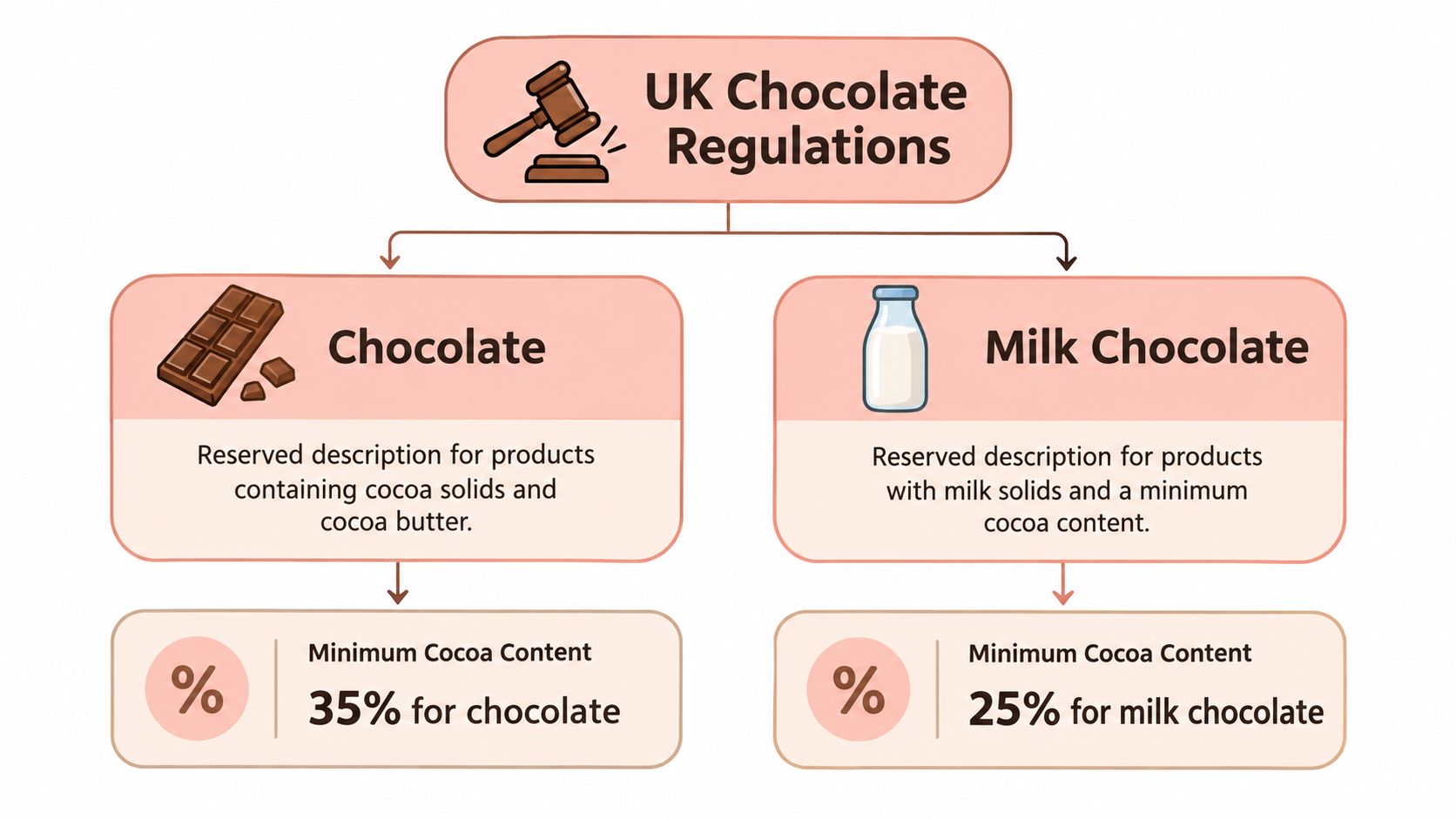
UK law gives shoppers a useful starting point, but it doesn't answer every question. The Cocoa and Chocolate Products Regulations reserve certain descriptions for products that meet defined composition rules.
For a product sold as “chocolate”, the regulations require at least 43% total dry cocoa solids, including at least 26% cocoa butter. “Milk chocolate” has its own requirements, including at least 30% total dry cocoa solids, 18% dry milk solids and 4.5% milk fat. Plant-based bars generally replace dairy ingredients with alternatives such as oat, rice, coconut or nut-based powders.
What the wrapper must tell you
A cocoa-solids declaration, usually written as a percentage, is required for most covered cocoa and chocolate products. GOV.UK guidance on chocolate composition and labelling explains that these declarations support comparison between products, while milk-solids information is required where relevant.
That number is useful, but limited. It helps you anticipate whether a bar is likely to taste sweeter and softer or darker and more cocoa-led. It doesn't confirm that the product is vegan, lower in sugar, free from nuts or safe for a milk allergy.
The word “vegan” also needs careful handling. UK government guidance states that there's no legal definition of “vegan” in UK law. In practice, the label means animal-origin ingredients weren't intentionally used, but it doesn't guarantee that accidental contamination didn't occur.
Marketing language needs a separate reading
Terms such as “plant-based”, “dairy-free” and “free-from” can be useful, but they don't all make the same promise. The ingredient list and allergen statement carry more practical weight than a leaf symbol or front-of-pack claim.
A sensible order is simple: confirm the recipe, check the allergen declaration, then use the cocoa percentage to judge style. That prevents the most attractive claim on the front from doing all the decision-making.
Reading a UK Vegan Chocolate Bar Like an Expert
You don't need a laboratory or a long tasting session to screen a bar. Give the wrapper a consistent scan, starting with the information that can rule a product out.
Start with the ingredients
Look for milk, whey, lactose, butter, butterfat, milk powder, cream powder and other dairy derivatives. Filled bars need extra attention because a caramel, biscuit, praline, wafer or flavoured centre can introduce milk even when the chocolate shell is plant-based.
Compare these two simplified examples:
- Suitable recipe check: cocoa mass, sugar, cocoa butter, oat powder, vanilla.
- Ingredient concern: cocoa mass, sugar, cocoa butter, whey powder, caramel pieces.
The first example may still carry a shared-equipment warning. The second contains a dairy-derived ingredient and isn't vegan.
Then read the allergen statement
Regulated allergens must be declared and emphasised in pre-packed foods. A statement such as “may contain milk” doesn't mean milk is an intentional ingredient. It means the manufacturer identifies a possible unintentional presence risk.
| Ingredient term | Why it matters for vegan shoppers |
|---|---|
| Milk powder | A direct dairy ingredient, so the bar isn't vegan. |
| Whey | A milk-derived ingredient often found in fillings, biscuits and flavour systems. |
| Lactose | Milk sugar, which rules out a vegan recipe. |
| Butterfat | Dairy fat, sometimes used in caramel or creamy centres. |
| May contain milk | A precautionary warning about possible cross-contact, not proof that milk is an intentional ingredient. |
| Oat, rice or coconut powder | A plant-based alternative ingredient, but the full allergen statement still needs checking. |
Finally, check the cocoa declaration and the product format. A plain dark bar is usually easier to assess than a filled or highly layered product because there are fewer compound ingredients to investigate.
Cocoa Percentage and What It Actually Tells You
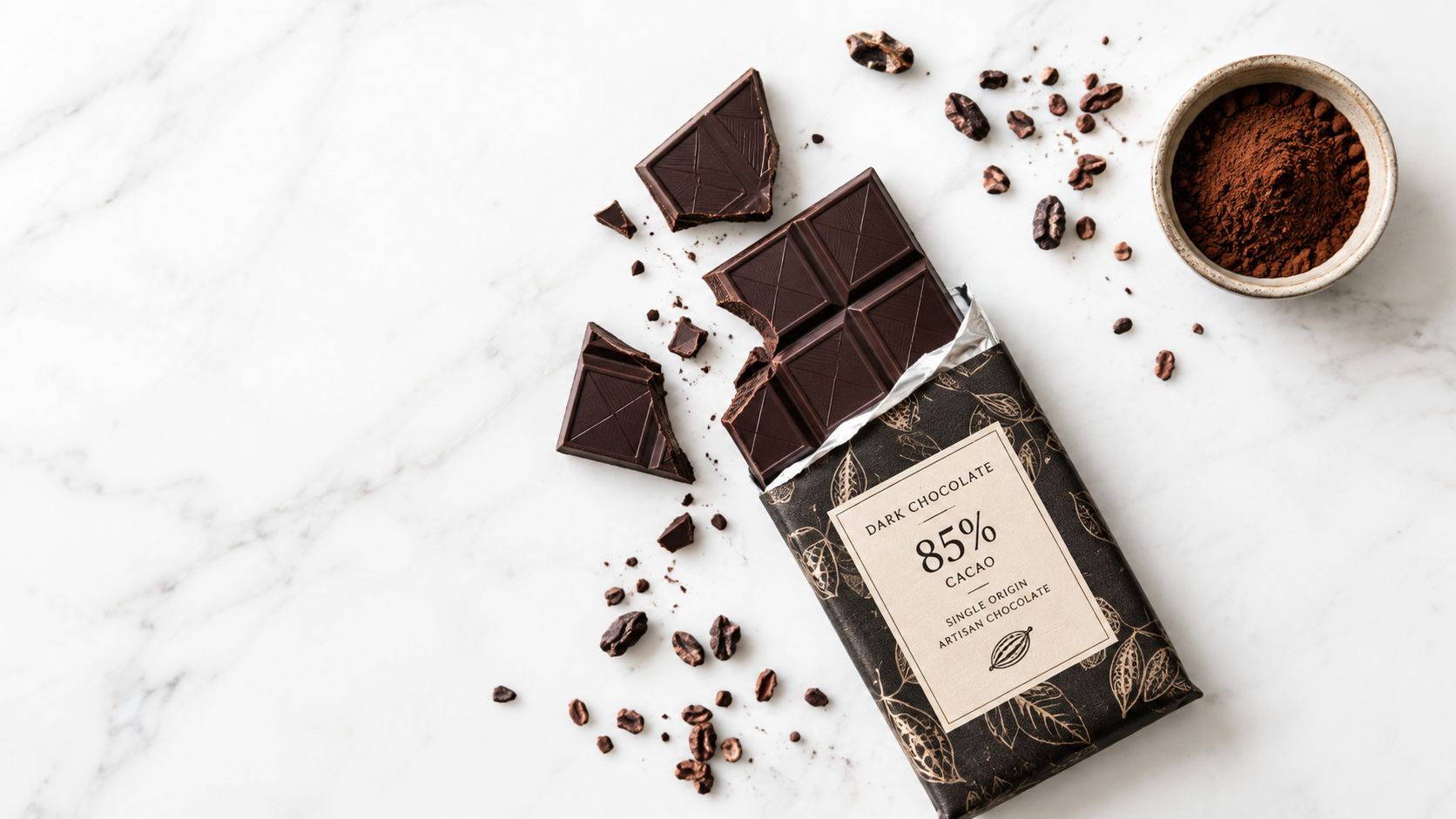
A higher cocoa percentage usually signals a more intense, less sweet style. It doesn't give you a complete quality score.
UK evidence summarised by the British Heart Foundation's guidance on dark chocolate found that dark chocolate generally contained more flavanols than milk chocolate, but flavanol concentration wasn't reliably related to the cocoa-solids percentage printed on the label. Processing can degrade flavanols, while bean variety and origin also affect the final level.
That distinction matters. A 70% bar can taste more cocoa-forward than a softer plant-based bar, but the printed percentage doesn't prove it contains more flavanols or offers a superior nutritional profile. Compare sugar and saturated fat per 100g instead of treating “high cocoa” as a health guarantee.
What to look for beyond the number
For flavour, origin, roast profile, conching and inclusions often tell you more than the percentage alone. A bar with a clearly stated cocoa origin may offer a more distinctive tasting experience than a higher-percentage bar with no information about the beans.
Processing matters too. Conching, roasting and recipe balance can move a chocolate towards fruitiness, nuttiness, bitterness or caramel-like depth. Use the percentage as a style clue, then read the rest of the description.
For shoppers comparing eating styles, this guide to smart low carb chocolate picks can provide another perspective, but don't confuse a lower-carbohydrate positioning with a guarantee of vegan suitability or allergen safety.
If you enjoy intense chocolate, Saporia's Vivani dark chocolate with cocoa nibs illustrates the kind of detail worth noticing: cocoa style and inclusions can shape the experience as much as the headline percentage.
Vegan Versus Milk-Free Versus Free-From on UK Wrappers
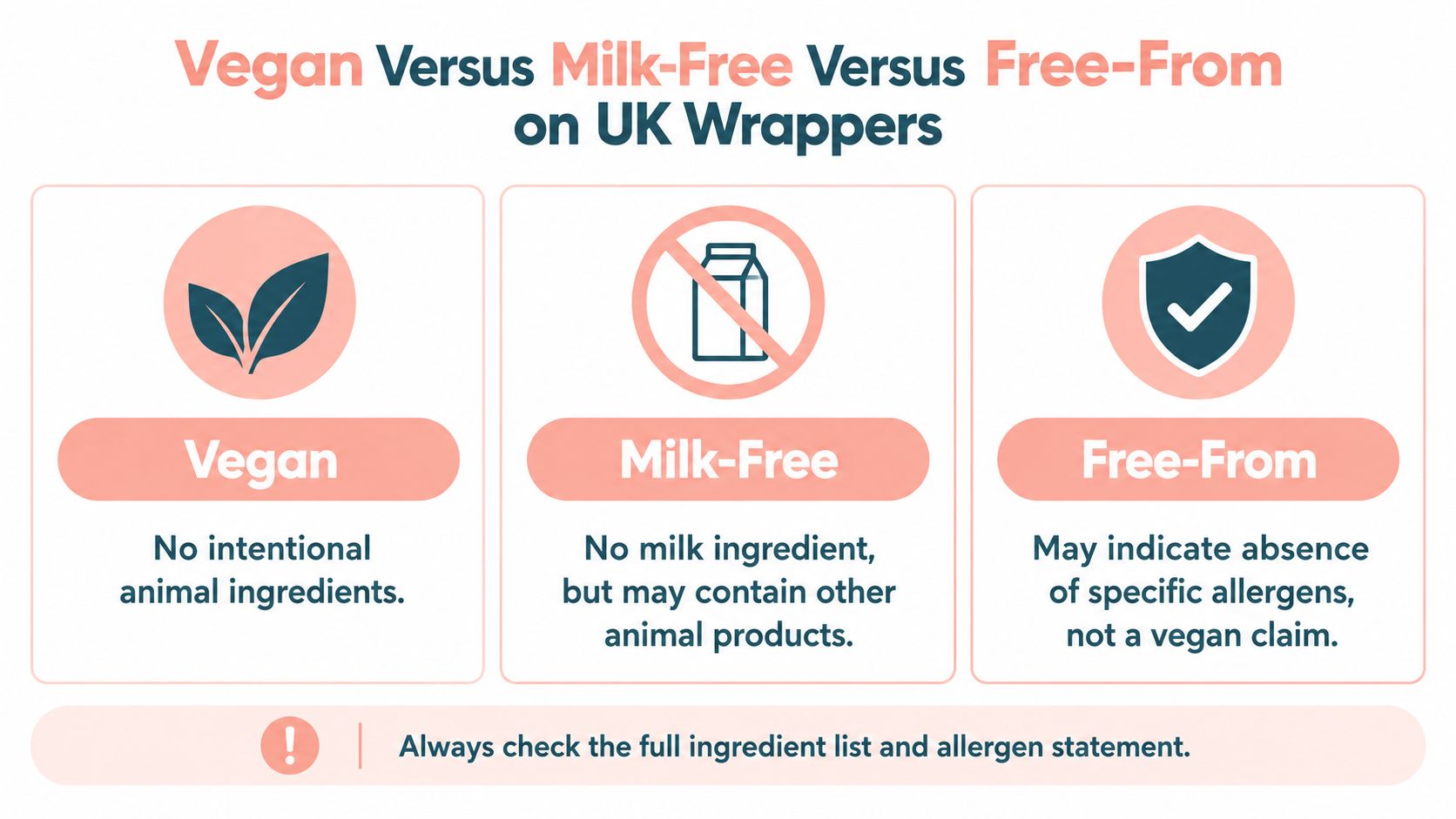
These terms aren't interchangeable, and shoppers often pay the price for treating them as synonyms.
Vegan means animal-origin ingredients weren't intentionally used. It doesn't guarantee the absence of accidental milk contact.
Milk-free generally communicates that milk isn't an ingredient, but it may not make a broad vegan claim. Other animal-derived ingredients could still be present, depending on the recipe and the manufacturer's wording.
Free-from usually refers to the absence of a specified allergen or group of allergens. It can be useful for allergy-led shopping, but it isn't automatically a vegan statement.
The question that settles it
Ask: what does the allergen statement say?
UK government advice explains that a vegan label doesn't guarantee the absence of accidental contamination. Food allergy and intolerance advice for UK consumers recommends paying attention to the full ingredient list and precautionary allergen labelling.
That's especially important when you're buying for a child, a guest with a diagnosed allergy or someone who has a very low tolerance for cross-contact. “May contain milk” isn't the same as milk being listed as an ingredient, but it still communicates a manufacturing risk that some people must avoid.
Where to find practical options
A plain oat-based bar, such as Otherly original plain oat milk chocolate, may suit shoppers who prefer a softer, milk-style texture. Still, check the current packaging before serving it to anyone with an allergy because recipes and precautionary statements can change.
For allergy-sensitive buying, don't rely on a retailer category filter alone. Read the product page, inspect the physical packaging where possible and contact the manufacturer if the warning is unclear.
Matching Bars to Real UK Buying Moments
The right bar depends on what you're asking it to do. A snack for your desk doesn't need the same flavour profile as a gift for a serious chocolate lover, and a bar for a cheeseboard should complement the cheese rather than overpower it.
Everyday dairy-free snacking
Choose a bar with a recipe you'll enjoy eating without an elaborate serving ritual. Oat-based and other milk-style recipes can bring a softer, creamier texture, while darker bars suit shoppers who prefer bitterness and a firmer snap.
For an everyday option, read the ingredients first, then compare the cocoa declaration and pack size. You're looking for a reliable balance of sweetness, texture and price, not a dramatic origin story you'll never taste.
Gifting
A gift needs more than attractive packaging. Check that the recipient's dietary needs are clear, then look for a bar with an interesting origin, an unusual inclusion or a presentation that works alongside other vegan food gifts.
Chocolate pairs naturally with a curated cheese bundle, crackers, chutney or a gift card. That gives the recipient an occasion to enjoy rather than another isolated snack.
Cheeseboard pairing
For a board, avoid choosing the most intense bar by default. A dark, fruit-led chocolate can work beside a bold blue-style plant-based cheese, while a gentler oat-style bar may be more comfortable with soft Camemvert or Bree-style cheeses.
Nut-forward chocolate can complement feta-style cheeses, especially when the board already includes salty crackers and a sharp chutney. Keep the pairing deliberate. One chocolate style is usually enough, served in small pieces so it feels like part of the tasting rather than a separate dessert.
After-dinner coffee
A dark bar with a clean finish works well with black coffee or a short espresso-style serve. If the chocolate is heavily sweetened, pair it with a stronger coffee; if it's bitter or highly roasted, a softer drink can keep the finish balanced.
Saporia's chocolate range sits alongside the practical building blocks of plant-based entertaining, including vegan cheese, crackers, chutneys, olives and pickles. That makes a specialist deli useful when you're planning a board, hamper or tasting rather than just replacing a conventional chocolate bar.
A Simple Decision Path for Choosing the Right Bar
Use this sequence whenever you're comparing bars online or standing in a shop.
- Name the occasion. Are you buying for everyday snacking, baking, gifting or a cheese pairing? A cooking bar needs dependable melting behaviour, while a gift benefits from distinctive flavour or presentation.
- Scan allergens before judging quality. Confirm the recipe contains no milk, whey, lactose, butterfat or other animal-derived ingredients. Then check precautionary wording for milk and other allergens.
- Read the cocoa declaration. Treat the percentage as a guide to likely sweetness and intensity, not a guarantee of superior quality. Origin, processing and inclusions can change the flavour substantially.
- Inspect the recipe style. Oat, rice, coconut and nut-based powders create different textures. Nibs, nuts, fruit, salt and biscuit pieces alter both taste and allergen considerations.
- Compare value sensibly. Look at the price per 100g, pack size and actual ingredients. A smaller premium bar may offer a more distinctive tasting experience, but a higher price doesn't automatically prove better sourcing.
The sustainability question deserves the same scepticism. UK-specific reporting has associated cocoa imported into the UK with more than 2,000 hectares of deforestation in 2025, with estimated exposure concentrated in Côte d'Ivoire and Ghana, according to Mongabay's reporting on chocolate and deforestation. Higher cocoa costs have also led manufacturers to respond with smaller portions and recipe changes.
For cheese pairing, prioritise flavour balance and allergen clarity. For gifting, prioritise presentation, traceable information and the recipient's dietary needs. For everyday snacking, prioritise a recipe you'll happily finish, then use price per 100g to make the comparison fair.
Pairing Vegan Chocolate With Cheeses and Saporia Bundles
Chocolate and plant-based cheese work best when you treat them like a small tasting, not a crowded buffet. Put out modest pieces of each, serve the cheese first, then return to the chocolate and notice how the finish changes.
Start with a dark origin-style bar beside a blue-style vegan cheese. The chocolate's bitterness and roasted depth can stand up to the cheese's stronger character, while a little sweetness from chutney can join the two without flattening them.
A milk-style oat-based bar is gentler. Try it with a soft Camemvert or Bree-style cheese, where the creamy texture creates a smooth transition from savoury to sweet. This is a relaxed combination for guests who are new to plant-based cheese because neither element needs to dominate.
Nut-forward chocolate suits feta-style cheeses particularly well. The roasted notes echo the nutty character, while the cheese's saltiness keeps the pairing from becoming cloying. Add crisp crackers and a few olives or pickles for contrast.
Build the tasting around texture
Texture controls the pace of the board. A firm, snappy dark bar gives you a clean break between creamy cheeses. A softer oat-based bar creates continuity with spreadable styles. Chocolate with nibs or nuts introduces crunch, so serve it beside a smoother cheese rather than another heavily textured accompaniment.
Keep the chocolate in a cool, dry place away from strong cheese aromas. Chocolate absorbs surrounding smells, and a bar stored beside pungent cheeses can lose its intended flavour before it reaches the plate.
For the tasting itself, take the same approach used in any good guided food comparison: look, smell, taste, then revisit the first bite after trying the pairing. Readers who enjoy structured tasting notes may find this Napa Cabernet collector's tasting guide useful for its emphasis on observing aroma, flavour and finish, even though the subject is wine rather than chocolate.
Make it easy for guests
You don't need a complicated menu. Choose one dark bar, one softer milk-style bar, two or three vegan cheeses, a box of crackers and one sweet or sharp chutney. Add olives or pickles for salt and acidity, then offer coffee or tea to finish.
Saporia's cheese bundles and broader deli categories can help you assemble that kind of spread without sourcing every element separately. Browse the current chocolate, vegan cheese and bundle collections, checking each product's latest ingredients and allergen information before serving.
The useful mental checklist is short:
- Label scan: Is the recipe genuinely plant-based?
- Allergen check: What does the precautionary statement say?
- Occasion match: Does the bar suit snacking, gifting or pairing?
Visit Saporia to explore its current vegan chocolate, artisan plant-based cheese, crackers, chutneys and curated bundles. For a more hands-on experience, consider booking a tasting at The Cheese Cellar in Camden and use the session to discover which chocolate and cheese combinations you'd serve at home.