

Dairy Free Cheese Sauce: 4 Bases, 7 Dishes, Zero Compromise
You're standing at the hob with pasta water bubbling, the oven already hot, and one small detail has changed the whole plan. The butter isn't going in, the milk isn't going in, and the cheese sauce you wanted to pour over dinner has to work without dairy. That's exactly where a good dairy free cheese sauce earns its keep, because the useful version isn't just “cheesy-ish” in a saucepan, it stays smooth when you bake it, reheat it, or serve it as a proper meal.
Table of Contents
- The Dairy Free Cheese Sauce Problem Most Recipes Skip Past
- Choosing the Right Base for Your Kitchen
- The Master Method Every Dairy Free Cheese Sauce Shares
- Four Base Recipes to Build Your Sauce Around
- Seven Dishes That Show the Sauce Off
- Why Dairy Free Cheese Sauce Splits and How to Fix It
- Storing, Reheating and Pairing Your Sauce
The Dairy Free Cheese Sauce Problem Most Recipes Skip Past
Most first attempts focus on taste alone. They give you a cashew blend or a quick plant milk mix, then stop before the sauce has to survive an oven, a grill, or a tray of nachos held warm on the table.
That's the gap this guide fills. The sauce needs to do different jobs depending on the dish, and the base matters. Oat works for a neutral weeknight pour, soy brings body and a more structured finish, cashew gives richness for baked dishes, and a potato-carrot base is the nut-free option that also suits family cooking.
Practical rule: if the sauce has to bake, hold, or reheat, choose the base for texture first and flavour second.
There's also a wider UK reason this topic matters. Dairy-free cheese alternatives were worth £41 million in the UK convenience channel in 2021, with sales growing by 13.4% in volume and 12.4% in value over the latest 52 weeks reported at the time, while the same source still described the sector as niche, which points to room for growth rather than saturation. That free-from market baseline helps explain why a sauce format now feels useful, not just trendy.
The four bases below are chosen for real cooking jobs, not just taste tests in a bowl. Each one behaves differently once heat, starch, acid and air get involved, and that's where most confusion starts. If you've ever wondered why one sauce turns grainy while another stays glossy, the answer usually sits in the base you picked.
Choosing the Right Base for Your Kitchen
The easiest way to choose a base is to start with the dish, then the diner. A sauce for nachos can stay looser and more immediate. A sauce for lasagne or cauliflower cheese needs more body, because it has to hold through oven heat instead of just tasting good in the pan.
Four bases, four different jobs
| Base | Flavour profile | Protein per batch | Allergens | Cost | Best cooking method |
|---|---|---|---|---|---|
| Oat | Mild, neutral, easy to season | Low | Usually nut-free, check labels | Lower-cost pantry style | Gentle pan heating, nachos, quick pours |
| Silken soy | Soft, savoury, slightly fuller | Higher than oat | Soy | Mid-range | Bain-marie, fondue, dipping |
| Raw cashew | Rich, rounded, closest to a mature cheese feel | Moderate | Tree nuts | Higher, because of nut content | Oven baking, mac and cheese, gratins |
| Potato-carrot | Mild, creamy, softly sweet | Low | Usually nut-free, check labels | Budget-friendly from basic veg | Baking, gratins, family trays |
The oat base is the calmest starting point. It stays neutral, so mustard, smoked paprika and savoury seasoning can do the work without the sauce turning muddy. That makes it a good choice for quick pours, especially in kitchens that avoid nuts.
The soy base gives more structure. It behaves a bit like a sturdier batter, holding together better in warm dips and fondue-style servings. The cashew base brings the richest finish, which is why it suits baked dishes so well, but it also needs more care once heat is involved. If you want that rounded cashew character without making the sauce from scratch, try a ready-made option like the Cashew Chive Cheese Free Spread from Saporia.
The potato-carrot base is the most family-friendly of the four. It gives a smooth, pale-orange sauce that works neatly over cauliflower or baked pasta, and it avoids nuts as long as the labels are checked. That soft sweetness can be useful, because it rounds off sharper seasonings instead of fighting them.
If you already know your main job, choose the base that matches it and stop there. If you want one sauce to cover several meals, cashew or potato-carrot usually gives the most room to work, then you can season it to suit the dish.
The Master Method Every Dairy Free Cheese Sauce Shares
Build body before flavour
Every version works better if you create structure first, then season it. That means blending until silky, not just “mostly mixed”, because tiny flecks show up fast in a pale sauce and make the texture feel unfinished.
For nut and tofu bases, high-speed blending matters because it breaks down solids enough to make the sauce look smooth on the plate. If the base isn't fully broken down, no amount of seasoning will hide that slightly gritty finish.
Thicken gently, not aggressively
A gentle roux or a cold starch slurry gives the sauce its shape. Starch needs cold liquid first, because if it hits hot liquid too soon it can seize into little lumps before it has a chance to spread evenly.
Acid belongs at the end. Add it after the sauce has thickened, not before, or you risk thinning the whole pan.
That last point matters more than people think. A pinch of acid can sharpen the flavour, but too much heat plus too much acid can make a plant-based sauce lose its glossy finish and turn a bit thin or split at the edges.
Finish with low heat only
The finished sauce should hold, not reboil. Plant proteins, starch and fat all behave better at a gentle temperature, so once the sauce is smooth, turn the heat right down and keep it there.
For a technical backstop, food process literature on cheese sauces points to emulsification, viscosity control and heat treatment as the key stability points, and it flags fat separation, graininess and microbial instability as common failure points during storage and reheating. The same review also supports the practical method most home cooks use, build on a hydrated starch or protein matrix, shear-mix thoroughly, then apply controlled heat and rapid cooling. That formulation and process guidance is the reason this method keeps the focus on discipline rather than just adding more fat or flavour.
The versions below all follow that same logic. The ingredients shift, but the method doesn't.
Four Base Recipes to Build Your Sauce Around
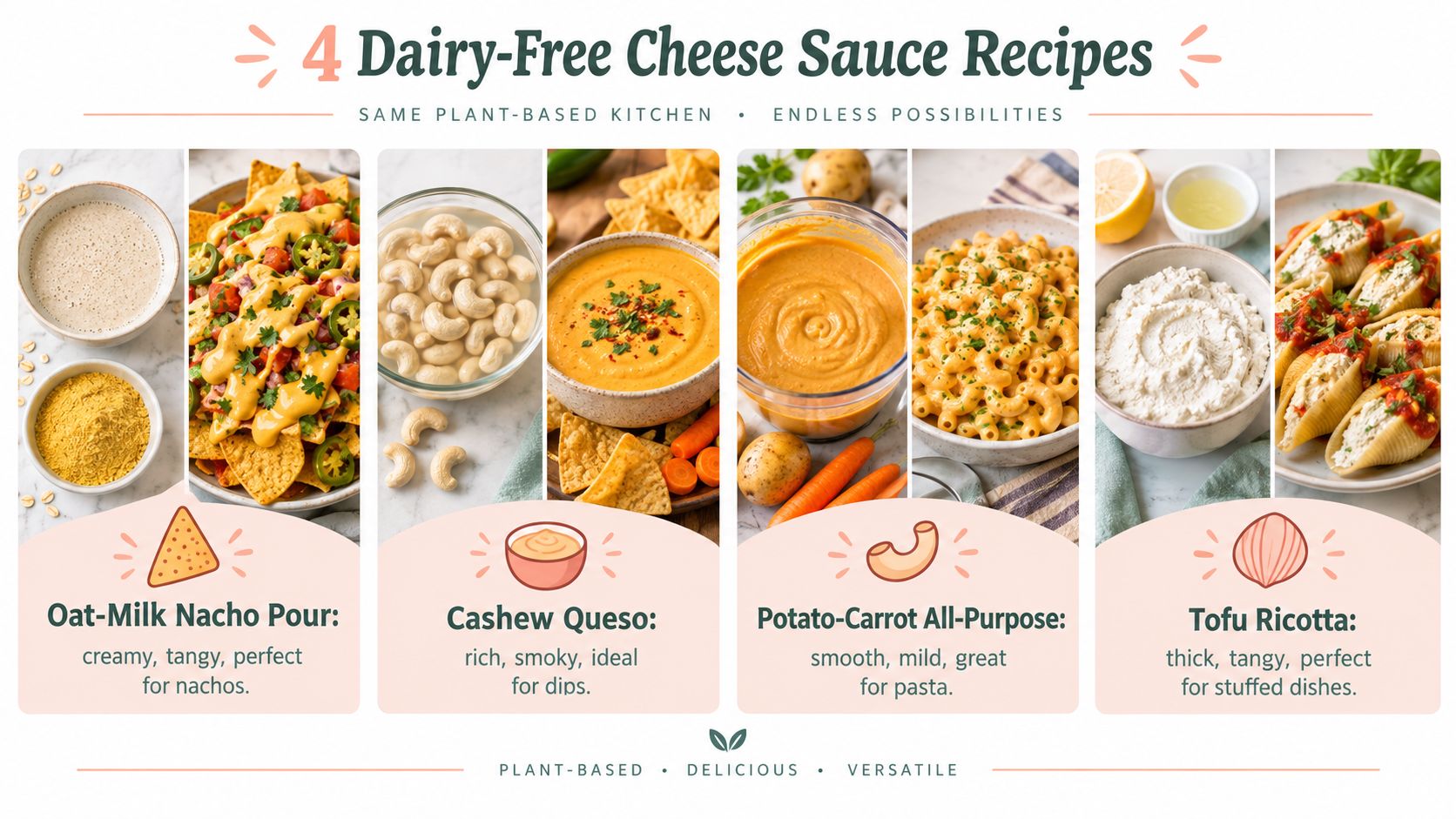
The easiest way to think about these is by dish. Each base was chosen because it behaves well in a specific cooking moment, not because it sounds clever on paper.
Oat milk for the nacho pour
Start with rolled oats, nutritional yeast, Dijon and a little smoked paprika, then blend with hot stock until the mixture loosens into a pourable sauce. It should stay fluid enough to coat tortilla chips without clumping as it hits the table.
This base works when you want something quick, savoury and mellow. It's the one that feels most like a concession to convenience, except it still needs proper blending so the oat particles disappear. For a pantry shortcut with a creamier texture, a plant-based cooking cream can also help in other dishes, and Saporia's soya-based cooking cream is the sort of ingredient people reach for when they want a smoother finish without dairy.
Cashew and potato for oven-stable mac and cheese
Soaked cashews, cooked potato, miso and turmeric make a sauce that clings to pasta and holds up under baking. The potato keeps it from becoming heavy, while the cashew gives that rich, rounded feeling people often want from a mac and cheese.
This is the version to make when dinner has to come out of the oven looking intact. Keep the heat moderate and don't let it boil hard once it's blended, because that's when the fat starts behaving badly.
Silken soy for fondue and dipping
Use silken tofu blended with cornstarch, white wine and garlic, then whisk it gently in a pan over a bain-marie. The result should be glossy enough to coat a bread cube, but still soft enough to dip repeatedly.
If you want an ingredient that behaves cleanly under warm holding, clearspring silken tofu suits this style well. It's a good match for fondue-style serving because the tofu gives body without the same split risk as a high-fat nut base.
Potato and carrot for gratins
Steam potatoes and carrots until tender, then blend with almond milk and a little Dijon until smooth. Thin it just enough to pour over cauliflower florets or sliced veg before baking.
This one is the most adaptable for family meals. It's mild, naturally thick, and useful when you want the sauce to disappear into the dish rather than dominate it.
Seven Dishes That Show the Sauce Off
Quick weeknight plates
Loaded nachos are the fastest win. Use the oat base, spoon it hot over chips, then finish with grated smoked vegan cheese for extra depth. The main danger is letting the sauce sit too long off the heat, where it starts to stiffen before it reaches the plate.
A broccoli and cheese rice bowl needs a looser version of the same oat sauce. Stir it through steamed broccoli and hot rice, and keep a splash of stock nearby so it stays glossy. The point of failure here is adding the sauce too early and letting it dry out in the pan.
A speedy quesadilla dip works best with the soy or oat base, reheated gently and served straight from the fridge with a whisk and a little extra liquid. It's the easiest place to notice whether the sauce has split, because cold storage exposes any weak emulsion fast.
Weekend bakes
For mac and cheese, use the cashew base and bake it until the top catches in spots, then add a crisp panko crown. The sauce can fail if you push the oven too hard and dry the edges before the middle has settled.
Cauliflower cheese gratin suits the potato-carrot sauce because it coats the florets without feeling heavy. The common mistake is over-thinning, which leaves the dish watery under the crust.
Lasagne is where the soy base earns respect. It replaces béchamel cleanly if you keep it thick enough before layering, because a loose sauce will seep and split the pasta sheets rather than sitting between them.
Party centrepiece
A vegan cheese fondue works best with the soy base held in a small slow cooker and stirred every ten minutes. Serve it with bread, roast veg and apple cubes, and keep the heat low so it stays dip-able rather than bubbling away into glue.
If the dish needs holding time, lower the heat before the guests arrive. A sauce that looks perfect at the stove can fail on the table if it keeps boiling.
For finishing touches, a little smoked vegan cheese grated over baked dishes gives more savoury lift. It's the kind of detail that makes the sauce feel intentional rather than just functional.
Why Dairy Free Cheese Sauce Splits and How to Fix It
Read the texture before you panic
Graininess usually means the starch didn't cook out fully, or the blender left tiny flecks behind. The fix is simple, simmer it a little longer, or pass it through a fine sieve if you want a smoother finish right away.
Splitting is different. That usually happens with richer nut-based sauces when they meet direct boiling, because the fat separates before the emulsion has properly settled. Temper the sauce, then hold it over a bain-marie and whisk until it comes back together.
Thin sauce often means there wasn't enough thickener, or the veg released more water than expected. Reduce it in a wider pan, or whisk in a small cornstarch slurry so the liquid can tighten up without turning stodgy.
Bland flavour is the one people misread most often. It usually means the savoury layer was skipped, so the sauce tastes flat even if the texture is fine.
Fix flavour at the right moment
Add miso, Dijon, a little pickle brine or a squeeze of lemon after the sauce has thickened and off the heat. Acid sharpens the flavour, but if it goes in too early it can work against the sauce's structure.
If you need a useful holding reference for warm service, the practical advice in these food warmer notes is worth reading because it reinforces the same basic principle, keep the temperature steady and avoid letting the sauce sit in a hard boil.
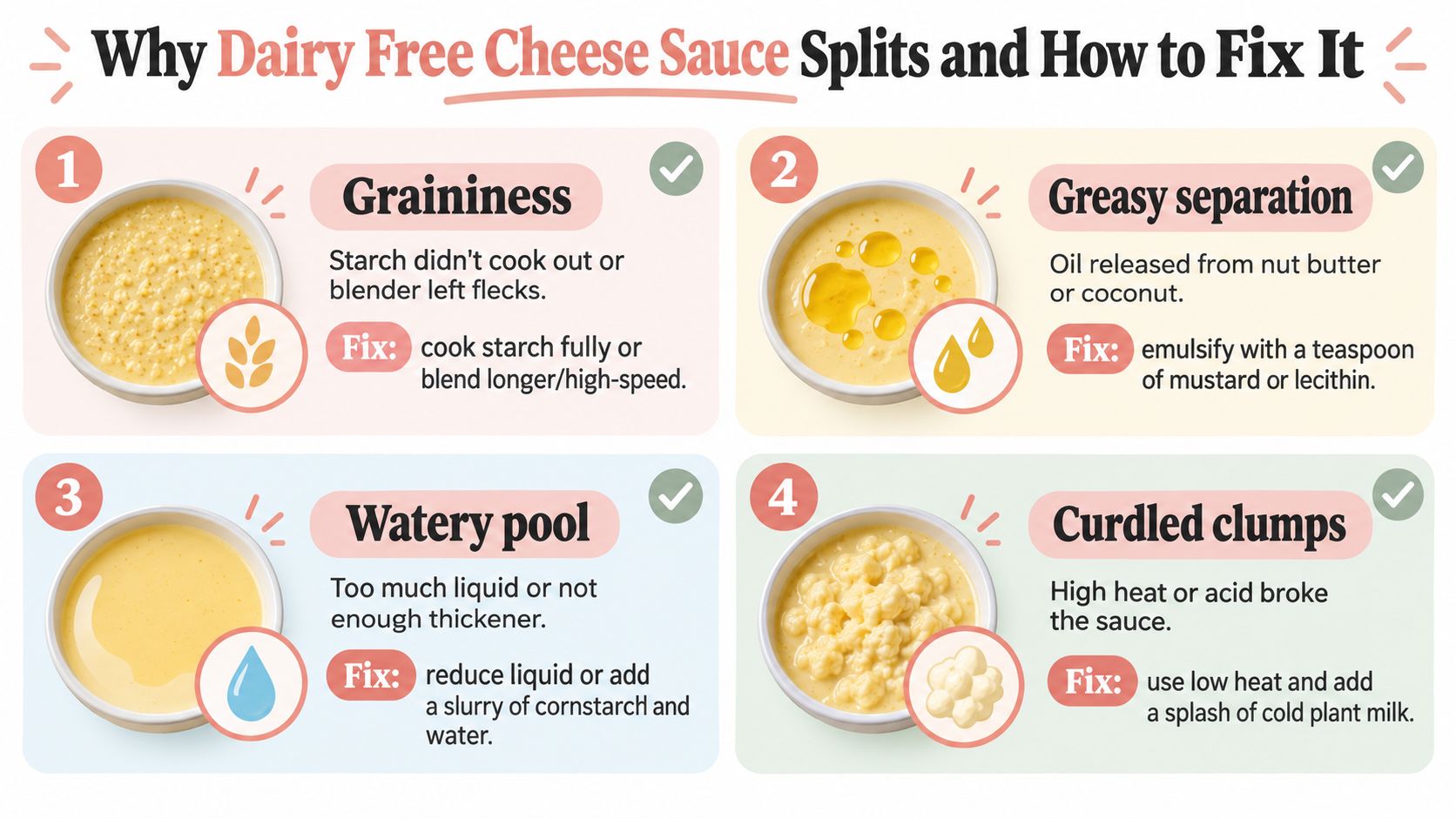
A quick checklist helps when you're in a rush:
- Grainy finish: cook the starch longer or blend harder.
- Greasy separation: switch to gentler heat and whisk over a bain-marie.
- Watery texture: reduce the liquid or add more slurry.
- Curdled clumps: lower the heat and add acid only at the end.
High heat is the common enemy here. Once the sauce is stable, keep it warm, not boiling.
Storing, Reheating and Pairing Your Sauce
Keep it smooth in the fridge and freezer
Most of these sauces keep well for a few days in the fridge in a sealed container, but the container matters. Use something airtight and shallow enough that the top doesn't skin over, because skinning is usually the first sign the sauce has been left too exposed.
The cashew and soy versions are the safest candidates for freezing, while the oat and potato-carrot sauces are more likely to change texture on thawing. If you do freeze a sauce, thaw it slowly in the fridge, then bring it back with a whisk and a little extra plant milk.
Reheat with restraint
On the hob, use low heat and stir often. A splash of plant milk or stock helps restore the gloss, and the whisk is doing the work here, not the heat.
In the microwave, warm in short bursts and stir between each round. If you rush it, the edges overheat before the centre loosens, which is how a smooth sauce turns lumpy and dull.
For batch cooking, portion into meal-sized tubs if you know it'll be used for pasta, or smaller jars if it's going to become a dip. That way you only reheat what you need, and the rest stays stable.
Serve it with things that need contrast
This sauce gets better when you serve it alongside texture. Drizzle it over roasted cauliflower, stir it through pasta, spoon it onto grain bowls, or set it out as a warm dip with crudités and crusty bread.
Saporia's artisan vegan cheeses and deli accompaniments fit naturally at that point, especially when you want a plate that looks considered rather than plain. Crumble a smoked block over mac and cheese, tuck shaved slices into a grilled sandwich, or add crackers, chutneys and olives when you're turning sauce into a grazing board moment.
For a fuller kitchen setup, browse Saporia for vegan cheese, deli-style accompaniments and cooking-friendly plant-based staples that pair neatly with the sauces in this guide. If you want dinner to feel organised without feeling complicated, start with the base that matches your dish, then build the rest of the plate around it.
If you're ready to cook this properly, browse Saporia's vegan cheese, sauces and deli accompaniments for the ingredients that suit your next tray bake, fondue or pasta night. The right dairy free cheese sauce gets easier once you've got a base that behaves, and Saporia is a handy place to build that into a full plant-based meal.