

How to Cook Tofu: A Simple Guide for Perfect Results
You've got a block of tofu in the fridge, a dinner to make, and a nagging suspicion that it'll turn out bland, rubbery, or both. The fix is usually not more effort, it's choosing the right tofu, preparing it properly, and cooking it with enough heat to build flavour instead of steam.
Table of Contents
- Choosing the Right Tofu for Your Cooking Goal
- Pressing, Slicing and Marinating Tofu
- Pan-Frying, Baking and Grilling Techniques
- Quick Tofu Recipes for Weeknight Meals
- Serving Tofu with UK Vegan Deli Favourites
- Troubleshooting Common Tofu Problems
Choosing the Right Tofu for Your Cooking Goal
A block of tofu only behaves well if you match it to the job. In a UK kitchen, that starts with the format, silken, firm, extra-firm and super-firm. Each one gives a different result, and using the wrong one is usually what leads to soggy edges or a broken pan.
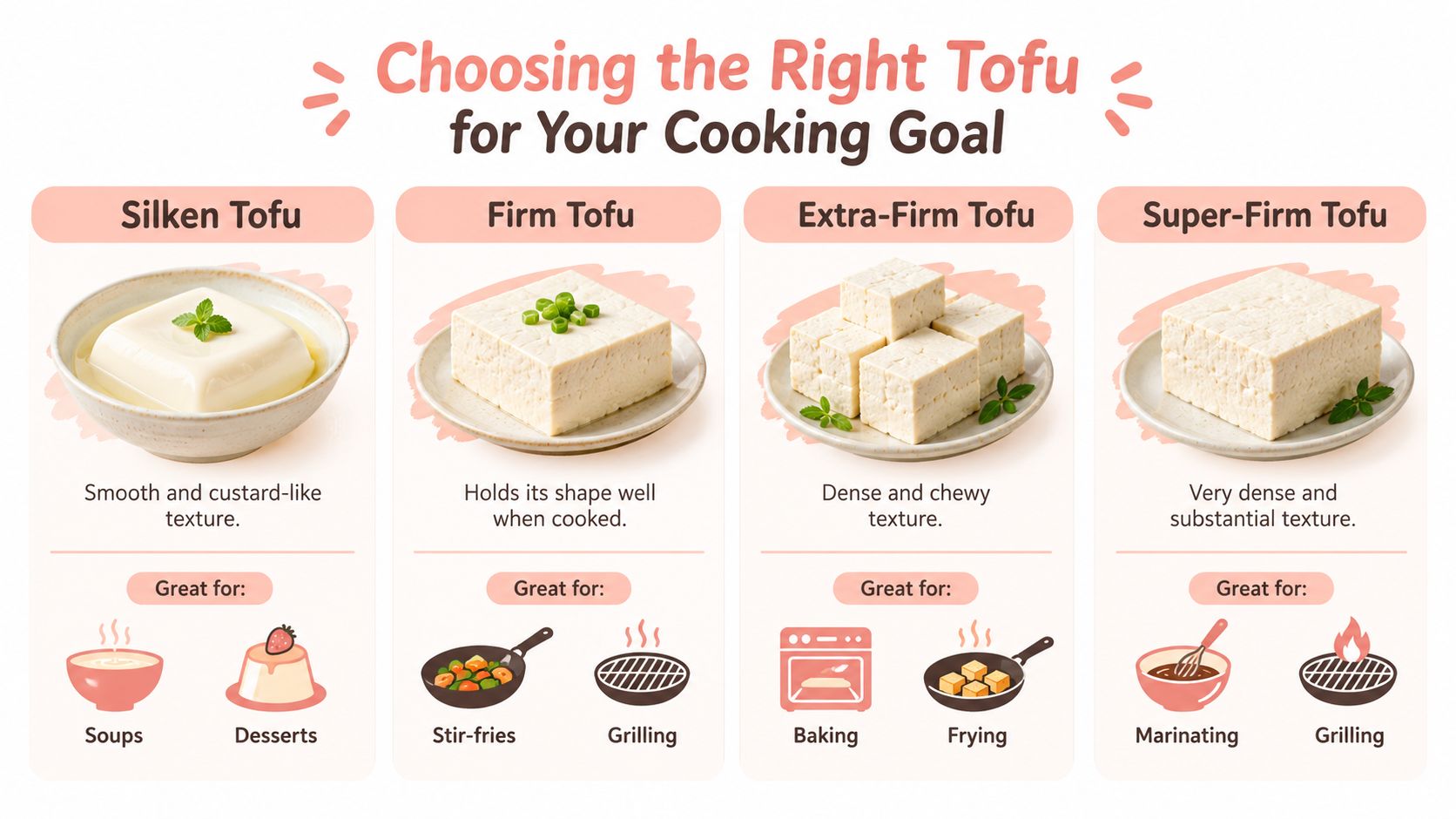
Silken tofu is soft and custard-like, so it suits blended sauces, soups and desserts. Firm tofu keeps enough structure for stir-frying, barbecuing and grilling. Extra-firm gives a denser bite for baking and frying, while super-firm is the safest pick when you want neat cubes that hold up under high heat.
| Tofu Type | Texture | Best Methods | Approx Protein per 100g |
|---|---|---|---|
| Silken | Very soft, smooth | Blending, soups, desserts | Varies by brand |
| Firm | Holds shape, tender | Stir-frying, barbecuing, grilling | Varies by brand |
| Extra-firm | Dense, chewy | Baking, frying | About 16 g in one UK retailer listing (UK tofu product data) |
| Super-firm | Very dense | Marinating, grilling, crisping | About 9.8 g in one UK supermarket listing (UK tofu product data) |
Practical rule: move up the firmness scale when you want a crisper edge and cleaner shape in the pan. Softer tofu asks for gentler handling, firmer tofu stands up better to direct heat.
That simple choice saves a lot of disappointment. If you want a plain block that takes seasoning well at home, the current plain organic tofu range is a useful place to start, especially when you plan to marinate, fry or bake it for later serving with crackers, vegan cheese or deli-style sides.
Pressing, Slicing and Marinating Tofu
Moisture is the main reason tofu turns disappointing. If you cook it straight from the pack, the surface can soften before it browns, and the pan ends up doing the work of a steamer. A better workflow is simple, press, slice, season, then cook.
Cauldron Foods recommends pressing tofu for 10 to 20 minutes, and longer pressing gives a firmer result. That short wait changes the final texture more than many expect. If you want a block that takes on flavour and browns cleanly, start there rather than reaching for more oil or more sauce.
Best habit: press only as long as the tofu needs, then cut it into even pieces so every cube cooks at the same pace.
For most weekday dishes, even pieces matter more than fancy knife work. A reliable guide is roughly 2 cm pieces for consistent cooking, especially if you plan to bake or fry them. Marinating works best after pressing, because the block has more room to absorb flavour instead of sitting slick on the outside.
The timing matters too. One UK guide recommends marinating for at least 30 minutes, ideally overnight. That doesn't mean every meal needs a long soak, but it does mean tofu tastes better when the seasoning has time to sink in. A light coating of cornflour can help if you want a crisper shell, because it gives the surface something dry to brown against.
Food safety sits alongside texture here. Tofu should be heated so the centre reaches 70°C for 2 minutes, or an equivalent safe time-temperature combination. If you're working with a marinated block, keep the marinade clean and reserve any extra sauce for the end rather than reusing anything that's touched raw tofu.
For a ready-to-cook option that fits this workflow, browse the marinated tofu range.
Pan-Frying, Baking and Grilling Techniques
A good tofu finish comes from controlled heat. Give the surface time to brown, keep the pieces spaced out, and let each method do its own job. Pan-frying gives the quickest crust, baking suits bigger batches, and grilling adds colour fast if the tofu is firm enough to hold together.
A dependable pan-frying method is to add 1 tablespoon of vegetable oil to a frying pan over medium-high heat, then cook the tofu in a single layer. Turn the pieces every 1 to 2 minutes for about 15 minutes in total until they are crisp and evenly browned. Crowding the pan works against you, because trapped moisture softens the surface before it has a chance to set.
Baking is steadier and easier for larger trayfuls. A practical oven method is 200°C, with 2 cm by 10 cm pieces taking around 20 minutes. That size guide matters. Thinner pieces dry out sooner, while thicker ones need longer to colour through. Grilling works well for firmer tofu too, with 2 to 3 minutes per side giving a useful char without much fuss.
| Method | Temperature | Time | Crispness Level |
|---|---|---|---|
| Pan-frying | Medium-high heat | About 15 minutes total | High |
| Baking | 200°C | Around 20 minutes for 2 cm by 10 cm pieces | Medium to high |
| Grilling | High heat | 2 to 3 minutes per side | Medium |
| Air-frying | 180°C | 5 minutes per side | High |
For oil choice, check this oil and smoke-point resource and match the oil to the heat you plan to use. The practical rule is simple, use an oil that suits the cooking temperature, then leave the tofu alone long enough for the surface to colour.
Air-frying also works well for firmer tofu on busy evenings. A UK source recommends 180°C for 5 minutes per side, while another suggests frying for about 10 minutes. I'd use the firmer end of the tofu range for both, then add sauce at the end so the coating stays crisp.
For a deeper savoury note without extra work, try the smoked tofu option.
Quick Tofu Recipes for Weeknight Meals
A good weeknight tofu recipe should be repeatable, not fussy. The base formula is always the same, then the flavour changes with the sauce and the cooking method. Once you know that, tofu stops feeling like a substitute and starts behaving like a proper ingredient.
For a soy and ginger stir-fry, press and cube firm tofu, then pan-fry it until golden before tossing it with soy, grated ginger, garlic and greens. Keep the sauce light at first, because a heavy pour too early can undo the crisp edge you've worked for. This is the version I reach for when the fridge is full of odds and ends.
For oven-baked smoky paprika cubes, use extra-firm tofu, marinate it briefly, then bake at 200°C until the edges darken. A dusting of cornflour gives you a drier surface and a better crust. Serve it with rice, roasted veg or a sharp dip if you want contrast.
A vegan scramble needs a softer touch. Crumble firm tofu into a pan, add turmeric, nutritional yeast and black pepper, then cook just long enough for the liquid to evaporate. The aim isn't a dry fry-up. It's a tender, savoury mix that takes seasoning well and works with toast or a wrap.
For a barbecue-style tofu, use firm or super-firm slices, grill or bake them first, then glaze lightly at the end with a sweet and tangy sauce. That late glaze matters, because sugar-heavy sauces can burn if they hit the heat too soon. If you want a fuller plate, serve this with crunchy salad and something pickled.
The quickest route to better tofu is to cook the block for the meal, not the recipe card. Once you match texture to method, the rest gets easier.
Serving Tofu with UK Vegan Deli Favourites
Cooked tofu is at its best when it's part of a meal with contrast. Crispy tofu wants something creamy, tangy or salty next to it, because that's what keeps a plate from tasting flat. In a UK kitchen, the easiest upgrades are the familiar deli-style ones.
A simple supper can become a proper spread with plant-based crackers, a spoonful of chutney or pickle, and a few slices of artisan vegan cheese on the side. Firm tofu cubes bring the savoury base, while a creamy spread or a soft cheese gives you richness. If you like a cheeseboard style plate, add olives, nuts and a sharp preserve so every bite has a different texture.
For lunch, crumbled super-firm tofu works well on crackers with a soft spread and a little cracked pepper. It's a good use for leftovers because the texture stays interesting even when the tofu is cold. I also like it in a lunchbox with pickles and a handful of mixed nuts, since the salty and crunchy elements keep it from feeling dull.
A tofu meal doesn't need to stay separate from the rest of your vegan pantry either. It sits naturally alongside cheese bundles, meat-free items and the kinds of accompaniments that make quick food feel considered. If you're building a fridge for easy meals, browse the vegan cheese range and look at cheese bundles for the same kind of mix-and-match logic that makes tofu plates work.
The point is simple. Once tofu is browned properly, you can treat it like a centrepiece, not a compromise.
Troubleshooting Common Tofu Problems
Rubbery tofu usually means one of two things, not enough moisture was removed, or the tofu didn't cook long enough to brown properly. If the block still feels wet before it hits the pan, press it longer next time. If the outside browns but the centre stays bland and soft, give it a little more time over heat.
Bland tofu is nearly always a flavour issue rather than a tofu issue. It needs either a longer marinade, stronger seasoning, or a finishing sauce added at the end. Salt, acid and savoury notes matter here. If the seasoning only sits on the surface for a minute, it won't do much.
Sticking happens when the pan isn't hot enough or the tofu is moved too soon. Let the oil heat, lay the pieces down in a single layer, then leave them alone long enough for the crust to form. Once they release cleanly, turn them. If you keep nudging them, they'll tear before they brown.
Sogginess usually comes from one of three mistakes, too much sauce, too many pieces in the pan, or adding liquid before the tofu is ready. Keep the sauce for the end, cook in batches if needed, and keep the heat high enough that the surface can dry and colour. The same rule protects the texture whether you're pan-frying, baking or grilling.
Food-safety reminder: tofu should reach 70°C at the centre for 2 minutes, so the goal is not just colour, it's proper heating too.
Once you understand those fixes, tofu gets much less temperamental. The texture improves, the flavour lands better, and the block starts doing exactly what you want it to do.
If you want to build better tofu meals without starting from scratch every time, browse Saporia for vegan cheeses, crackers, chutneys and deli favourites that pair naturally with crispy tofu. It's an easy way to turn a simple tofu supper into something more complete, more varied and more satisfying.