

Lactose Free Feta: Your Practical Buying and Serving Guide
You're standing in a UK cheese aisle with a salad planned for dinner, comparing packs marked low lactose, lactose free and vegan. They may all promise a salty, tangy crumble, but they don't mean the same thing, and choosing the right one depends on your tolerance, your dietary boundaries and how you want to serve it.
Traditional feta is generally a low-lactose dairy cheese, not a lactose-free food. A reformulated dairy option may use lactase to break down lactose, while a vegan feta-style cheese removes dairy altogether. This guide will help you read the wording, compare the three routes and choose a feta style that works on salads, in warm dishes or on a plant-based cheeseboard.
Table of Contents
- Finding the Right Lactose Free Feta for You
- What Makes a Feta Lactose Free or Low Lactose
- Low Lactose, Lactose Free and Vegan Feta Compared
- Reading UK Feta Labels with Confidence
- Serving and Pairing Feta Without the Worry
- Exploring Vegan Feta-Style Options with Saporia
- Bringing It All Together on Your Next Cheeseboard
Finding the Right Lactose Free Feta for You
Start with the reason you're avoiding lactose. You might be managing occasional digestive sensitivity, following professional dietary advice, or choosing a completely plant-based and dairy-free diet. Those situations can lead to different answers, even when the shopping question looks identical.
Traditional feta is made with sheep's, goat's or mixed milk. During cheesemaking, some lactose leaves with the whey and some is fermented, so feta is often easier for some lactose-intolerant people to tolerate than a fresh, soft dairy cheese. UK NHS-style guidance places feta at about 1.4g of lactose per 100g, within a low-lactose category of up to 2g per 100g, but that doesn't make ordinary feta lactose free. See the UK NHS dietary advice on avoiding lactose for the underlying comparison.
Begin with your personal boundary
Use these questions before you focus on the front-of-pack wording:
- Are small amounts sometimes manageable? A low-lactose dairy feta might fit, depending on your own tolerance and any guidance you've received.
- Do you need lactose kept as close to zero as possible? Look for an explicit lactose-free claim and check the product's stated value rather than assuming every feta is equivalent.
- Are you avoiding all dairy? Choose a vegan feta-style product, because lactose-free dairy still contains milk proteins and remains a dairy food.
Think of the three options as different ways to reach a similar eating experience. Low-lactose feta keeps the traditional dairy format, lactose-free dairy feta changes how the milk sugar is handled, and vegan feta-style cheese changes the base ingredients entirely.
Practical rule: Choose by the strictest part of your diet first, then choose by flavour and texture.
Read the ingredients, allergen statement and serving guidance before you buy. A product may be suitable for a salad but too soft for baking, or pleasantly crumbly on a board but less convincing once heated. Your best match is the one that satisfies both your dietary needs and the dish in front of you.
What Makes a Feta Lactose Free or Low Lactose
Lactose is the natural sugar in milk. Cheese doesn't retain all the lactose found in its starting milk because the curds separate from the whey during production. A simple analogy is a glass of milky tea: the milk contains the sugar, but cheesemaking divides the liquid into parts, and much of the lactose travels away with the whey.
Starter cultures can ferment some of the remaining lactose, while draining, pressing and ageing influence how much stays in the finished cheese. That's why traditional feta is commonly described as low lactose rather than lactose free. Its salty, assertive flavour doesn't tell you its lactose level, and you shouldn't use taste as a test of tolerance.
The UK numbers need careful reading
UK hospital guidance lists feta at approximately 1.4g lactose per 100g, while lactose-free cheese is listed separately at under 0.1g per 100g in the same style of dietary table. This distinction is explained in UK guidance on lactose-containing foods, and it shows why ordinary feta shouldn't automatically be placed in the lactose-free category.
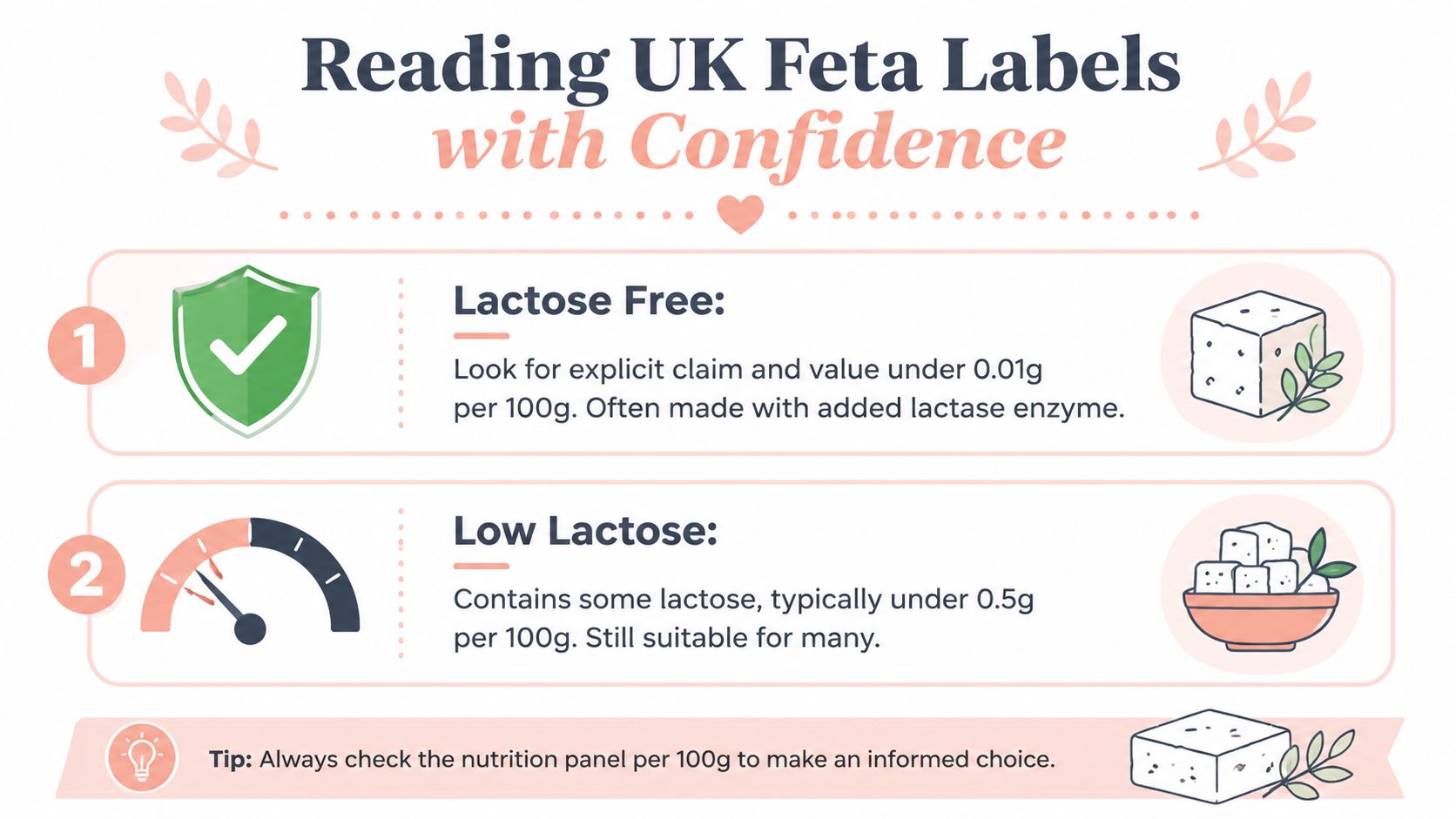
UK retail wording can be stricter still. Products labelled lactose free are commonly described as containing less than 0.03% lactose, equivalent to under 0.03g per 100g, and a listing for a lactose-free soft cheese gives that figure while describing the product as easier to digest for people who may be lactose intolerant. The relevant product information is discussed in this UK explanation of lactose-free feta.
The UK Food Standards Agency also says there are currently no EU-wide rules governing claims that indicate the absence or reduction of lactose, so manufacturers may use their own thresholds. Read the Food Standards Agency guidance on lactose claims alongside the pack, rather than treating every lactose-free badge as identical.
Three production routes
A dairy feta made lactose free usually has lactase added during production. The enzyme breaks lactose into simpler sugars, allowing the finished product to retain a dairy base while reducing the lactose that causes difficulty for some people.
A vegan feta-style cheese takes a different path. It contains no milk, so it contains no dairy lactose. Producers may use plant oils, nuts, tofu, starches, cultures and flavourings to create a creamy, tangy or crumbly result, but the recipe varies from one product to another.
That difference matters. Lactose free does not automatically mean dairy free, and vegan does not mean every recipe has the same texture or allergen profile. Check the full ingredient list and allergen panel before deciding.
Low Lactose, Lactose Free and Vegan Feta Compared
The three choices can look similar on a plate but behave differently in your kitchen. Low-lactose dairy feta offers the familiar salty, crumbly character of traditional cheese. Lactose-free dairy feta keeps a dairy base while using lactase to address the lactose content. Vegan feta-style cheese avoids dairy completely and can suit vegan and dairy-free diets, although its texture may range from firm and crumbly to soft and spreadable.
| Product type | Main ingredients and lactose approach | Taste and texture | Tolerance and dietary fit | UK availability |
|---|---|---|---|---|
| Low-lactose dairy feta | Sheep's, goat's or mixed milk, with some lactose remaining | Salty, tangy and crumbly | May suit some people who tolerate small amounts, but isn't suitable for every lactose-avoidance requirement | Traditional dairy feta is widely encountered |
| Lactose-free dairy feta | Dairy milk with lactase used to break down lactose | Often aims for a recognisable feta character | Designed for shoppers seeking very low lactose, but still contains dairy unless the label says otherwise | Reformulated products can be more specialised |
| Vegan feta-style cheese | Plant ingredients with no dairy milk | May be crumbly, creamy, firm or spreadable | Suitable for vegan and dairy-free diets, subject to the ingredient and allergen declaration | Specialist chilled or frozen options vary |
A useful example of the third route is Violife Greek White 200g, a plant-based Greek-style option rather than conventional dairy feta. If you're planning a meal around this kind of ingredient, easy dairy free recipes can provide broader inspiration for adapting familiar dishes.
Match the format to the dish
For a salad, you may want a clean crumble that holds its shape beside cucumber, tomato and olives. For pastry or a tray bake, a firmer plant-based block may be easier to slice, while a softer dairy crumble can melt or soften more quickly when heated. On a cheeseboard, salinity and texture matter as much as the lactose claim, because the cheese needs to balance fruit, crunch and something sweet or sharp.
Availability can also affect your choice. Traditional feta is a familiar UK retail item, while reformulated lactose-free dairy products and specialist vegan feta-style cheeses may appear through different chilled or frozen ranges. Check storage instructions before planning an occasion.
Reading UK Feta Labels with Confidence
Front-of-pack wording gives you a starting point, not the full answer. The phrase lactose free should be supported by a clear product claim and a stated lactose value where available. UK retail practice often describes lactose-free products as containing less than 0.03%, or under 0.03g per 100g, but the Food Standards Agency notes that the UK position isn't fully standardised, so products should be assessed individually.
A low lactose or reduced lactose statement means some lactose may remain. Industry coverage describes reduced-lactose claims under EU-style rules as requiring at least a 30% reduction compared with a comparable product, while current reporting says lactose-free claims are expected to sit below detection limits. Read the explanation of these differences in UK, EU and US lactose-free labelling coverage.
Use this quick pack scan
- Find the allergen panel. Look for milk if you're avoiding dairy, not just lactose.
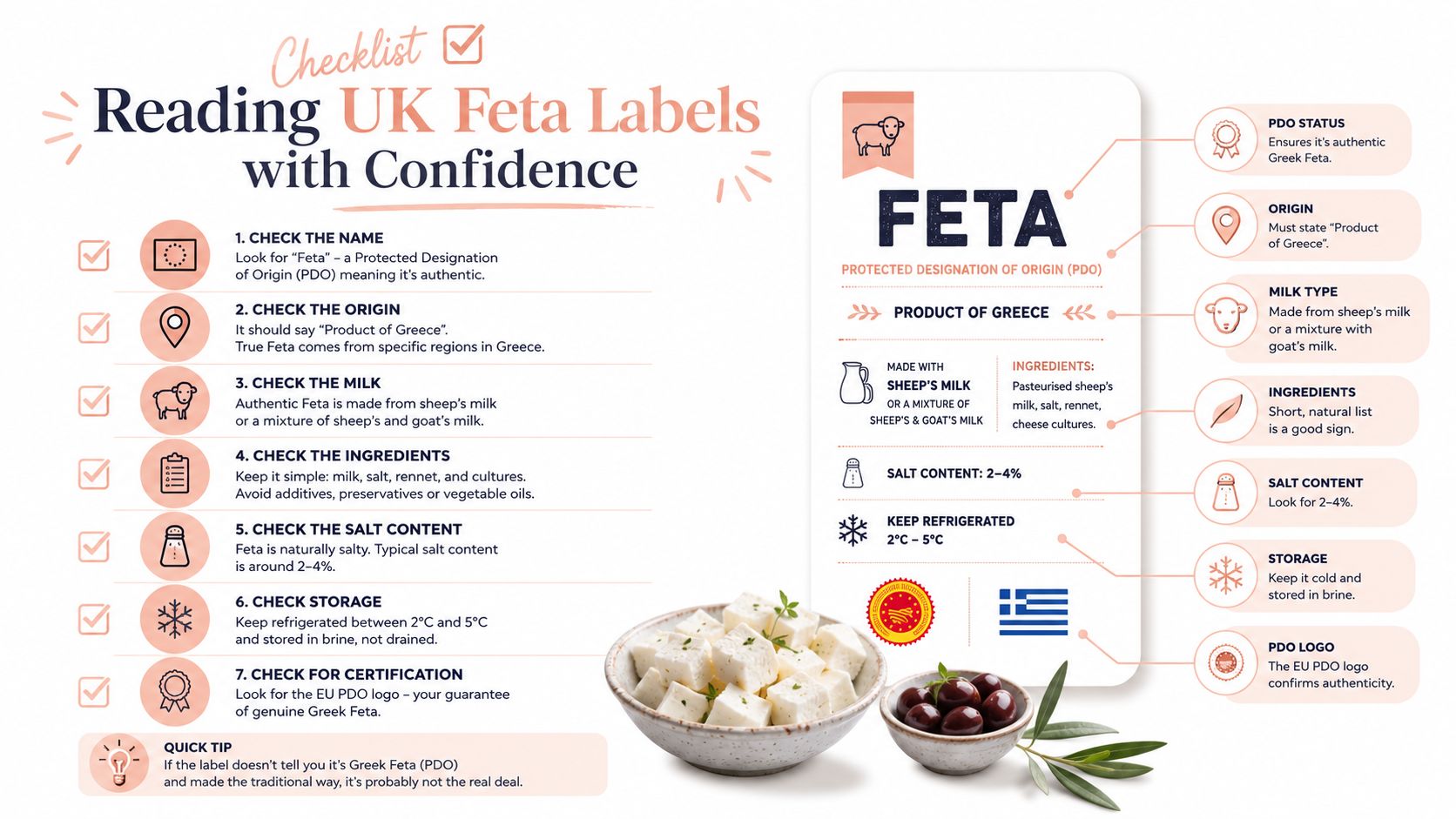
- Read the ingredient list. Dairy feta will identify milk from the relevant animal source. Vegan feta-style recipes may list coconut oil, almond, cashew, tofu, starches, cultures or flavourings.
- Check the exact claim. “Low lactose”, “reduced lactose” and “lactose free” describe different positions and shouldn't be treated as interchangeable.
- Look for vegan identification. A vegan trademark or “suitable for vegans” statement can help, but the ingredient list remains important.
- Note salt and storage. Brined feta styles can be salty, and chilled or frozen storage affects how you plan and serve them.
Feta also has a distinctive legal and historical identity in the UK. The Cheese and Cream Regulations 1995 specifically name Feta alongside Provolone, Pecorino and Romano and restrict the enzymes that may be used in making it, reflecting its protected traditional character in the UK legal framework. Plant-based products therefore commonly use terms such as feta-style or Greek-style, rather than presenting themselves as conventional feta.
For a quick plant-based meal where a crumbly topping could add contrast, 3-Bean & Lentil Chilli 280g combines red kidney beans, black beans, cannellini beans and green lentils, with cumin and smoked paprika. It can be eaten on its own or served over rice, baked potatoes or nachos.
Serving and Pairing Feta Without the Worry
Once you've checked the label, treat the feta style according to its texture. A product that crumbles cleanly is ideal for finishing a salad, while a soft spreadable style may work better under roasted vegetables or alongside crisp crackers. If you're serving guests with different dietary needs, keep the vegan option separate from dairy foods and use a clean knife for each.
Fresh plates
Try a Greek-style combination of tomato, cucumber and olives, then add a generous crumble, olive oil and lemon. Watermelon and mint create a sweeter, cooler contrast, while roasted beetroot and walnuts bring earthiness and crunch. A vegan feta-style cheese can provide the salty counterpoint in each of these combinations, even when its texture differs from dairy feta.
For lunch, crumble it over grains with roasted vegetables, herbs and a sharp dressing. A small amount of chilli oil or pepper relish can give a milder plant-based cheese more lift without hiding its tang.
Warm dishes
Firm blocks often hold their shape more successfully in a hot dish, while softer crumbles may melt or soften faster. Test a small amount before committing a whole pack to pastry, particularly if you're trying a new style.
Good uses include:
- Phyllo parcels: Combine feta-style pieces with spinach, herbs and seasoning, then fold into crisp pastry.
- Tray bakes: Add pieces among roasted peppers, courgettes, tomatoes and chickpeas.
- Flatbreads: Finish with warm vegetables, fresh herbs and a little lemon after baking.
- Omelettes: Use the dairy-free option in a plant-based omelette or fold it through a tofu-based filling.
For a board, add figs or grapes, walnuts, seeded crackers, olives and pickles. A tangy beetroot or pepper relish gives the cheese a bright edge, while agave can provide a plant-based sweet note where honey would traditionally be used.
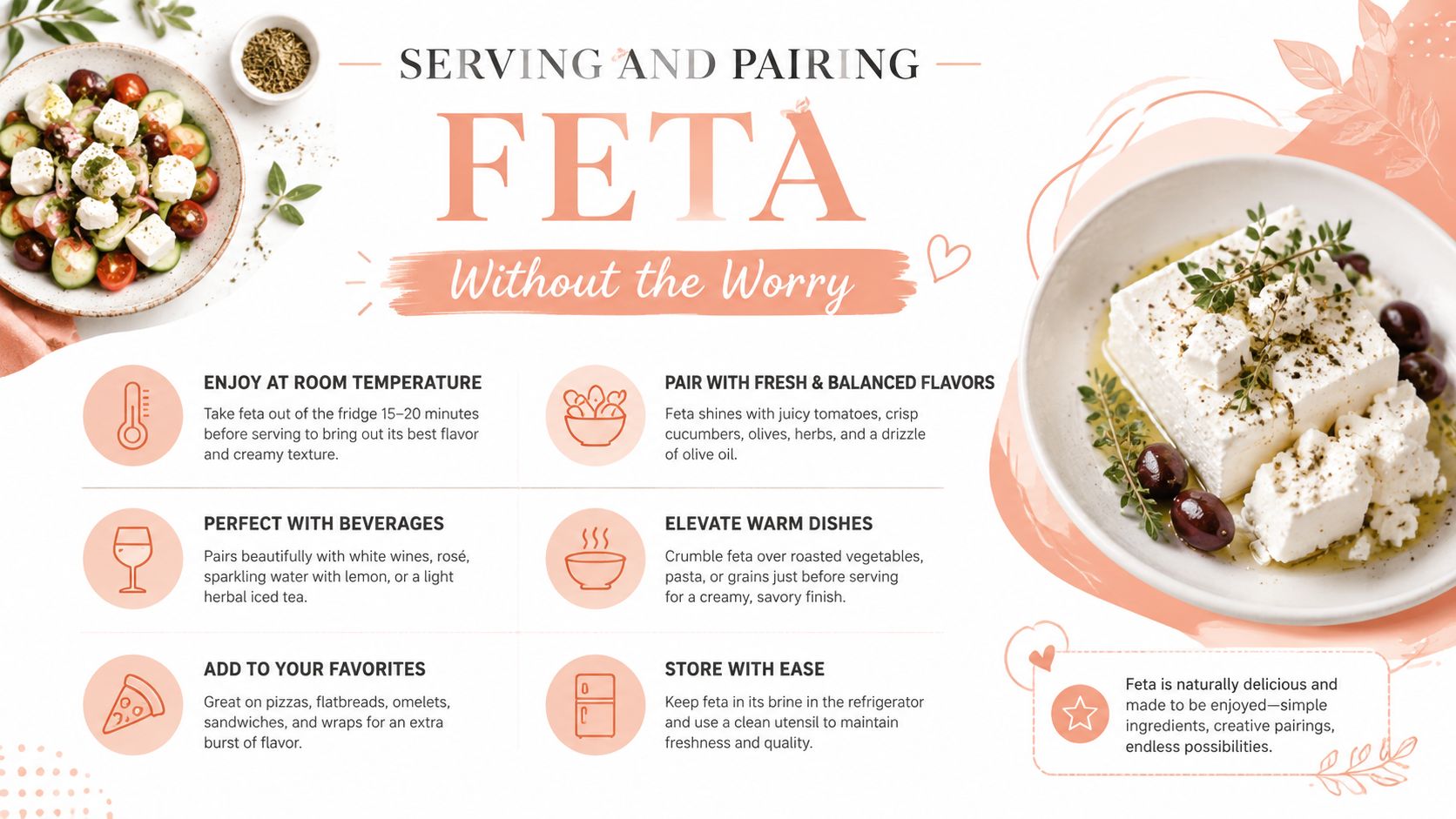
Serve drinks according to the occasion. A crisp white, dry rosé or sparkling water with lemon can cut through salt and richness. For a no-alcohol table, this guide to non-alcoholic wine offers a useful starting point for choosing a bottle-style pairing.
Keep opened cheese according to its own packaging instructions. Chilled vegan products may firm up or soften as they come to serving temperature, so allow a little time before judging the final texture.
Exploring Vegan Feta-Style Options with Saporia
A shopper who wants a fully dairy-free feta experience often needs more than a single substitute. They need a cheese for salads, a different texture for baking, something attractive for a board and accompaniments that make the whole spread feel intentional.
Saporia is a UK-based vegan cheesemonger and deli with an online marketplace and in-person tasting experiences. Its range brings together plant-based cheeses alongside crackers, chutneys, spreads, olives, pickles and other deli items, so you can build a meal or board without treating the cheese as an isolated replacement.
Explore by the occasion
For everyday cooking, an individual block or tub gives you a straightforward option for salads, flatbreads and grain bowls. A mixed cheese bundle lets you compare styles in one order, which is useful when you're still learning whether you prefer a firm crumble, a creamy texture or a sharper cultured flavour.
A cheeseboard or gift needs a little more structure. Pair a feta-style cheese with crackers, a chutney, olives and something fresh such as grapes or figs. Seasonal selections and gift-focused sets can make that planning easier, while gift cards offer a flexible route when you're choosing for someone else.
One practical way to explore a single style is Fetamorphosis. Read the product details for its current ingredients, allergens, storage and delivery information, then compare those details with other plant-based options rather than assuming all vegan feta-style cheeses behave alike.
Taste texture before you settle
Plant-based recipes may use coconut oil, almonds, cashews, tofu, starches or cultured ingredients. Those bases can create noticeably different results, from a clean crumble to a soft, creamy centre. Saporia's product information and tasting experiences can help you consider tang, salinity and texture before building a larger order.
Browse the current vegan feta-style selection when you want a focused starting point. If you're entertaining, explore cheese bundles with crackers and accompaniments. For more guided discovery, look into Saporia's in-person tastings and check the current UK delivery and allergen information before booking or ordering.
Bringing It All Together on Your Next Cheeseboard
The choice becomes much simpler once you separate tolerance from dietary identity. Low-lactose dairy feta may work for someone who can manage small amounts of lactose. Reformulated lactose-free dairy feta is designed for a stricter lactose boundary, but it remains dairy. Vegan feta-style cheese avoids dairy altogether and is the clearest route for a fully plant-based or dairy-free board.
Then match the texture to the occasion. Use a clean crumble for salads, a firmer block for baking and a cheese with enough character to sit beside fruit, crackers, chutney and olives on a board. Before serving, check the ingredient list, allergen statement and storage guidance, especially when cooking for other people.
For more ideas on balancing crunch, salt and creaminess, these cheese and cracker pairings offer useful inspiration. A sweet accompaniment such as organic quince fruit for cheese can add a gentle contrast to a salty feta-style centre.
Great flavour and comfortable eating don't have to compete. Once you know what the label means, you can choose the format that fits your body, your values and the plate you're preparing.
Browse Saporia for curated vegan cheeses, feta-style options, cheese bundles, crackers and chutneys to build a dairy-free board with confidence. Choose a few textures, add a sweet or sharp accompaniment, and make your next salad, picnic or gathering completely your own.