

Vegan Biscuits UK Guide to Ingredients Pairings and Brands
You're standing in the biscuit aisle, looking for something that's vegan, genuinely enjoyable and suitable for everyone at the table. The front of the packet says “plant-based”, but the small print may still raise questions about milk traces, wheat, nuts or unfamiliar emulsifiers.
This guide to vegan biscuits in the UK will help you choose with confidence. You'll learn how the category has grown, how to read labels, where different styles are sold, which biscuits work with plant-based cheeses, and how to make simple versions at home.
Table of Contents
- Introduction and UK market overview
- Ingredients labelling tips for vegan biscuits
- Top UK vegan biscuit brands and buying options
- Allergy and gluten-free biscuit options
- Best biscuits for cheeseboards with plant-based cheeses
- Storage serving and gifting ideas for vegan biscuits
- Simple DIY vegan biscuit recipes
- Conclusion and next steps
Introduction and UK market overview
At a UK tea table, one biscuit may be passed around, paired with a plant-based cheese, or packed for an allergy-aware guest. That everyday scene explains why vegan biscuits in the UK require more than a “plant-based” label. Shoppers may want a familiar digestive-style crunch, a chocolate coating, or an oat biscuit while checking dairy, egg, wheat, gluten and nut information.
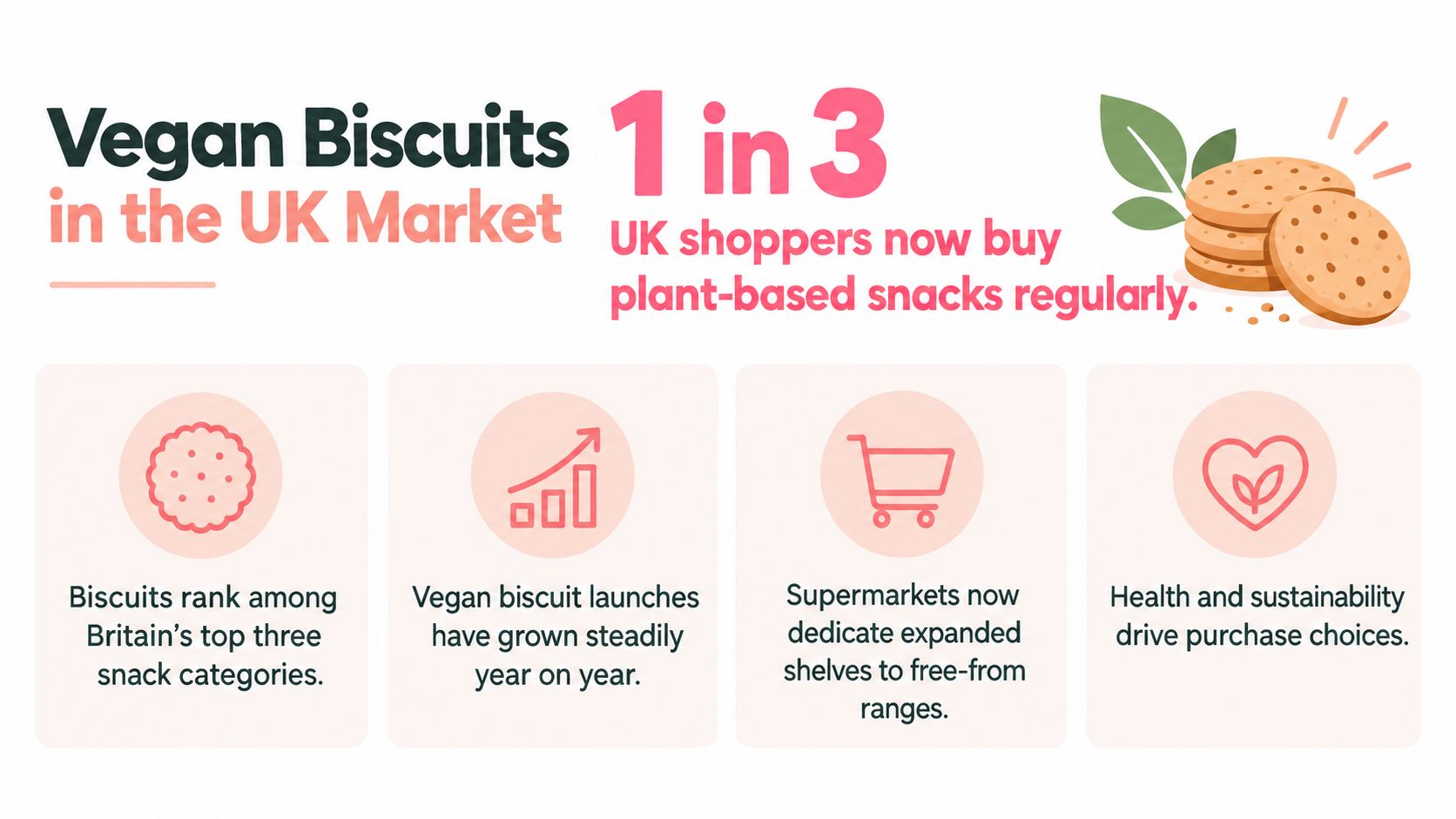
The category sits inside a large, established market. Biscuits are easy to store and serve, and 99.2% of UK households purchased biscuits in 2024, while category value grew by 2.7%, according to The industry estimate. It values the UK biscuit market at £4.2 billion, helping explain why plant-based choices are appearing in everyday shops rather than only specialist retailers.
Forecasts for the wider biscuit market also point to continued scale, although they cover biscuits generally rather than vegan products. Within that market, vegan versions now include digestives, oat biscuits, cookies, wafers and chocolate-coated treats. The range gives shoppers more ways to match a biscuit with a dietary need, texture preference or occasion.
Why the category is expanding
A UK bakery-industry report citing Innova data recorded 43% growth in cookies and biscuits launches, alongside more than 170 products marked “suitable for vegan” over the previous three years. The bakery report presents this as sustained recipe development.
More choice also makes careful comparison worthwhile. Plant-based fats and oat-based ingredients can affect crispness, richness and snap, so the packet's ingredient list matters as much as its front label. Allergen checks, texture, sweetness and pairing suitability will shape a confident choice, especially for a plant-based cheeseboard.
Ingredients labelling tips for vegan biscuits
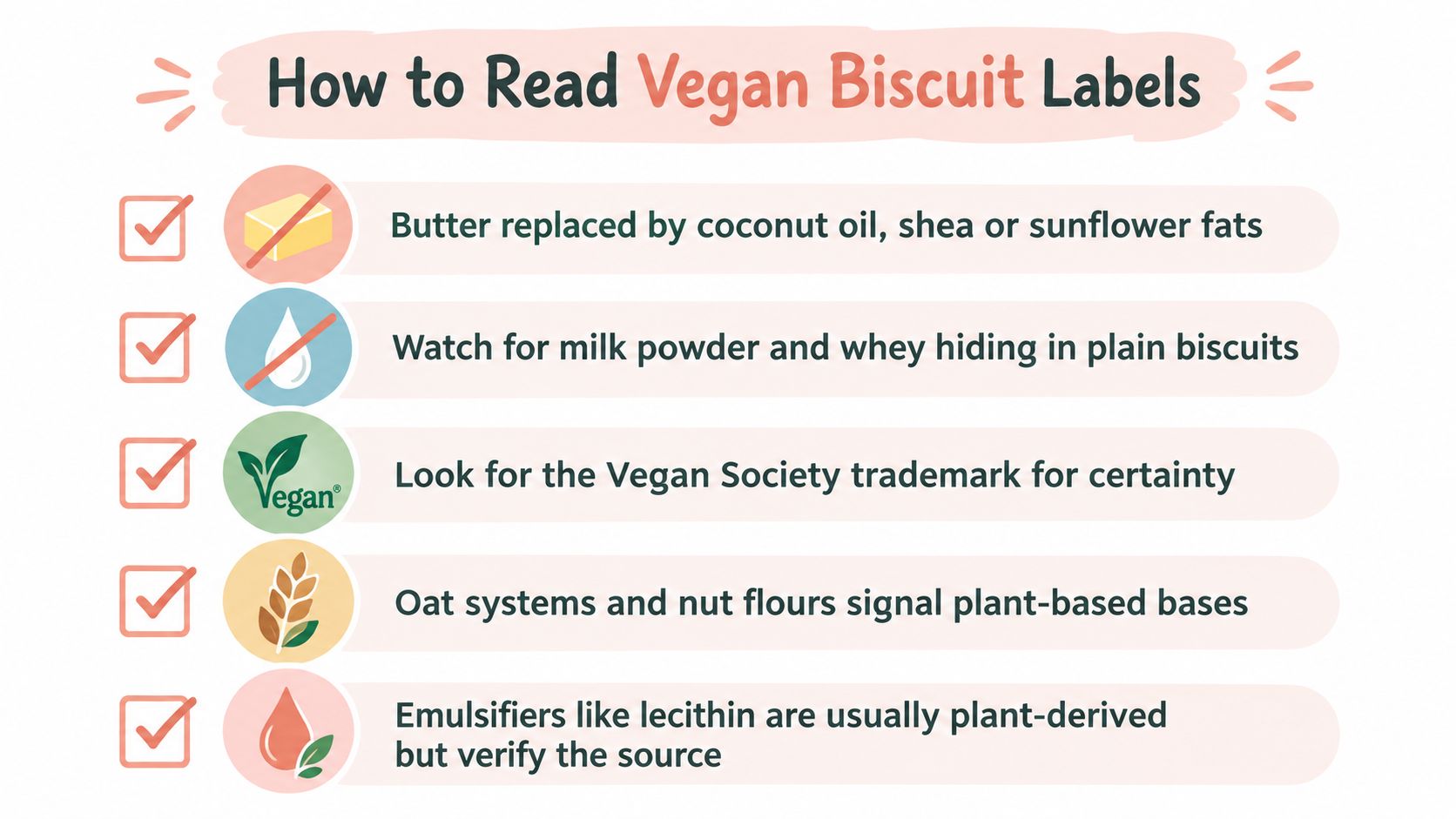
A vegan biscuit usually replaces butter, milk powder and other dairy ingredients with a plant-based combination of fats, grains, fibres and flavourings. Oats, nut flours, vegetable fats and plant-based emulsifiers can all help create structure, tenderness or crunch, but the exact formula varies widely between products.
The safest approach is to treat the packet like a short checklist rather than relying on one word on the front.
Start with the vegan claim
In the UK, there's no legal definition of vegan food. A product labelled vegan must still be accurate and must not mislead shoppers, but the claim means that ingredients of animal origin weren't intentionally used. It doesn't guarantee the absence of animal-derived cross-contamination. The UK Government's labelling guidance explains why the vegan claim should be understood as a suitability statement, not an automatic safety guarantee.
Look for a clear vegan statement or a recognised certification mark, then read the ingredients and allergen information as well. Certification can provide additional reassurance, but it shouldn't replace checking the current packet, especially if your needs are connected to an allergy or hypersensitivity.
Scan for less obvious ingredients
Milk can appear in an ingredient list as milk powder, whey, lactose, casein or milk protein. These terms are particularly easy to miss in filled, coated or chocolate-style biscuits, where the biscuit itself may look plant-based but the topping or cream centre isn't.
Emulsifiers need attention too. Ingredients such as E471 can come from plant or animal sources unless the manufacturer specifies the origin. Lecithin is commonly plant-derived, but a current label is still the right place to confirm suitability.
Practical rule: Read the ingredients list, the bold allergen panel and the precautionary statement together. None of these areas tells the whole story on its own.
Understand “may contain”
A “may contain milk” statement doesn't necessarily mean milk is an intentional ingredient. It indicates that the manufacturer considers accidental cross-contact possible during production. That distinction matters for a committed vegan shopper, and it matters even more for someone who needs to avoid milk for medical reasons.
For everyday plant-based choices, a clear vegan label may be sufficient for your circumstances. If you have a severe allergy, always follow professional medical advice and the manufacturer's current guidance rather than assuming that vegan means allergen-free.
Top UK vegan biscuit brands and buying options
The UK shopping experience now covers several types of vegan biscuit seller. Mainstream supermarkets tend to offer familiar everyday formats, while specialist shops and online delis often focus on unusual flavours, artisan production and giftable presentation.
A supermarket free-from aisle may be the easiest place to start if you want a plain biscuit for tea, lunchboxes or baking bases. Look for digestives, bourbons, oat biscuits, shortbread-style rounds and chocolate biscuits, but check every packet because recipes and manufacturing arrangements can change.
Choosing by shopping channel
In-store shopping gives you the advantage of checking the current allergen panel before buying. It's also useful when you want to compare texture clues, packet size and storage information side by side. Online shopping offers a wider view of specialist ranges, especially when you're searching for seeded biscuits, wafers, small-batch flavours or biscuits intended for entertaining.
Cookies and biscuits launches grew 43% year-on-year, according to Innova data cited by a UK grocery analysis, and more than 170 products were marked suitable for vegan over the previous three years. The category analysis shows why shoppers can now find more than basic sandwich biscuits.
Match the biscuit to the occasion
For a simple cup of tea, a crisp digestive-style biscuit or an oat biscuit gives you a familiar, sturdy bite. For a present, look for a more distinctive flavour, attractive packaging or a biscuit that can sit comfortably alongside preserves and plant-based cheese.
A caramel-filled wafer-style biscuit can add a lighter, sweeter note to a dessert plate or coffee break. For a specialist option, you can browse a caramel stroopwafel-style biscuit and check the current product information before ordering.
If you're buying online, read the full description rather than selecting only from a search filter. Filters can narrow the range, but the product page and packet remain the best places to confirm ingredients, allergens, storage and serving suggestions.
Allergy and gluten-free biscuit options
Vegan and gluten-free are different claims. A vegan biscuit avoids intentionally used animal-derived ingredients, while a gluten-free biscuit must meet the relevant gluten-free requirements. One label doesn't automatically provide the other.
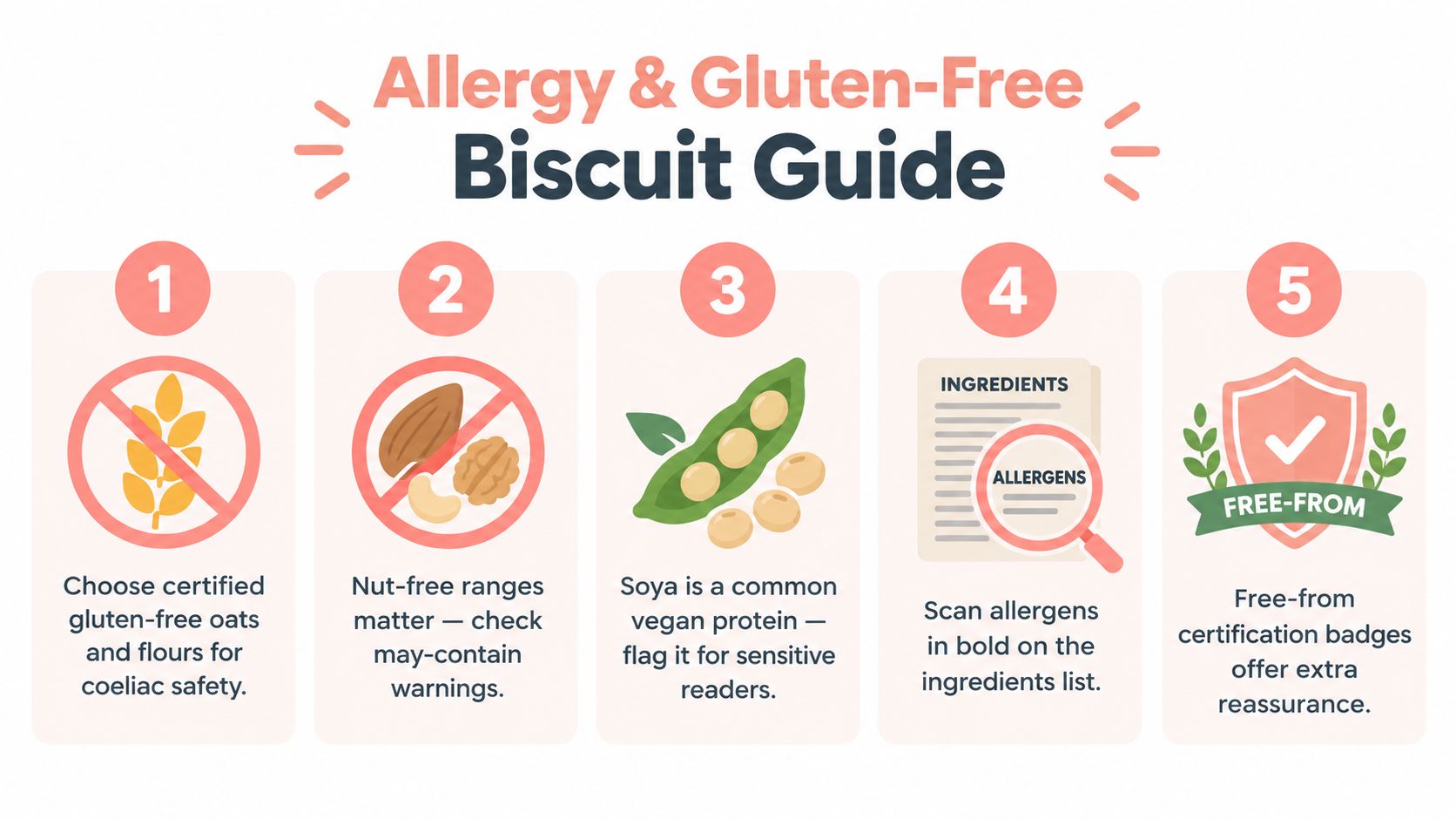
That distinction is especially important for shoppers with coeliac disease, wheat allergy, nut allergy or sensitivity to soya. A biscuit can be free from dairy and eggs while still containing wheat flour, oats that aren't suitable for your needs, nuts or soya lecithin.
Use a three-part check
The Food Standards Agency advises people with food hypersensitivities to check both “free from” statements and precautionary allergen labelling before buying vegan foods. Its consumer guidance is particularly relevant to biscuits because milk cross-contact can remain a consideration even where milk isn't an intentional ingredient.
Use this sequence:
- Confirm the dietary claim: Look for vegan and gluten-free wording if you need both.
- Read the bold allergens: Check for wheat, gluten-containing cereals, nuts, peanuts, soya and milk.
- Check precautionary wording: Treat “may contain” advice as relevant to your personal level of risk.
Oat biscuits deserve particular care. Oats may be naturally free from wheat, but they can be exposed to gluten-containing cereals during growing, transport or manufacturing. Choose products with clear suitability information if you need strict gluten avoidance.
Find ideas without skipping the label check
A recipe can be useful when you want control over flour, fat and flavour. For a home-baking starting point, this gluten-free cookie recipe offers a way to explore a biscuit format while reminding you to verify every ingredient and shared-equipment warning for your own dietary requirements.
For a ready-made option, see the gluten-free seeded oatcake listing, then review its latest product details before serving it to anyone with a diagnosed allergy or coeliac disease. “Free from” should always be matched to the specific condition you're managing.
Best biscuits for cheeseboards with plant-based cheeses
A cheeseboard biscuit is more than a vehicle for cheese. It controls the first texture, adds seasoning and can either support or overwhelm delicate flavours. The strongest boards use contrast, pairing a crisp or neutral biscuit with a creamy cheese, then introducing seeds, fruit, spice or sweetness elsewhere.
Plant-based biscuits are well suited to this setting because shoppers often associate them with a natural and healthy profile. UK consumer research found that 48% of consumers perceived plant-based biscuits as more natural and 45% as healthier than conventional versions, while 47% reported buying plant-based food weekly. The bakery source reporting these findings helps explain why biscuits now appear naturally in plant-based entertaining.
Build around texture first
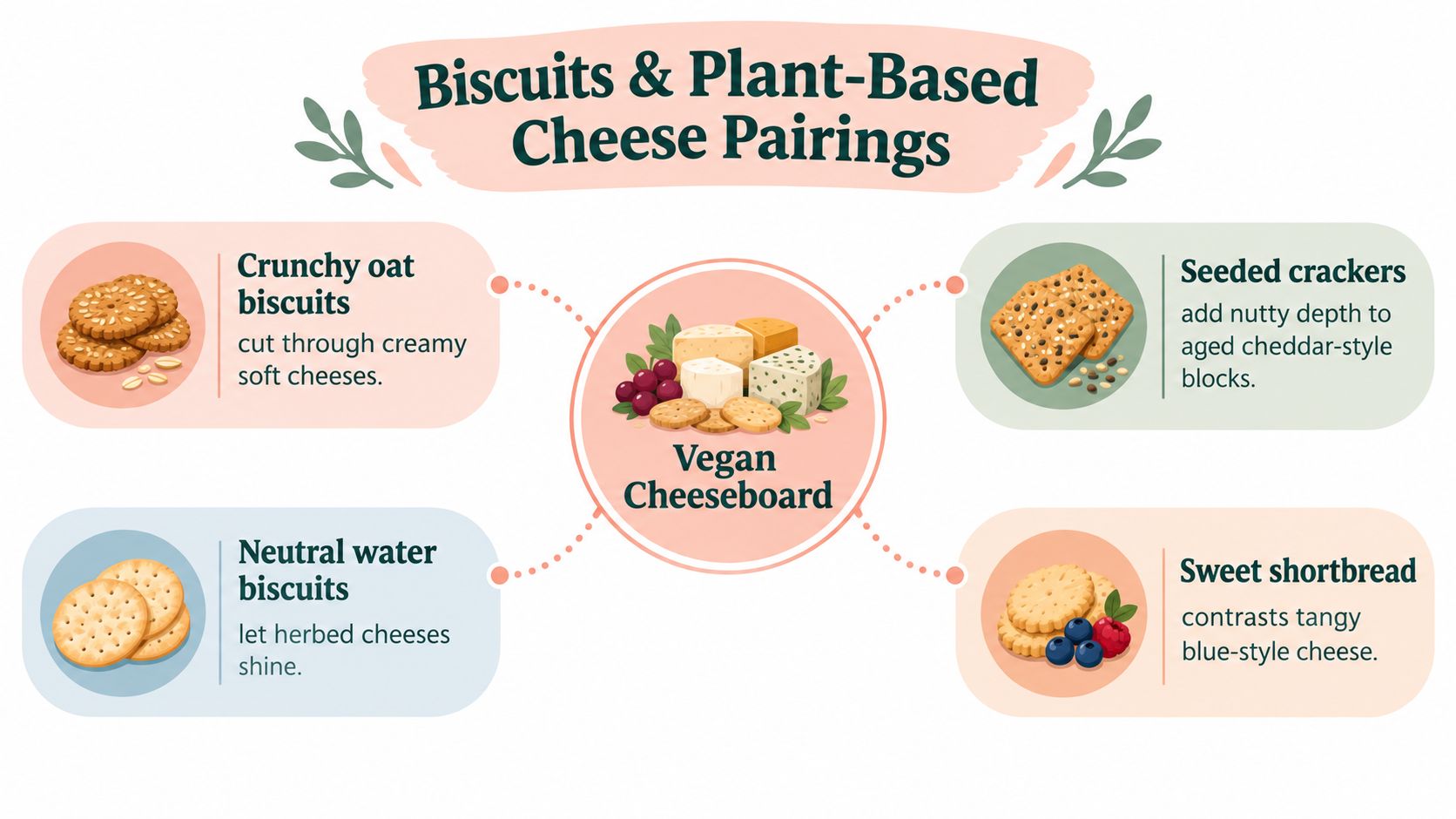
A creamy, soft cheese needs a biscuit with enough crunch to create contrast. An oatcake with a firm snap works particularly well because its toasted grain character supports the richness without adding too much sweetness. Mini original oatcakes are the sort of compact, practical format that suits individual servings and informal boards.
For an aged cheddar-style plant-based cheese, choose a seeded cracker or biscuit with a savoury, nutty edge. Seeds add texture and depth, while the cheese provides the rounder, fuller note. Keep the spread simple so neither element disappears.
Neutral water biscuits are useful with herbed or fresh cheeses. Their restrained flavour lets garlic, herbs, pepper and citrus notes come forward. They're also a good choice when you're serving several cheeses and want a dependable base between stronger tastes.
Add sweetness with intention
A lightly sweet biscuit can make a tangy blue-style plant-based cheese feel more balanced. Shortbread-style biscuits, fruit biscuits or a biscuit with gentle spice can soften the sharper impression without requiring a heavy chutney.
Use a simple pairing template:
- Soft and creamy: Choose crunchy oat biscuits, then add fresh fruit or a sharp pickle.
- Aged and savoury: Choose seeded crackers and finish with chutney.
- Herbed and delicate: Choose neutral biscuits with olives or lightly dressed vegetables.
- Tangy and bold: Choose a sweet biscuit, then add a small amount of fruit preserve.
Serve biscuits in separate groups rather than scattering every style across the board. That makes the pairings easier to understand and helps guests notice how the same plant-based cheese changes with a different base.
Storage serving and gifting ideas for vegan biscuits
Good storage protects the quality you paid for. Crisp biscuits absorb moisture quickly, while filled or chocolate-coated varieties can soften or pick up nearby aromas. Keep unopened packets according to the manufacturer's instructions, then transfer leftovers to a clean airtight container once opened.
Keep the texture at its best
Store crisp biscuits away from steam, direct sunlight and strongly scented foods. A sealed tin or container works well for dry biscuits, but let freshly baked biscuits cool fully before closing the lid. Warm biscuits release moisture into the container, which can leave the surface soft.
Filled biscuits need more care. If the filling is perishable, follow the packet's storage instructions and refrigerate where advised. Bring chilled biscuits out briefly before serving if you want their flavour and texture to open up, but don't leave them at room temperature beyond the stated guidance.
For homemade biscuits, separate soft and crisp styles. Store them in different containers, because the moisture from a softer cookie can reduce the crunch of an oatcake or plain biscuit.
Serve with shape and contrast
A small platter can look generous without becoming complicated. Place sturdy savoury biscuits near plant-based cheeses, keep sweeter biscuits beside fruit or chocolate, and add small bowls for chutney, olives and pickles. A few crumbs are easier to manage when each style has its own serving area.
For gifting, combine a biscuit selection with a cheese bundle, a jar of chutney or a dairy-free chocolate treat. A themed package could focus on afternoon tea, a picnic, a festive gathering or a first plant-based cheeseboard. Choose items with compatible storage requirements so the recipient can enjoy everything without rushing.
If you're preparing gifts for sale or a larger event, this guide to how to package cookies for sale offers useful general ideas for wrapping, presentation and protecting biscuits during handling. For personal gifts, recyclable boxes, tissue paper and a handwritten pairing note can make the presentation feel thoughtful without overcomplicating it.
Simple DIY vegan biscuit recipes
Homemade biscuits give you control over sweetness, flour choice and flavour. The three formulas below use common plant-based swaps and avoid specialist equipment. Before baking for someone with an allergy, check every ingredient and your kitchen's cross-contact risks.
Digestive-style biscuits
Ingredients
- Plain flour, with a little wholemeal flour if you want a deeper grain flavour
- Oat flour or finely blended oats
- Caster sugar
- Baking powder
- A pinch of salt
- Dairy-free block butter or a firm plant-based baking fat
- A small splash of unsweetened plant drink
Method
Combine the dry ingredients first. Rub in the dairy-free fat until the mixture resembles fine crumbs, then add just enough plant drink to form a firm dough. Chill the dough until it feels easy to roll, then roll it thinly, cut rounds and place them on a lined baking tray.
Bake in a moderate oven until the edges are lightly golden. Leave the biscuits on the tray briefly, then move them to a rack to cool completely. They'll firm as they cool, so don't judge the final texture while they're still warm.
Chocolate-chip biscuits
Use plain flour, soft brown sugar, baking powder, salt, dairy-free butter, vanilla and vegan chocolate chips. Mix the fat and sugar until smooth, stir in the dry ingredients, then fold through the chocolate chips without overworking the dough.
Scoop the dough into even portions and leave space between them on the tray. Bake until the edges look set while the centres still seem slightly soft. If the dough spreads too much, chill it before baking. If it stays crumbly, add plant drink a teaspoon at a time until it holds together.
Spiced oat cookies
Stir together rolled oats, flour, sugar, cinnamon, ground ginger, baking powder and salt. Add dairy-free butter and enough plant drink to create a spoonable mixture, then fold in raisins or chopped dried fruit if desired.
Place rough spoonfuls on a lined tray and flatten them lightly. Bake until the surface looks dry and the edges are golden. Put the tray in the centre of the oven for more even heat, and allow the cookies to cool before storing.
Baking adjustment: If biscuits are pale and soft after cooling, return them to a low oven briefly. If they're hard, the dough was probably too dry or the bake was too long.
Conclusion and next steps
Choosing vegan biscuits in the UK becomes much easier once you separate the questions. First, check whether the product is vegan. Then check gluten, nuts, soya and precautionary allergen statements according to your needs. Finally, choose the biscuit by occasion, whether that means a dependable tea-time option, a crunchy cheeseboard base, a gift or a homemade bake.
Texture makes the biggest difference when you're pairing biscuits with plant-based cheese. Crisp oat biscuits suit creamy styles, seeded crackers support aged flavours, neutral biscuits let herbs shine and sweeter biscuits can balance tangy profiles. Good storage then keeps each choice tasting the way it should.
For entertaining or gifting, browse a curated selection of vegan biscuits, plant-based cheeses, crackers, chutneys, spreads and bundles in one place. You can also build a board around the flavours you already enjoy, then add one unfamiliar biscuit to make the tasting more interesting.
Visit Saporia to explore vegan biscuits, plant-based cheeses and deli accompaniments for everyday treats, cheeseboards and gifts. Browse the current range, create a pairing that suits your occasion and discover new arrivals for your next plant-based gathering.