

Vegan Chocolate UK: The Complete Guide to Buying and Pairing
Vegan chocolate in the UK isn't automatically safe for people with milk allergies because shared production lines can create a cross-contact risk. At the same time, 46% of Britons aged 16–75 are considering reducing their consumption of animal products, making vegan chocolate an inclusive treat rather than a niche substitute.
You might be choosing a gift for someone who avoids dairy, putting together a dessert board for friends, or just looking for a chocolate bar that everyone at the table can enjoy. The label says “vegan”, so the decision seems straightforward, until you notice “may contain milk” beneath the ingredients.
That small detail explains why buying vegan chocolate UK shoppers can trust involves more than checking for a leaf symbol. You need to understand the difference between vegan ingredients, allergen controls, cocoa composition, flavour style and the way chocolate works alongside other plant-based foods.
This guide will help you make those decisions with confidence, whether you're shopping for yourself, entertaining guests or building a thoughtful vegan food gift.
Table of Contents
- Understanding Vegan Chocolate in the UK Market
- How to Read Chocolate Labels and Spot Allergens
- Navigating UK Chocolate Composition and Regulations
- Exploring Artisan Vegan Chocolate Brands and Styles
- Perfect Pairings with Plant-Based Cheeses
- Gifting and Shopping for Vegan Chocolate in the UK
Understanding Vegan Chocolate in the UK Market
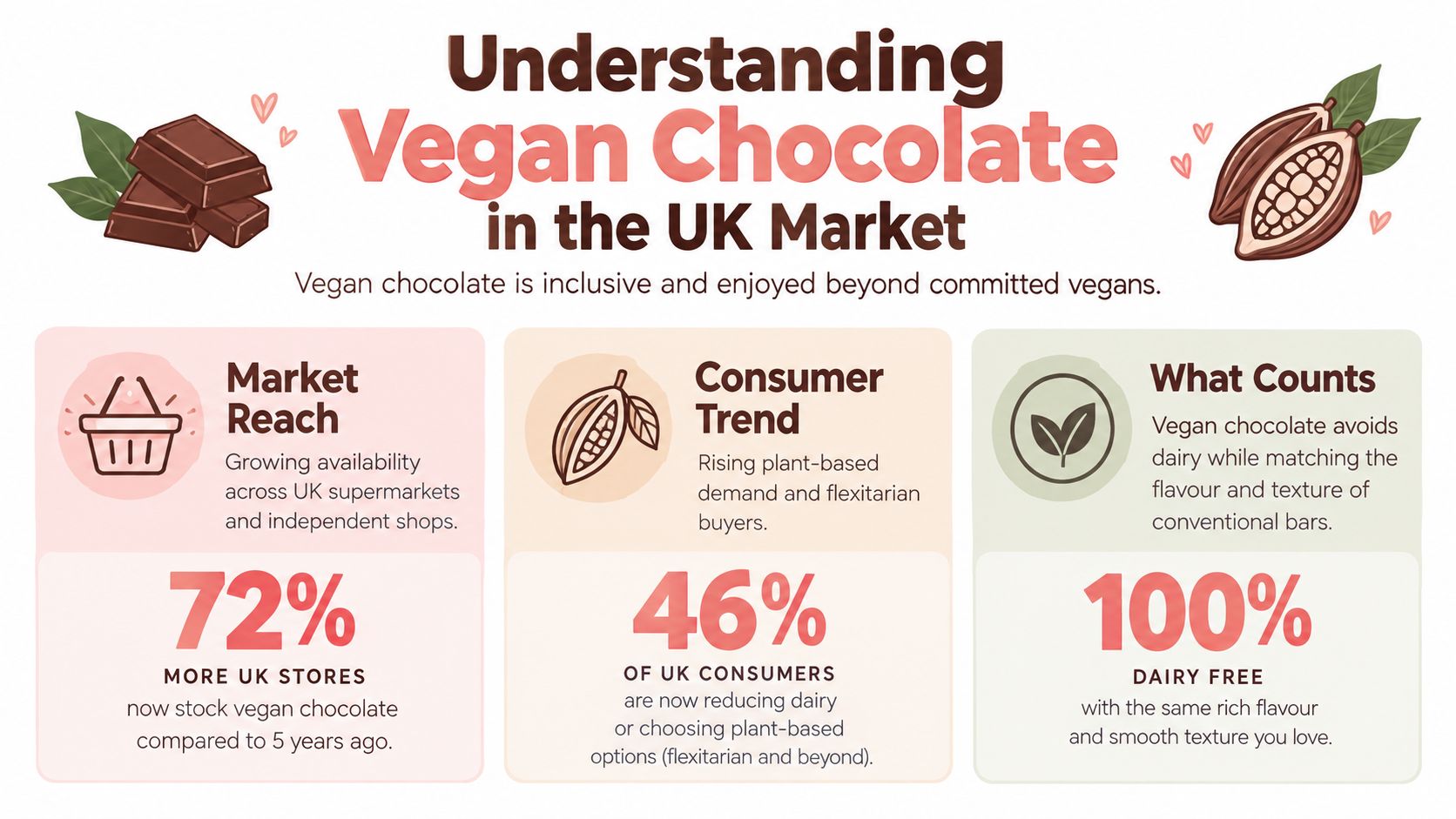
A shopper standing in front of a chocolate shelf may assume vegan chocolate is made for a small, clearly defined audience. In practice, the category reaches much further. Strict vegans remain a minority, with the Food Standards Agency's recurring Food and You 2 survey placing the proportion of vegans in England, Wales and Northern Ireland at approximately 1–2%. Yet UK food-sector reporting has found that 46% of Britons aged 16–75 are considering reducing animal products in the future, according to UK plant-based food reporting.
That difference matters when you're choosing chocolate. A dairy-free bar may suit a committed vegan, but it can also appeal to a flexitarian, a person avoiding lactose, a family serving mixed diets or a host who wants one inclusive dessert for the table. The same reporting says 58% of adults use at least one plant-based meat alternative, suggesting that trying plant-based food has become familiar even for people who don't follow a fully vegan diet.
Vegan is an ingredient statement
At its simplest, vegan chocolate avoids deliberately used ingredients of animal origin, especially milk and milk fat. That doesn't tell you everything about how the chocolate was made, how it tastes or whether it's suitable for someone with a serious milk allergy.
Think of “vegan” as answering one question: Were animal-derived ingredients intentionally used? It doesn't necessarily answer another question: Could milk have entered the product accidentally during manufacture?
This is why vegan chocolate shouldn't be treated only as a free-from replacement. It can be a premium treat for gifting, a finishing element for a cheeseboard, a baking ingredient or a small everyday indulgence. Britain's role in category development supports that broader view. Research reported by Speciality Food found that the UK accounted for almost one in five new vegan chocolate launches globally, approximately 17%, during the period studied. That's a historical indicator of British innovation, not a current market-share figure, but it helps explain the variety now available.
What the wider choice means for shoppers
You'll find dark bars, milk-style alternatives made with plant ingredients, filled chocolates, truffles, seasonal eggs and gifting formats. The best choice depends on the person eating it and the occasion, not only on whether the front of the packet says vegan.
For a shared gathering, start with flavour and texture. For a gift, consider presentation and dietary information. For an allergy-sensitive recipient, place the complete ingredients list and precautionary allergen labelling ahead of appearance or cocoa percentage.
Practical rule: Treat vegan status as the starting point for your decision, not the whole decision.
How to Read Chocolate Labels and Spot Allergens
A vegan label can tell you that milk wasn't intentionally added. It can't always guarantee that the chocolate is safe for someone with a milk allergy. UK government guidance distinguishes vegan labelling from free-from claims, because free-from products require strict controls designed to prevent cross-contamination.
That distinction becomes particularly important with chocolate. Manufacturers may use shared equipment for products containing milk, nuts, soya or cereals containing gluten. A bar can therefore be vegan in its recipe and still carry a precautionary statement such as “may contain milk”.
Use a repeatable label check
When you're buying vegan chocolate for someone else, work through the label in this order:
- Start with the ingredients list. Look for milk, milk powder, milk fat, whey, butter or other animal-derived ingredients. UK rules require regulated allergens used as ingredients to be emphasised in the list, often with bold type, a contrasting colour or a different font. Milk, soya, nuts and cereals containing gluten can all be relevant to chocolate.
- Find the precautionary allergen statement. Wording such as “may contain milk” communicates a residual cross-contact risk identified through assessment. It isn't a universal legal requirement, so the absence of a warning doesn't prove that cross-contact is impossible.
- Check the product's specific status. “Vegan”, “dairy-free”, “milk-free” and “free-from milk” aren't interchangeable in practical risk terms. The UK guidance on vegan food labelling explains why shoppers with allergies shouldn't assume that a vegan label guarantees safety.
- Read the manufacturer's information. If the packet is unclear, check the manufacturer's allergen statement or contact the business. For an allergy, don't rely on a retailer's short description alone.
- Be careful with unpackaged chocolate. If you're buying loose truffles, pick-and-mix sweets or a gift box assembled without the original packaging, ask how allergen information is provided. UK businesses must provide allergen information for non-prepacked food in writing or verbally when requested, as explained in UK food packaging and labelling guidance.
Vegan doesn't always mean allergy-safe
A person avoiding dairy because of preference may accept a product made on shared equipment. Someone with a diagnosed milk allergy may not. Those are different needs, and a careful gift buyer should ask which one applies before choosing.
A “may contain milk” warning is also different from an ingredient declaration. The first refers to possible accidental presence, while the second indicates that milk was deliberately used. The guidance on precautionary allergen labelling explains that a product making a genuine free-from milk claim shouldn't carry a contradictory precautionary statement.
For a useful introduction to cocoa as an ingredient, you can also explore Maximum Health Products cocoa, particularly if you're comparing bars with cocoa powder, cocoa mass or cocoa solids. When shopping for a packaged bar, however, always return to the actual label on the product you're buying.
For a concrete example of how a specialist chocolate listing may present its ingredients and dietary details, review this dark almond chocolate. Product information can change, so the current packaging remains the final check.
Navigating UK Chocolate Composition and Regulations
The percentage printed on a chocolate bar is useful, but it isn't a complete quality score. In the UK, chocolate sold under reserved chocolate descriptions must meet composition and labelling rules under the Cocoa and Chocolate Products Regulations 2003. Most covered products need a declared minimum cocoa-solids percentage, while the exact requirements depend on the product description and whether milk solids are included.
The UK guidance on food standards, labelling, durability and composition gives the regulatory context. For shoppers, the practical lesson is simple: cocoa percentage helps you compare products, but you should also look at the rest of the recipe.
Dark chocolate and milk-style alternatives
A high-cocoa dark chocolate usually offers a more intense, roasted profile. It may taste bitter, fruity, earthy or pleasantly dry, depending on the cocoa and recipe. That makes it a natural partner for sweet chutney, dried fruit or a creamy plant-based cheese.
Milk-style vegan chocolate aims for a softer, rounder experience without dairy. Plant ingredients can create a mellow texture and gentle sweetness, which works well for new chocolate drinkers, children's treats and gifting. The label may show oat, rice, nut or another plant ingredient, so check the allergen information carefully rather than assuming every milk-style bar suits every free-from diet.
| What to compare | What it can tell you | What it can't tell you |
|---|---|---|
| Cocoa-solids percentage | The proportion of cocoa-derived ingredients declared for the product | Whether the flavour will suit you |
| Cocoa butter and other vegetable fats | Something about texture and formulation | Whether the chocolate is ethically sourced |
| Sugar | How sweet the recipe may be | Whether the bar is allergen-safe |
| Emulsifiers and added ingredients | How the recipe is constructed | Whether shared equipment was used |
| Origin and traceability details | Where the cocoa or other ingredients come from | Whether a broad sustainability claim is independently verified |
Choose by eating experience
A cocoa percentage isn't a shortcut to flavour quality. A lower-cocoa bar may be exactly right for someone who prefers creamy sweetness, while a more intense dark bar can suit a tasting plate or an after-dinner bite.
Also look for the product's batch or lot code, origin details and allergen information. These records help food businesses manage traceability and supplier verification, while giving shoppers more context than a single large number on the front of a wrapper.
Exploring Artisan Vegan Chocolate Brands and Styles
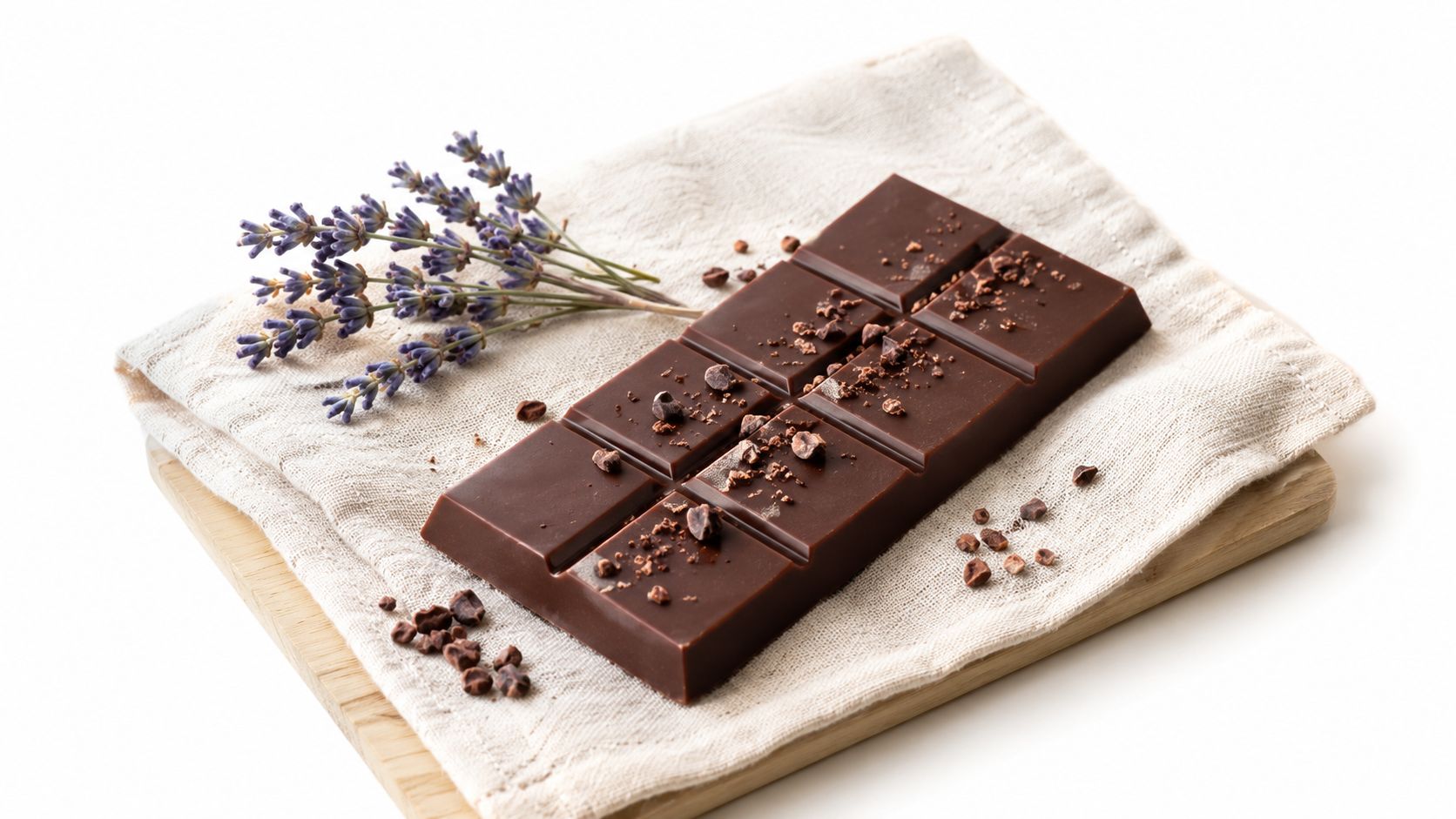
Artisan vegan chocolate becomes more interesting when you stop treating it as one fixed style. A deli-style selection might include a smoky bar, a dark chocolate with fruit, a truffle with a soft centre or a seasonal format designed for gifting. The category's creativity also mirrors the range of plant-based cheeses, which can move from gentle and creamy to cultured, sharp, blue or smoky.
That's why chocolate can sit comfortably on a vegan cheeseboard. It isn't just the sweet item added at the end. A carefully chosen piece can echo a toasted note in a smoked cheese, soften a salty bite or provide contrast against a tangy cultured wedge.
Look beyond the standard bar
You might encounter styles inspired by familiar cheeseboard flavours, including smoked, blue or feta-style combinations. These aren't dairy chocolates. They're flavour-led plant-based interpretations that can bring savoury complexity to a tasting experience.
Seasonal chocolate also deserves attention. UK retail reporting has highlighted increased vegan confectionery availability around Easter and Christmas, when novelty products and chocolate gifting become especially visible. A seasonal egg, filled chocolate or boxed truffle selection can make a useful gift when you've checked the recipient's allergen requirements and storage needs.
For baking, choose chocolate in a format that melts predictably and suits the recipe. A dairy-free baking resource can help when you're adapting familiar cakes, biscuits or desserts, but the chocolate's own label still matters. A bar intended for snacking may behave differently from drops or couverture-style pieces when heated.
Build a tasting journey
Start with a milder chocolate, then move towards darker or more intensely flavoured styles. Serve small pieces at room temperature, use separate knives for different cheeses and keep the original packaging nearby if guests need to check allergens.
Truffles can provide a softer, more luxurious texture than a snapped bar. A vegan chocolate truffle selection can work as the sweet course of a tasting, especially alongside crisp crackers, fruit preserves and a selection of plant-based cheeses.
The most rewarding choice isn't necessarily the product with the most elaborate description. It's the one that gives your table a clear progression of flavour, texture and aroma.
Perfect Pairings with Plant-Based Cheeses
Chocolate belongs on a plant-based cheeseboard because it contributes contrast. Cheese can be creamy, salty, tangy, smoky or crumbly, while chocolate adds bitterness, sweetness, roasted depth or a smooth finish. When the two are chosen deliberately, each bite feels more complete than either ingredient would on its own.
Artisan and small-batch chocolates can be particularly useful here because their flavour profiles are more varied. That doesn't mean every premium product is automatically better. It means you have more room to match intensity, texture and sweetness to the cheeses already on the board.
Match intensity with intensity
A rich dark chocolate can cut through the creaminess of a sharp plant-based blue. Its cocoa bitterness keeps the pairing from becoming overly soft or sweet, while the cheese brings savoury depth to the chocolate.
An oat-milk-style chocolate offers a gentler pairing. Its mellow sweetness can balance a tangy cheese without overwhelming it, making it a friendly option for guests who are new to plant-based tasting.
Try these combinations:
- Dark chocolate with plant-based blue: Use a small piece of intense dark chocolate after a creamy, sharp bite.
- Oat-milk-style chocolate with a soft cheese: Let the mellow sweetness complement tangy or cultured flavours.
- Hazelnut chocolate with a cashew brie-style cheese: The nutty notes can echo the creamy, rounded texture.
- Fruit-infused dark chocolate with an aged almond-style cheese: Fruit can lift a sharper, crumbly cheese and add freshness.
- Smoked chocolate with a smoked plant-based cheese: Keep portions small so the shared smoky character doesn't dominate.
The final two examples are flavour frameworks, not guarantees. Recipes differ, so taste a small piece first and adjust the order according to sweetness and intensity.
Arrange the board for easy discovery
Place savoury items at one end and sweeter additions at the other. Include a plant-based cheese bundle with crackers, chutney, olives or pickles, then add chocolate as a separate finishing section rather than scattering it between every cheese.
A simple serving order works well:
- Begin with the mildest cheese and the least intense chocolate.
- Move towards sharper, smoked or aged flavours.
- Finish with a richer truffle or filled chocolate.
Serving idea: Give each guest a small tasting plate, so they can compare one cheese and one chocolate without mixing every flavour at once.
If you're serving wine alongside the board, keep the wine style supportive rather than dominant. People who enjoy a regular wine subscription can use recurring wine shipments as a source of pairing inspiration, but the same principle applies to any drink. Choose a beverage that refreshes the palate between creamy, salty and sweet bites.
A plant-based cheeseboard can also become an experience rather than a display. Add a note beside each item describing its texture, invite guests to taste from mild to bold, and keep allergen information available for every packaged food.
Gifting and Shopping for Vegan Chocolate in the UK
Buying vegan chocolate as a gift starts with the recipient, not the packaging. A single dark bar may suit an everyday treat, while truffles, filled chocolates or a curated box can feel more appropriate for a birthday, Christmas, Easter or a thank-you gift.
Use this short shopping route:
- Clarify dietary needs: Ask whether the recipient is vegan, avoiding lactose, managing an allergy or following a wider free-from diet.
- Choose the format: Select bars for simple treats, truffles for presentation, or chocolate ingredients for someone who enjoys baking.
- Check the label: Review ingredients, allergens and precautionary statements before ordering.
- Add complementary items: Crackers, chutneys, olives, pickles, spreads, coffee or tea can turn chocolate into a fuller deli gift.
- Plan delivery: Chocolate may need protection from heat and rough handling, so check current delivery information and storage advice before sending.
- Keep flexibility in mind: A gift card can be more suitable when you're unsure about flavours, allergies or existing pantry supplies.
A specialist marketplace can simplify this process by bringing plant-based chocolate together with vegan cheeses, accompaniments and gift options. It also makes it easier to create a coherent hamper rather than assembling unrelated items from several places. For a mixed gathering, keep each product in its original packaging until guests have checked the information they need.
Whether you're choosing a box for a loved one or planning a tasting board at home, focus on clear labelling, complementary flavours and the recipient's actual preferences. That approach makes vegan chocolate feel generous and considered, not like a compromise.
Explore Saporia for vegan chocolate, artisan plant-based cheeses, cheese bundles, crackers, chutneys and other deli accompaniments that work beautifully for gifting and entertaining. Browse the current range to build a thoughtful tasting board or choose a flexible plant-based food gift with the flavours and dietary details clearly in view.