

Best Chilli Oil UK: Which Jar to Buy and Why
A jar's salt figure can change how freely you use it: a salty chilli oil may need only a small spoonful, while a milder one can take a more generous drizzle. Compare salt per serving alongside cost per serving, then check the oil base, texture and storage instructions against the food you plan to serve.
For a vegan cheeseboard, a clear, garlic-led oil can suit delicate cheeses better than a crunchy, heavily seasoned topping. Noodles may call for a bolder style. The label helps you judge what each jar will add before you open it.
Table of Contents
- Best Chilli Oils in the UK at a Glance
- Criteria and Oil Bases That Set Chilli Oils Apart
- Reading Labels for Allergens, Salt and Vegan Claims
- Where to Buy Chilli Oil in the UK
- Pairing Chilli Oil with Vegan Cheeseboards and Dishes
- Making and Storing Chilli Oil at Home
- Choose Your Chilli Oil for Your Next Meal
Best Chilli Oils in the UK at a Glance
If you cook for one on weeknights, a bottle suited to several meals is more useful than a specialist oil you rarely reach for. Match the seasoning and texture to the dish, then check the label for salt, allergens and storage instructions.
Quick picks by use
| Use | Style to look for | Watch for | Saporia example |
|---|---|---|---|
| Vegan cheeseboard and crackers | Chilli oil for a light drizzle | Strong seasoning can mask delicate cheese | Banhoek Chilli Oil Infused with Asian Spices 250ml |
| Noodles, rice and vegan egg-style fried dishes | Asian-spiced chilli oil | Bold spice notes can dominate a simple dish | Banhoek Chilli Oil Infused with Asian Spices 250ml |
| Pizza, pasta and roast potatoes | Garlic-led or plain chilli oil | Check the heat and salt on the label | Choose a style that suits the other seasonings |
| Crunchy toppings and salads | Chilli oil with solids | Check the allergen list for nuts, sesame and soya | Compare the ingredient and allergen lists |
| Gifts or budget batches | Homemade chilli oil | Check the storage instructions and use-by guidance | Homemade oil, stored as directed |
For a cheeseboard, use a small amount so the chilli and seasoning don't overwhelm milder cheeses. A chilli oil with solids adds crunch to noodles or tofu, while a smoother oil is easier to drizzle over pizza, pasta or potatoes. Homemade oil can suit everyday cooking, but clear storage instructions matter if you're giving it as a gift.
Criteria and Oil Bases That Set Chilli Oils Apart
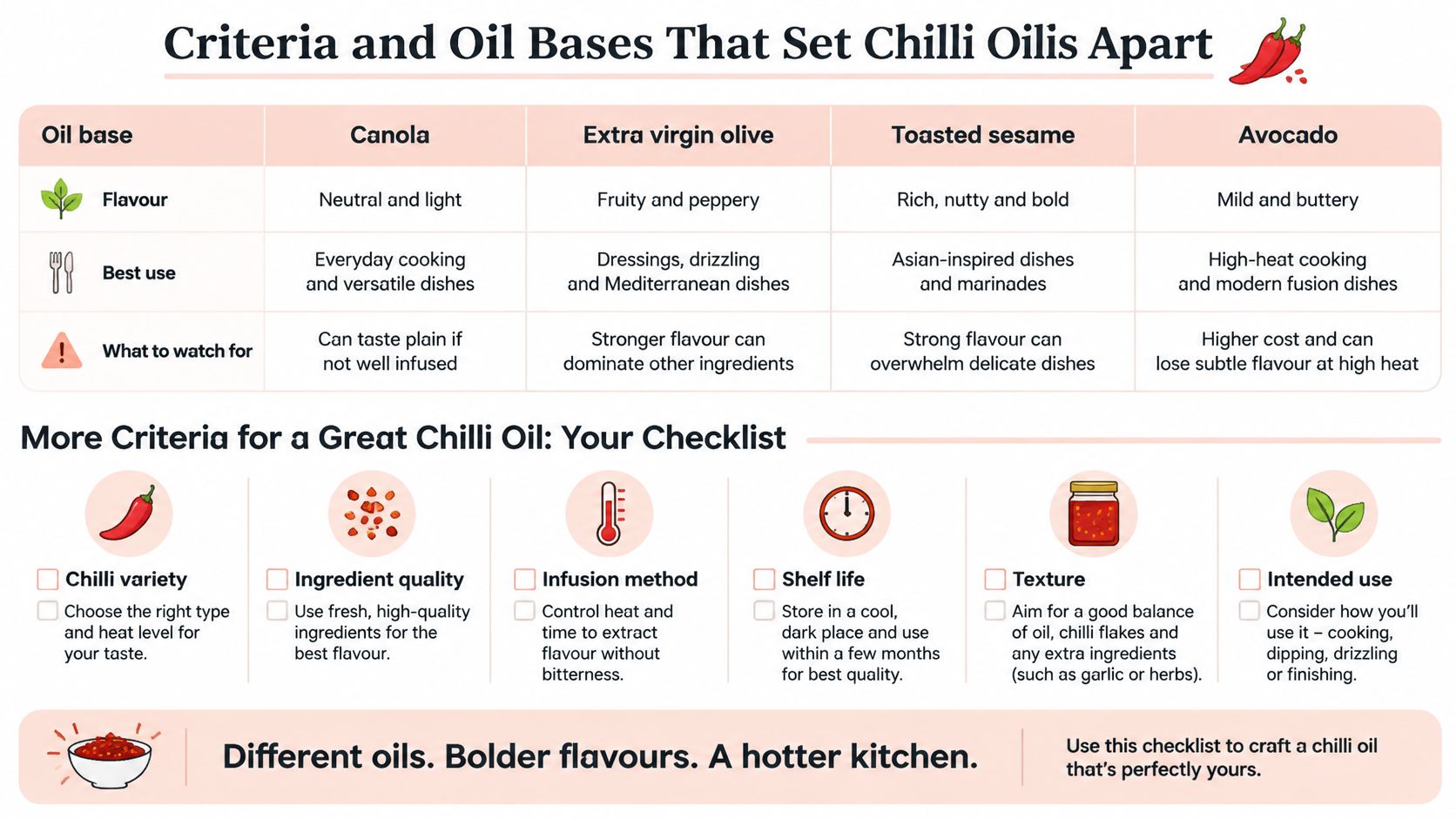
Oil bases compared
| Oil base | Typical flavour | Best for | Watch for |
|---|---|---|---|
| Canola (rapeseed) | Neutral and clean | Dips, stir-fries and everyday drizzling | Little flavour of its own, so the chilli does the work |
| Extra virgin olive | Fruity and peppery | Drizzling on bread, pasta and vegan cheese | Flavour can compete with delicate chilli and garlic |
| Toasted sesame | Nutty and deep | Noodles, dumplings and finishing | Sesame is a named allergen and must be declared |
| Avocado | Mild and buttery | Cooking, dressings and roasting | Less common in chilli oils, so check the label |
The base oil isn't just a carrier. Taste a little with plain bread and consider whether you enjoy the oil itself, the chilli infusion, or both. Extra virgin olive oil can be lovely with tomato pasta, while a neutral base gives garlic and chilli more room.
Under UK ingredients-list rules, ingredients appear in descending order by weight, and allergens must be emphasised. That makes the back label a better starting point than a front-label promise of bold flavour: you can distinguish an oil-led product from one containing substantial chilli, garlic, nuts or beans.
Heat, aromatics and texture
Judge heat against the meal, not your tolerance in isolation. An oil that tastes pleasantly warm on bread may become tiring when it coats an entire bowl of noodles. Look for a useful heat description on the label or product page, then begin cautiously.
Aromatics decide how widely you'll use the bottle. Garlic works across many everyday meals; star anise and clove suggest a more specific direction. Herbs can be appealing with vegetables, but don't assume they'll suit every sauce.
Texture is a separate buying decision. Clear oil disperses readily through a dip, while crunchy solids sit on top and add contrast. Stir a crisp-style jar before serving so you don't use mostly oil at the beginning and leave a dense layer of seasoning behind.
If you want a fermented chilli condiment rather than an oil-based finish, smoked sriracha fermented hot sauce is a different category to consider. Don't compare the two as though they perform the same job.
Calculate value from your actual serving
Cost per serving equals bottle price divided by the number of servings you'll use. As a worked measuring example, a 250ml bottle gives about 50 servings if you consistently use a 5ml measuring teaspoon. A generous pour will change that calculation considerably.
For homemade batches, base-oil cost matters too. Our listed options include Soilmates Avocado Oil 500g at £8.95, and Clearspring Organic 100% Italian Extra Virgin Olive Oil at £7.45 for 250g or £12.95 for 500g. These are base oils, not ready-made chilli oils; check the product page for the current price.
- Heat: Will you enjoy it across a whole portion?
- Aromatics: Does it suit the meals you cook?
- Texture: Do you want a drizzle or a crunchy topping?
- Cost per serving: How much do you need before the dish tastes right?
The cheapest jar can be the best value if it flavours several familiar meals. An expensive bottle you rarely open isn't a bargain, however attractive its packaging.
Reading Labels for Allergens, Salt and Vegan Claims
Could a jar suit your diet yet still make the dish too salty? Check the ingredients, allergen statements and salt declaration as separate parts of the label. The product name alone may not tell you how the oil will season a meal.
Check ingredients and precautionary warnings separately
The UK allergen-labelling guidance explains how deliberately added ingredients and accidental cross-contamination are labelled. Ingredients from the 14 regulated allergen categories must be clearly identified. Check for relevant allergens such as peanuts, sesame, soya, milk, tree nuts and cereals containing gluten.
Read any may contain statement separately from the ingredients list. It signals a possible cross-contamination risk and matters when serving someone with an allergy. A vegan claim describes whether a product is suitable for a vegan diet; it does not establish that the product is free from a particular allergen.
For dairy-free brunch ideas, Pep Tea's plant-based breakfast guidance for Australian kitchens offers a companion resource. Check the allergen declaration on each product you serve, including the oil and any accompaniments.
Compare salt before seasoning the rest of the plate
Salt levels vary between chilli oils, so check the nutrition information on the jar you plan to buy. The examples below show how a small measured portion can still contribute salt.
Salt per 100g in common chilli oils
| Style | Salt per 100g | Salt in a 5g portion |
|---|---|---|
| Chiu chow-style chilli oil with soy and dried salted chillies | 6.9g | About 0.35g |
| Mainstream crunchy chilli oils with solids | 2.7 to 3.1g | About 0.14 to 0.16g |
| Banhoek Chilli Oil | No salt figure declared | Check the back label |
The portion figures come from multiplying the salt per 100g by 0.05: for example, 6.9g × 0.05 gives about 0.35g of salt in 5g of oil. These are comparison examples, not guaranteed values for every jar in a style.
On a board with olives, crackers and savoury cheese, a strongly salted oil can make the whole mouthful taste over-seasoned. Add the oil first, then decide whether the dip, dressing or noodle sauce needs more salt.
If you can't establish suitability confidently, don't serve that jar to an allergy-sensitive guest. Offer a clearly suitable alternative with its own clean serving utensil.
Where to Buy Chilli Oil in the UK
The best place to buy depends on what you need to establish before ordering. Convenience matters, but readable ingredients, storage instructions and a traceable seller matter more than a dramatic product photograph.
Compare buying routes
| Buying route | Useful for | What to check |
|---|---|---|
| Specialist vegan deli or online cheesemonger | Planning a plant-based meal in one order | Individual product allergens and serving style |
| Supermarket | Adding a bottle to the weekly shop | Full label, heat description and pack size |
| International grocer | Exploring regional chilli-oil styles | Ingredients, translated information and storage |
| Online marketplace | Finding a particular bottle | Seller identity and complete product information |
| Producer website | Understanding a specific recipe | Oil base, process and after-opening instructions |
A specialist vegan shop can simplify dietary selection, but it doesn't remove the need to check individual allergens. Supermarkets offer convenience, while international grocers are useful when you know the regional style you want.
Online marketplaces need closer attention when listings show only the front of the jar. If the ingredients or storage information are missing, request them before ordering rather than assuming the pictured bottle matches a familiar recipe.
What to ask at a deli or market
Ask about the oil base, chilli mixture, garlic, nuts, sesame, soya and added sauces. A simple-looking infusion may still contain a seasoning mixture that changes its suitability.
Under UK packaging and labelling guidance, allergen information must be available for relevant loose foods before purchase; since 1 October 2021, food prepacked for direct sale must carry a full ingredients list with allergens emphasised. If staff can't provide dependable information, you can't reliably assess the product.
Saporia is one practical option for a planned cheeseboard because oils sit alongside vegan cheese, crackers, chutneys and sauces. Our oils collection lists 48 products from 15 brands, including Filippo Berio, Biona, Clearspring and Oily, and covers vegan cooking oils from extra virgin olive and cold-pressed oils to toasted sesame oil.
That collection is broader than chilli oil alone, so distinguish ready-infused bottles from plain cooking oils. Prices are shown in GBP; browse our current oils range and check the relevant product page before choosing.
Pairing Chilli Oil with Vegan Cheeseboards and Dishes
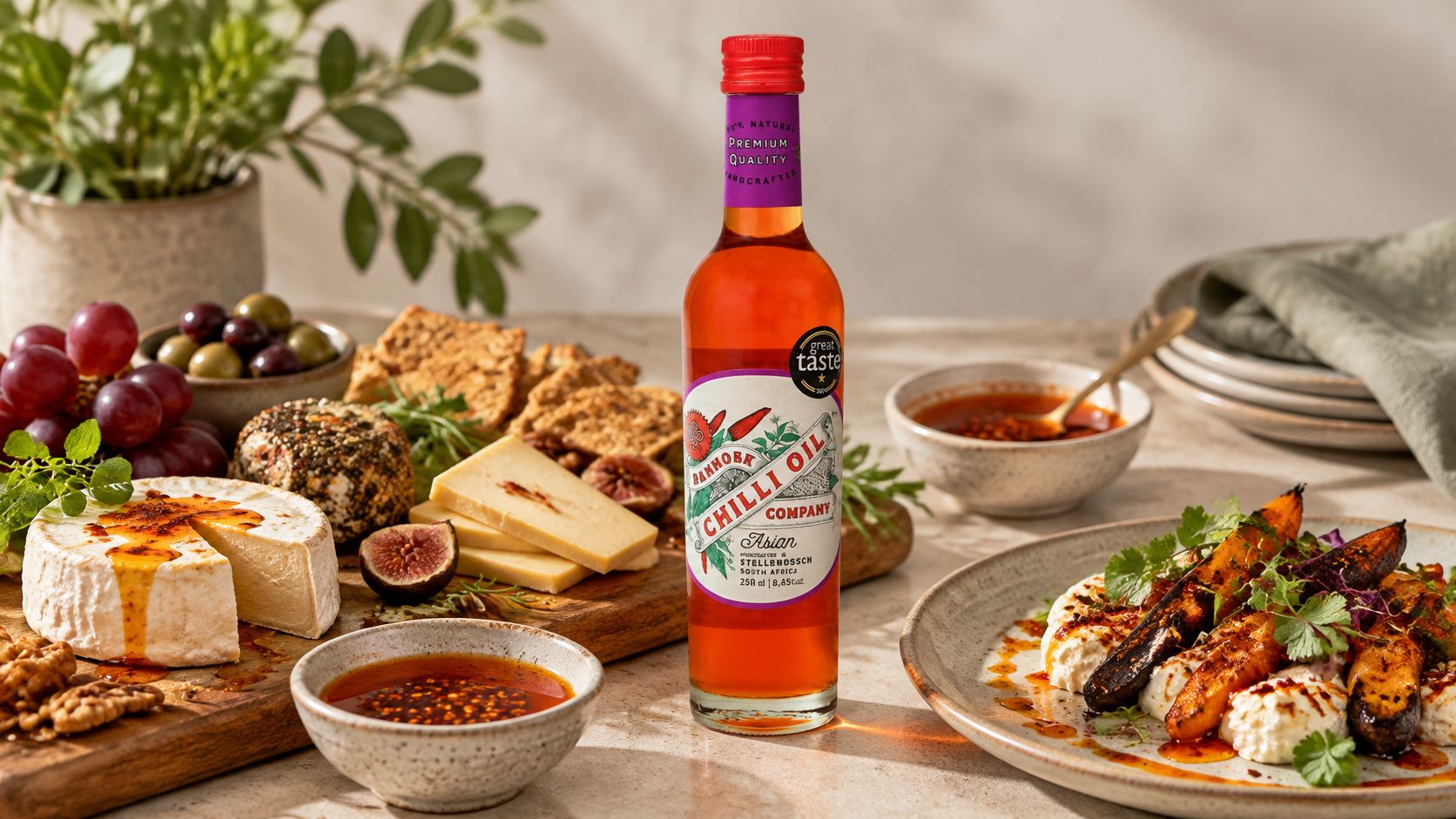
On a cheeseboard, use chilli oil as a measured finishing touch. Serve a soft vegan cheese with crackers, chutney and olives or pickles, and put the oil in a separate dish so each person can control the heat. A few drops on a slice of creamy cheese are enough to judge the pairing before adding more.
Build contrast rather than more heat
Try the hot and spicy cheeseboard chutney with a mild cheese, or offer it instead of chilli oil. Adding both can overwhelm a delicate cheese; choose one sharp, spicy accent and let the cheese remain distinct.
For drinks, serve a wine you already enjoy with savoury food. If you're considering wine collecting, wine memberships for collectors offers information on that option. Check vegan suitability separately rather than assuming it from a wine description.
Finish noodles, pizza and vegetables
For noodles, drain them, toss with sauce, then stir in chilli oil off the heat. Add a little at a time and taste; the oil's heat and seasoning can change the balance of the sauce. On pizza, drizzle it over a plant-based mozzarella-style topping after baking. For roast vegetables, add a small amount just before serving. For tofu, mix the oil with the other marinade ingredients before coating.
- Start with a few drops: Taste before adding more, especially when the oil's heat level is unfamiliar.
- Serve at the table: Let guests adjust their own portions.
- Keep a mild option: This gives people a choice without making the shared dish fiery.
For dinner, serve the oil separately alongside the cheeseboard. At a picnic, take a securely closed commercial bottle and follow its storage instructions. For a gift, pair a labelled oil with crackers and a cheese suited to the recipient's preferences.
Making and Storing Chilli Oil at Home
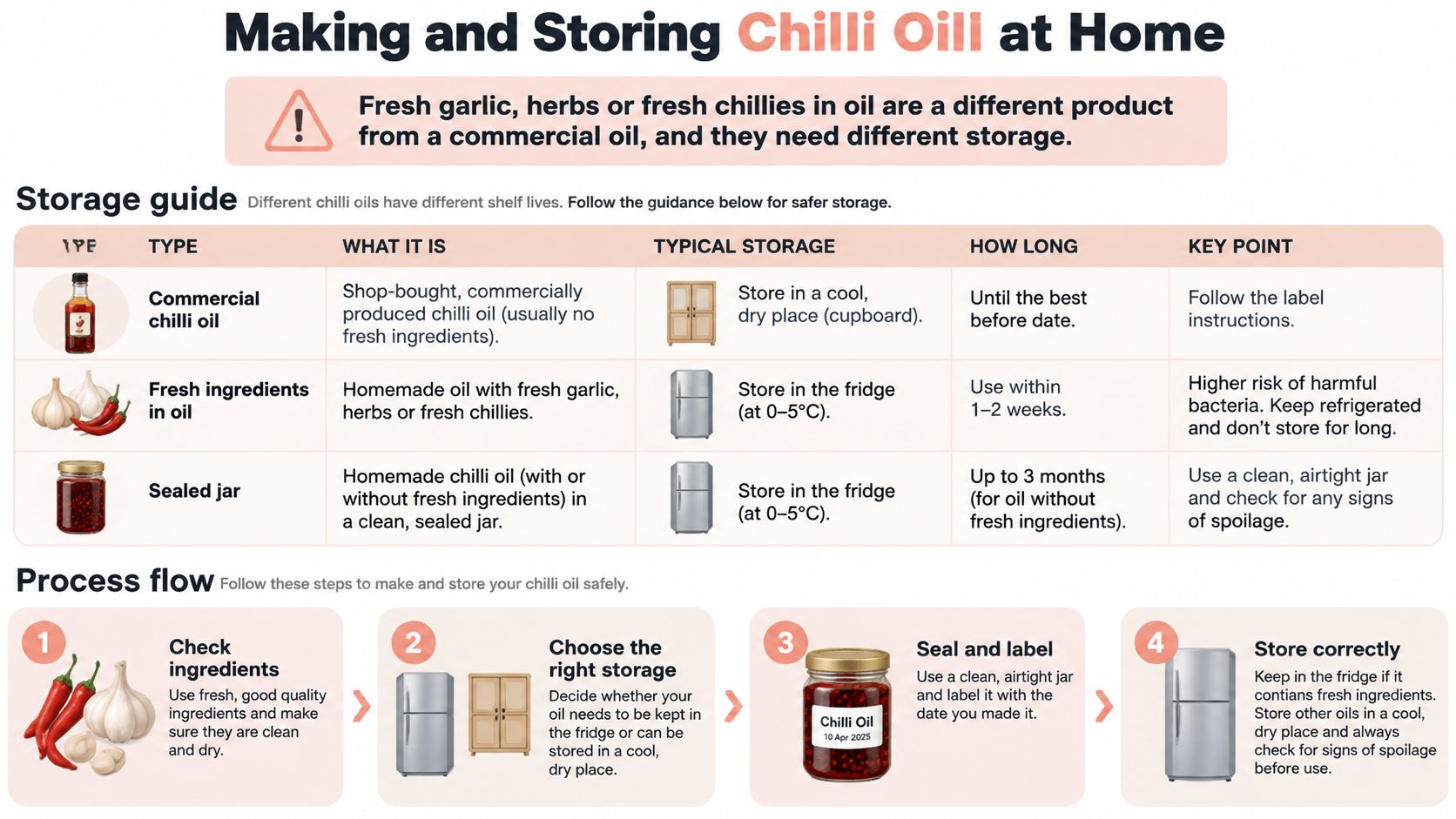
Fresh garlic, herbs or fresh chillies in oil are different from a commercially validated product. Gentle home heating doesn't make an infusion shelf-stable, and a sealed lid doesn't make it safe for cupboard storage.
Storage by type of chilli oil
| Type | Storage | Use within |
|---|---|---|
| Sealed commercial oil | Follow the label | Follow the use-by date |
| Commercial oil once opened | Follow the label's storage advice | Check the label |
| Homemade with garlic or herbs | Refrigerate | About one week |
| Homemade with fresh chilli | Refrigerate | Same day |
The UK government's botulism guidance warns about preserving garlic or herbs in oil; BBC Food's accompanying home-storage advice is to refrigerate homemade chilli oil and use it within a week, or the same day when made with fresh chilli. Treat these as short home-use windows, not evidence that an improvised recipe has been commercially validated.
Make a small dried-chilli batch
For a straightforward home version, use dried chilli flakes without fresh garlic or fresh herbs. Keep the batch small enough that you won't be tempted to stretch its storage life.
- Choose the base. Use a neutral canola oil or a mild olive oil whose flavour you enjoy.
- Prepare dry ingredients. Put dried chilli flakes in a clean, dry, heatproof bowl. If adding garlic or herbs, use commercially dried ingredients, not fresh pieces merely dried on the surface.
- Warm gently. Heat the oil in a saucepan without letting it smoke. Keep water away from the pan.
- Infuse carefully. Pour the warm oil over the flakes cautiously, watching for spitting, then let it cool.
- Choose the texture. Strain through a clean, dry fine sieve if you want a clearer oil, and transfer to a clean, dry jar.
- Label and chill. Mark the preparation date and refrigeration instruction, then refrigerate promptly once cooled.
This is a short-life kitchen preparation, not a preserving or sterilising method. Don't add fresh ingredients later and assume the original storage plan still applies.
Avoid the easy storage mistakes
Wet garnish, a warm cupboard and a jar left on the table after serving all undermine careful handling. Use a clean utensil, decant only what you need, and don't return leftovers from a communal dipping dish to the jar.
For outdoor serving, MODERN LYFE's fly fan tips for restaurant tables offer practical ideas for managing flies around food. A table fan doesn't replace covering food, keeping utensils clean or returning oil to its required storage.
Safety first: Clear oil and a fresh chilli smell can describe an appealing batch, but appearance and smell cannot prove that it's safe.
Unexpected bubbling, mould or other deterioration means discard it, but their absence isn't a safety test. Don't taste an uncertain batch to decide whether to keep it, and don't mistake refrigeration-related cloudiness alone for proof of spoilage.
Choose Your Chilli Oil for Your Next Meal
How quickly will you use a bottle? A smaller size can suit occasional drizzling, while a larger one makes more sense if chilli oil regularly goes into your cooking. Check the label for serving size and salt per serving too: a small pour can still add noticeable salt to a meal.
Make the first meal easy
On a cheeseboard, keep the oil separate so everyone can decide whether to add it. Saporia's Kinda Co Block Chilli Cheese is another cheese option to consider alongside your chosen accompaniments.
Before ordering, read the ingredient and allergen information, then check the label's after-opening storage instructions. Make sure you can store the bottle as directed and use it within the stated period.
Browse Saporia's vegan cheese range, latest arrivals or build-your-own cheeseboard selection to find accompaniments for your next meal.
Saporia is a UK vegan cheesemonger and deli with plant-based cheeses and pantry accompaniments, including oils. Visit Saporia to explore the range.