

Best Vegan Cheese for Melting: UK Guide
You've grated the cheese, loaded the pizza and waited expectantly by the oven. Instead of bubbling across the surface, the shreds have gone rubbery, the slice has slid off the toastie, or the sauce has separated into an oily puddle. It's a familiar disappointment, especially when you've chosen a plant-based cheese for flavour and assumed it would behave like its dairy counterpart.
The best vegan cheese for melting depends less on a universal winner and more on the dish in front of you. A mozzarella-style shred can give pizza the pull you want, while a cultured soft cheese may be better stirred into a sauce. Once you understand the fat-and-starch structure behind each style, you can choose more confidently, adjust your cooking method and avoid asking a delicate cheeseboard wedge to perform a job it was never designed to do.
Table of Contents
- The Friday Night Cheese Moment
- What Makes a Vegan Cheese Melt
- Vegan Cheese Styles and How They Behave Under Heat
- Matching Cheese to the Dish You Want to Make
- Practical Tips for Better Melt Every Time
- Building a Meltable Spread With Saporia
- Your Meltable Cheese Checklist and FAQs
The Friday Night Cheese Moment
It's Friday evening. The base is crisp, the tomato sauce is seasoned and the toppings are ready, but the cheese refuses to join the party. One handful disappears into dry little strands, another browns at the edges without softening in the middle, and a third turns glossy before sliding towards the edge of the pizza.
A rainy Sunday toastie can be even more revealing. A thin slice may soften but stay stubbornly intact, leaving the bread hot and crisp while the centre remains firm. A soft spread might melt beautifully into the filling, then escape through the corners as soon as you press the sandwich.
That doesn't mean plant-based cheese can't melt well. It means different products are engineered for different textures. A shreddable mozzarella-style cheese needs to soften, flow and often stretch. A cheddar-style block needs to grate cleanly and bind a filling. A cultured artisan cheese may be designed primarily for cold tasting, where its delicate flavour and crumbly or creamy texture matter more than oven performance.
UK shoppers are also becoming more selective about this difference. Plant-based cheese sales fell 25% in the first quarter of 2025, while cow's cheese sales rose 3%, according to BBC reporting on the UK cheese market. That contrast suggests that flavour, value and cooking performance all matter when people decide whether to buy a dairy-free cheese again.
Think of this guide as a chat across the deli counter. We'll look at what makes a vegan cheese flow, which styles suit pizza, toasties, sauces and fondue, and what to do when a promising product seizes or splits.
What Makes a Vegan Cheese Melt
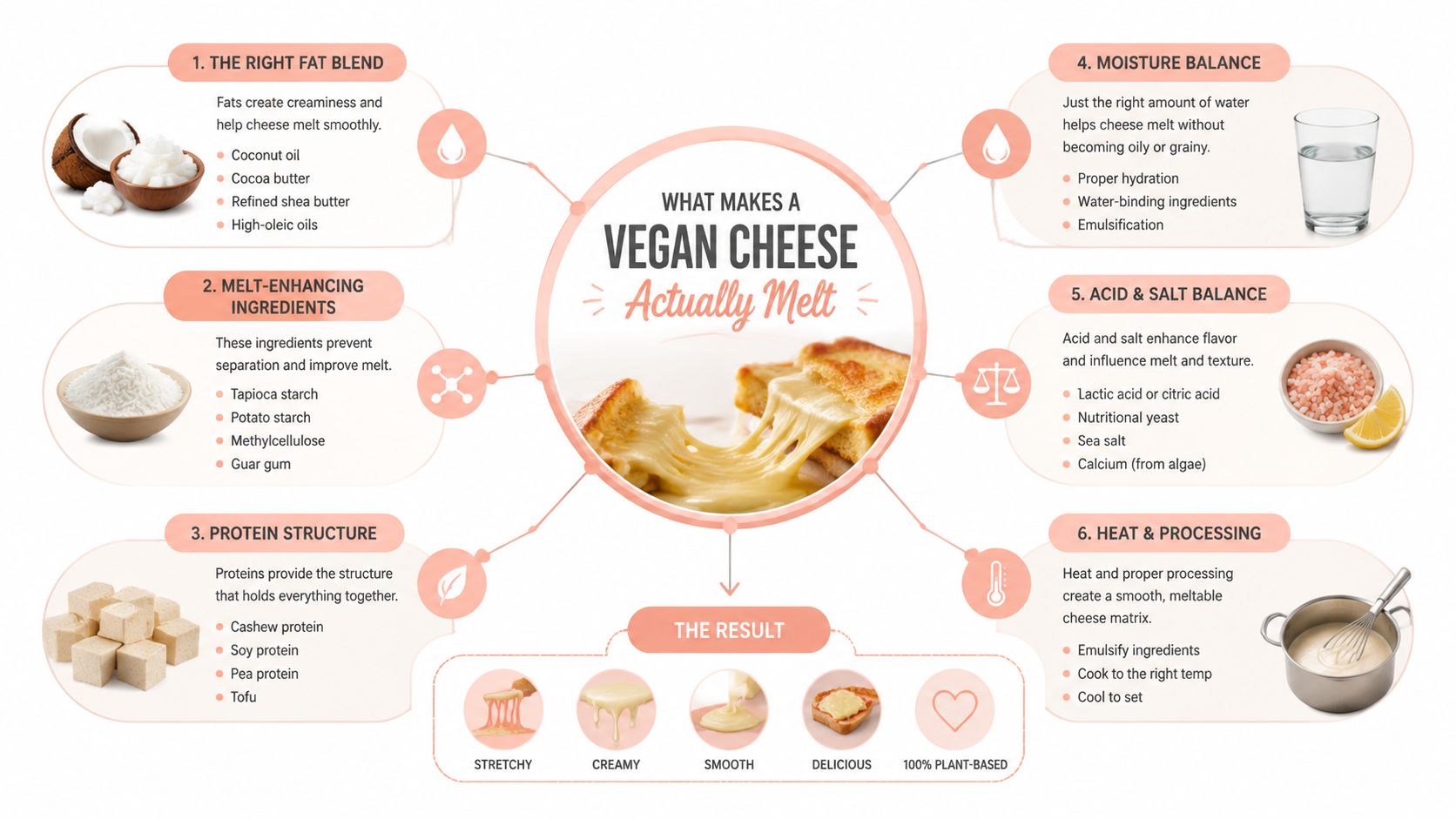
A vegan cheese melts well when its ingredients work together as heat rises. Dairy cheese relies on a casein protein network that loosens as its fat and moisture warm. Plant-based cheese contains no dairy casein, so producers create a different structure from fat, starch, water and setting agents. The aim is controlled softening, rather than a dry topping or a pool of separated oil.
The structure works like a carefully balanced emulsion. Oil and water need to remain connected while the mixture heats. When the matrix is well balanced, the cheese softens, flows and may stretch. A dry or brittle matrix can leave a firm, rubbery layer. Too little stability in the oil phase produces a shiny slick around a shrinking centre.
Common label clues include coconut oil, potato starch, tapioca starch, modified starch, agar agar, carrageenan and guar gum. Across several plant-based cheeses, ingredient information for vegan cheese styles shows the recurring combination of fat, starch and stabilisers. Coconut oil supplies a creamy fat phase, while starches thicken the water phase and can give the finished cheese a more elastic bite.
Read the label like a cook
A product containing coconut oil and starch is often formulated for slicing, shredding or melting. One cheddar-style listing describes coconut oil and starch with added calcium, and says the cheese is intended for melting and cooking, as shown in this retailer product description. A shredded mozzarella-style product also lists coconut oil and starches, recommending it for pizza, lasagne and baked dishes because of its melting characteristics, according to the product information for a shredded vegan mozzarella.
Moisture changes the result. A wetter, starch-led cheese may loosen into a spoonable sauce, while a firmer block can hold its shape before softening. Nut or legume protein can add body and savouriness, although a dense protein-and-starch network may resist flow if overheated.
The cooking occasion therefore matters as much as the label. A shreddable mozzarella-style cheese is built to spread over pizza or baked pasta. A soft, cultured spread may melt more like a rich filling or dip, where its creamy texture matters more than stretch. For a warm centrepiece rather than a tidy layer of shreds, try a melting faux Camembert with sturdy crackers, toasted bread or roasted vegetables.
Practical rule: Choose cheese by the texture needed at the end. “Meltable” may mean a flowing sauce, a stretchy pull, a soft topping or a cohesive toasted filling.
Vegan Cheese Styles and How They Behave Under Heat
A deli counter can make plant-based cheese look like one broad category, but the styles behave quite differently in the oven and frying pan. Use the table as a quick reference, then consider the texture you want rather than choosing by name alone.
Six styles worth knowing
Mozzarella-style shreds are usually built around a vegetable fat and starch structure. They're the natural choice for pizza, baked pasta and dishes where you want visible softening, browning and some stretch. A very dry topping may brown before it flows, so fine grating and moderate heat help.
Cheddar-style blocks tend to be firmer and more savoury. They're useful for toasties, jacket potatoes, burgers and grated toppings, particularly when you want pronounced flavour as well as melt. Some hold together in a slice, while finely grated pieces distribute heat more evenly.
Soft cream-cheese-style spreads behave more like a sauce than a topping. They can loosen into pasta, bind a lasagne layer or enrich a pan of vegetables, but they usually won't create the long pull associated with mozzarella.
Blue-veined styles bring salty, earthy and pungent notes. Heat normally softens the crumbly texture rather than turning it into a smooth, flowing blanket. Use small pieces over a baked vegetable dish, stir a little through a sauce or add it after cooking for a stronger aroma.
Feta-style crumbles are deliberately crumbly and briny. They may soften around the edges while keeping some shape, which makes them useful over roasted vegetables, filo pastries and baked pasta where salty pockets are welcome.
Smoked varieties add depth to grilled sandwiches and savoury bakes. Their stronger flavour can stand up to mushrooms, onions and sweet chutney, although a smoked block may dry if exposed to fierce, prolonged heat.
| Style | Typical Base | Melt Behaviour | Best For |
|---|---|---|---|
| Mozzarella-style | Vegetable fat and starches | Softens, flows and may stretch | Pizza, lasagne, baked pasta |
| Cheddar-style | Vegetable fat, starch and flavouring ingredients | Grates and softens into a cohesive layer | Toasties, jacket potatoes, burgers |
| Soft spread | Nut, oat or other creamy base with stabilisers | Loosens into a smooth sauce | Macaroni, dips, lasagne |
| Blue style | Nut or other plant base with blue-style seasoning | Softens while retaining some character | Baked vegetables, sauces, finishing |
| Feta-style | Firm plant base with salt and acid | Warms and softens without fully flowing | Filo, salads, roasted dishes |
| Smoked style | Vegetable fat or nut base with smoke flavour | Melts when managed gently, may dry under harsh heat | Grilled sandwiches, savoury bakes |
Independent rheology comparisons found that plant-based cheeses generally show less flow and stretch under heat than dairy melting cheeses, with plant-based samples remaining more solid-like during temperature sweeps. The same work observed larger cracks in plant-based cheese matrices, which helps explain why a product can soften on the surface yet resist a satisfying pull, as described in the rheology comparison of plant-based and dairy melting cheeses.
Matching Cheese to the Dish You Want to Make
The right choice becomes easier when you start with the cooking occasion. A pizza, a toastie, a cheese sauce and a fondue all ask for different things from a plant-based cheese.
Pizza
Choose a shreddable mozzarella-style block or a stretched artisan variety. Grate it finely and scatter it over a hot base so the pieces soften together instead of sitting in separate clumps. Leave a little tomato or topping visible, as an uncovered surface helps the cheese brown rather than steam under a heavy layer.
A mild mozzarella-style cheese suits mushrooms, roasted peppers and basil. If your toppings are sweet or smoky, a stronger plant-based cheese can bring balance, but it may not give the same clean stretch.
For a dependable everyday option, see this mozzarella-style cheese for pizza. Pair the finished slices with a sharp pickle or explore the wine club options if you're planning a more leisurely pizza supper with grown-up pairings.
Toasties
A toastie benefits from two textures. Grated cheddar-style cheese supplies savoury flavour, while a softer meltable block helps the filling bind. Cook the sandwich over moderate heat in a heavy pan, pressing gently so the bread colours before the centre overheats.
Sauce
For macaroni, nachos or lasagne, start with a soft, buttery spread. Warm it gently, then whisk in plant milk a little at a time. Starch helps the sauce thicken, but direct high heat can make it tighten suddenly, so take the pan off the hottest part of the hob while you adjust the consistency.
Fondue
Use grated meltable blocks with a soft alpine-style cheese. Keep the pot warm rather than bubbling, and add a splash of white wine or cider with lemon to help maintain a glossy texture. Serve with bread, steamed vegetables, small potatoes and crisp pickles.
| Dish | Best Style | Why It Works |
|---|---|---|
| Pizza | Mozzarella-style shred | Covers the base, softens and can brown |
| Toastie | Cheddar-style plus soft meltable cheese | Combines flavour with a cohesive filling |
| Cheese sauce | Soft spread | Blends smoothly with warm plant milk |
| Fondue | Grated block plus soft alpine style | Creates a warm, spoonable mixture with depth |
UK demand increasingly favours practical soft and snacking formats. GFI Europe reported that weekly plant-based cheese sales volume rose 15% from January to June 2024 compared with the same period in 2022, while plant-based cream rose 12% and plant-based yoghurt rose 3%, in its report on the UK plant-based food market. Those everyday formats make sense for hot sandwiches, baked dishes and quick sauces, not just a cold cheeseboard.
Practical Tips for Better Melt Every Time
Small changes in preparation often matter as much as the product itself. Plant-based cheese can be forgiving when you control heat and moisture, but it can turn stubborn when it goes from fridge-cold to fierce heat.
Prepare the cheese properly
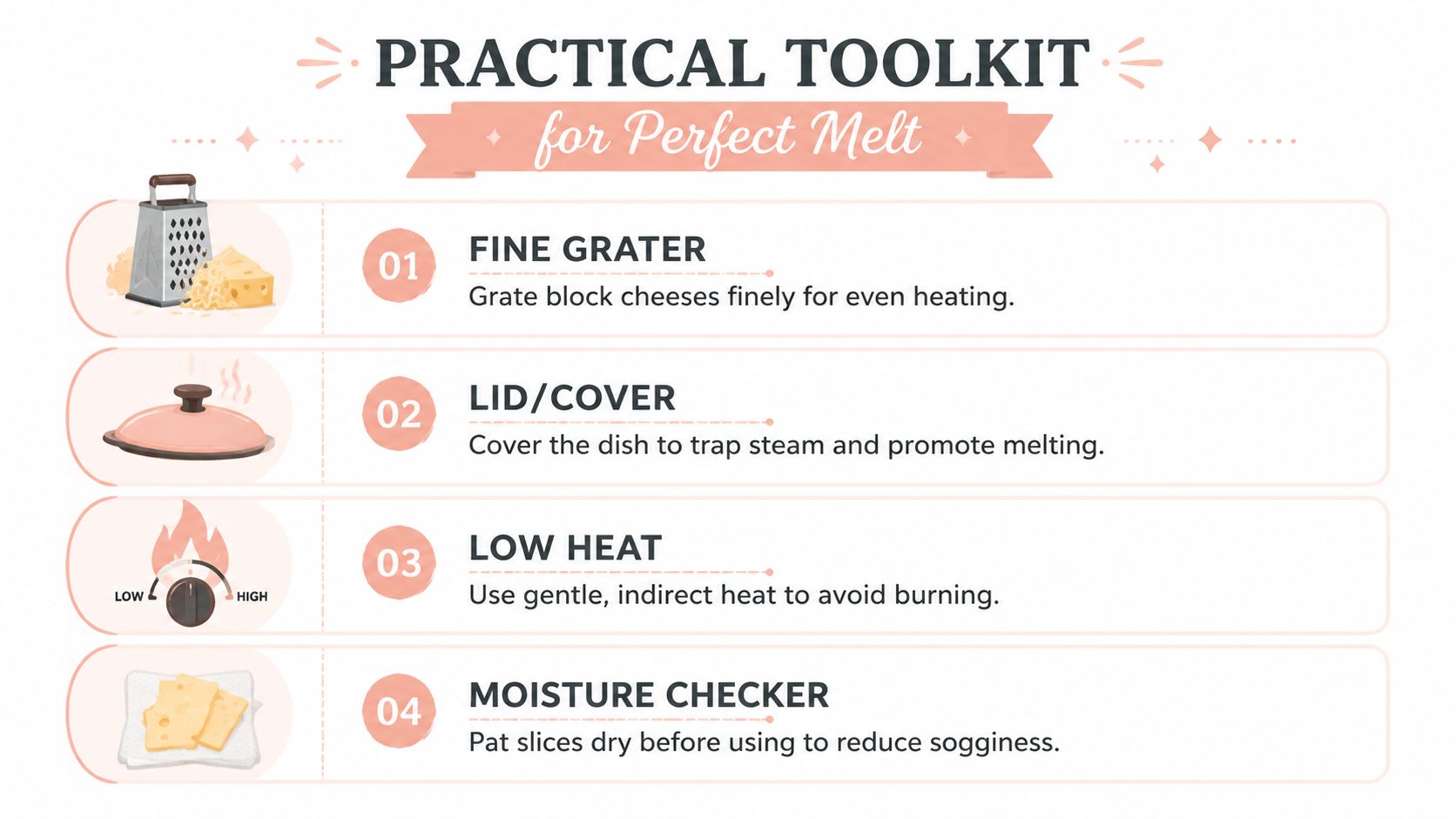
Grate blocks finely rather than laying down thick slices. Thin shreds heat through more evenly and release moisture sooner, which gives the centre time to soften before the outside dries.
Take the cheese out of the fridge before cooking where practical. A gentler starting temperature reduces the temptation to raise the oven or pan heat, and that helps prevent a protein-rich or starch-heavy matrix from tightening abruptly.
Pat soft cheeses dry if they carry surface moisture. Blot fresh mozzarella-style pieces before placing them on pizza, particularly when the base is already moist. Too much water can make the topping soggy before the structure has time to set.
Control the heat
Low and steady usually beats fierce and fast. In the oven, let the base cook properly and add the cheese in a layer that isn't so thick that steam becomes trapped underneath. For a toastie, use a heavy pan and press lightly, turning the sandwich when the bread needs an even colour.
If a sauce splits, move it away from direct heat. Whisk in a splash of warm plant milk, or blend in a small amount of starch slurry, then return it to gentle heat only if the sauce needs further thickening. Avoid boiling hard, as that can push the fat and water apart again.
When the sauce looks oily: take it off the heat first. A calm whisk and a little warm liquid usually have a better chance than more cooking.
Reheating leftovers
A low oven is kinder to stretch and texture than a microwave, which can create hot spots and encourage separation. Reheat gently, then add a fresh sprinkle of grated cheese near the end if the surface looks dry. That second layer restores a little freshness without forcing the original topping through another long blast of heat.
Building a Meltable Spread With Saporia
A useful deli selection starts with the dishes you cook most often. For a household that makes pizza, toasties and quick pasta, I'd begin with a mozzarella-style block for oven work, a cheddar-style cheese for grating and a soft spread for sauces. That gives you three different melting behaviours instead of one product being asked to do everything.
Add accompaniments that make the cheeses useful beyond the main meal. Oat crackers can carry a soft spread, chutney can sharpen a toasted sandwich and olives or pickles can cut through a rich fondue. Seasonal fruit adds freshness to the cold side of the board, while a smoked block can give a grilled sandwich more depth without needing a thick layer.
A soft spread is particularly handy when dinner needs rescuing. Stir it through cooked pasta with warm plant milk, fold it into a vegetable bake or use it beneath breadcrumbs before the dish goes into the oven. Saporia's classic spreadable option can sit in that versatile part of the fridge, ready for both crackers and cooking.
One board, several cooking jobs
For a more exploratory selection, include a blue-style crumble for salads or baked vegetables, a feta-style cheese for salty contrast and a cultured aged wheel for cold tasting. Some cultured artisan cheeses are better appreciated on crackers than grated over pizza, but a firm, well-structured style can also provide a characterful base for a warm sharing dish.
Saporia presents itself as a UK vegan cheesemonger and deli, with plant-based cheeses, bundles and pantry accompaniments available through its online marketplace. Its range includes crackers, chutneys, olives and pickles, sauces, spreads and other deli items, so you can build a cooking-focused selection rather than ordering cheese in isolation.
Keep chilled cheeses refrigerated according to their packaging and allow them to warm slightly before serving or cooking. Availability and delivery details can change, so check the current product information when ordering. If you prefer to compare textures with guidance, Saporia also hosts tasting experiences where different plant-based styles and pairings can be considered side by side.
Your Meltable Cheese Checklist and FAQs
The short version is simple. Match the style to the dish, look for a balanced fat-plus-starch structure, grate blocks finely and use gentle heat. If a sauce separates, take it off the heat before adding warm plant milk or adjusting it with a little starch.
Before you cook, ask yourself:
- What texture do I need? Choose flow for sauce, stretch for pizza or cohesion for a toastie.
- How much moisture is present? Pat soft cheese dry and avoid piling a wet topping onto a delicate base.
- Can the cheese handle direct heat? A soft spread may suit a sauce better than a hot, uncovered grill.
- What will balance the flavour? Pickles, chutney and fruit can make rich or smoky styles feel lighter.
Common UK shopper questions
Is vegan the same as dairy-free? Not always in how shoppers interpret the label. UK food law has no legal definition of vegan food, but businesses must label products accurately and avoid misleading claims. A product labelled vegan means that no ingredients of animal origin were intentionally used, and a possible cross-contamination risk should be communicated through precautionary allergen wording such as “may contain”, as explained in UK Government guidance on vegan food labelling. Always read the full label if you're managing an allergy.
Do block cheeses re-melt well after refrigeration? Some do, especially products designed with a heat-responsive fat and starch structure, but the texture can change after cooling. Reheat gently, add a little moisture where appropriate and expect a soft spread or sauce to refresh more easily than a firm cultured wedge.
Are nut-based cheeses suitable for a school lunchbox? Check the school's allergy policy before packing anything containing cashews, almonds or other nuts. A vegan label doesn't make a nut-based product suitable for every setting.
How long does an opened wedge keep its melt quality? Follow the product's storage instructions and use it within the stated guidance. Airtight wrapping and stable refrigeration help protect texture, but an opened cheese may gradually dry and become less cooperative under heat.
For drink pairings, you might also enjoy learning about green winemaking at Girard, particularly when you're planning a more considered plant-based board. Then choose the cheese style, cooking occasion and accompaniments together rather than chasing a single all-purpose substitute.
Saporia brings together artisan vegan cheese, cooking-friendly styles, bundles, crackers, chutneys and deli accompaniments for relaxed meals and entertaining. Visit Saporia to browse the current range and build a plant-based selection that melts confidently where you need it, from Friday-night pizza to a properly comforting toastie.