

Scrambled Tofu Recipe: A Flavour-Packed Plant-Based Classic
The first good pan of scrambled tofu usually happens on a morning when the table's already half-set, the toaster's busy, and people are drifting into the kitchen looking for something warm. That's when this dish earns its place, because it lands like a proper brunch plate, not a compromise. Scrambled tofu sits well on toast, takes seasoning happily, and gives you a savoury, flexible base that works just as well for a quiet weekend breakfast as it does for a mixed-diet spread.
Table of Contents
- Why Scrambled Tofu Works for a Plant-Based Brunch
- Choosing the Right Tofu and Prep Method
- Cooking the Scramble for Creamy, Golden Curds
- Flavour Variations from Smoky to Spicy
- Building a Saporia-Style Brunch Board
- Storage, Reheating and Common Fixes
- Final Thoughts and Brunch Pairing Ideas
Why Scrambled Tofu Works for a Plant-Based Brunch
A solid scrambled tofu recipe works because tofu behaves like a good canvas. It takes salt, spice, herbs and a little fat without fighting back, so the final dish tastes deliberate rather than improvised. In the UK, that matters more than ever, because tofu is moving further into everyday cooking, with supermarket tofu sales volumes up 15% in 2025 according to GFI Europe, while tofu still sits within a category that remains smaller than plant-based meat overall, at 4.7 times lower sales volumes than plant-based meat across tofu, tempeh and seitan combined (GFI Europe UK food system analysis).
That broader shift shows up at breakfast too. A UK breakfast study found 43% of the 2,000 adults surveyed believed breakfast is the most important meal, 52% said it sets them up for the day, and Gen Z adults were the age group most likely to choose plant-based alternatives at breakfast (UK breakfast habits research). Another UK plant-based study surveyed 2,394 people and found 41% reported actively reducing or eliminating meat, while only 56% had consumed any of eight plant-based categories in the previous month, which tells you there's interest, but not always a habit (UK plant-based research).
Practical rule: if a breakfast needs to please both vegan and non-vegan guests, a well-seasoned scramble is easier to serve than trying to explain a replacement.
For home cooks, that's the appeal. You get a dish that feels familiar, can be built quickly, and fits neatly beside toast, roasted tomatoes, avocado or a proper brunch board. If you want the method, the tofu choices, the moisture control and a few ways to make it feel fuller at the table, that's exactly where this recipe goes next.
Choosing the Right Tofu and Prep Method
The biggest decision in any scrambled tofu recipe is simple, which tofu you bring home. In UK supermarkets you'll usually find firm tofu in blocks and silken tofu in cartons or softer packs, sometimes labelled soft or extra soft. Firm tofu gives you the clearest curds and the most browning, while silken tofu makes a softer, almost custardy scramble that suits people who want a gentler texture.
Firm vs Silken Tofu for Scrambling
| Attribute | Firm Tofu | Silken Tofu |
|---|---|---|
| Texture | Chunkier, more egg-like curds | Softer, creamier, custardy |
| Browning | Browns well | Browns less, breaks down more easily |
| Moisture | Easier to control | Needs gentler handling |
| Best use | Toast topping, brunch plates, mixed additions | Soft, sauce-like scrambles |
For a firmer result, drain the tofu first and give it a little time to shed excess water. A clean tea towel or kitchen paper helps, and a heavy pan or board on top for 10 to 15 minutes gives the tofu a head start before it hits the heat. That matters because excess moisture is the usual reason a scramble turns steamy and pale instead of lightly set.
Texture starts before the hob does. If the tofu goes into the pan wet, you're already fighting for a good finish.
Crumble size changes the final mouthfeel too. A fork gives you finer, more even curds, while fingertip-sized pieces stay chunkier and read more like tender bites on toast. If you want to choose a base ingredient, the plain organic tofu listing at Saporia is the kind of everyday product that fits this method neatly.
The rule of thumb is easy enough to remember. Choose firm tofu for browning and definition, silken tofu for softness and silkiness. If you're unsure, start with firm tofu, because it gives you more control when you're learning how much moisture you want to keep.
Cooking the Scramble for Creamy, Golden Curds
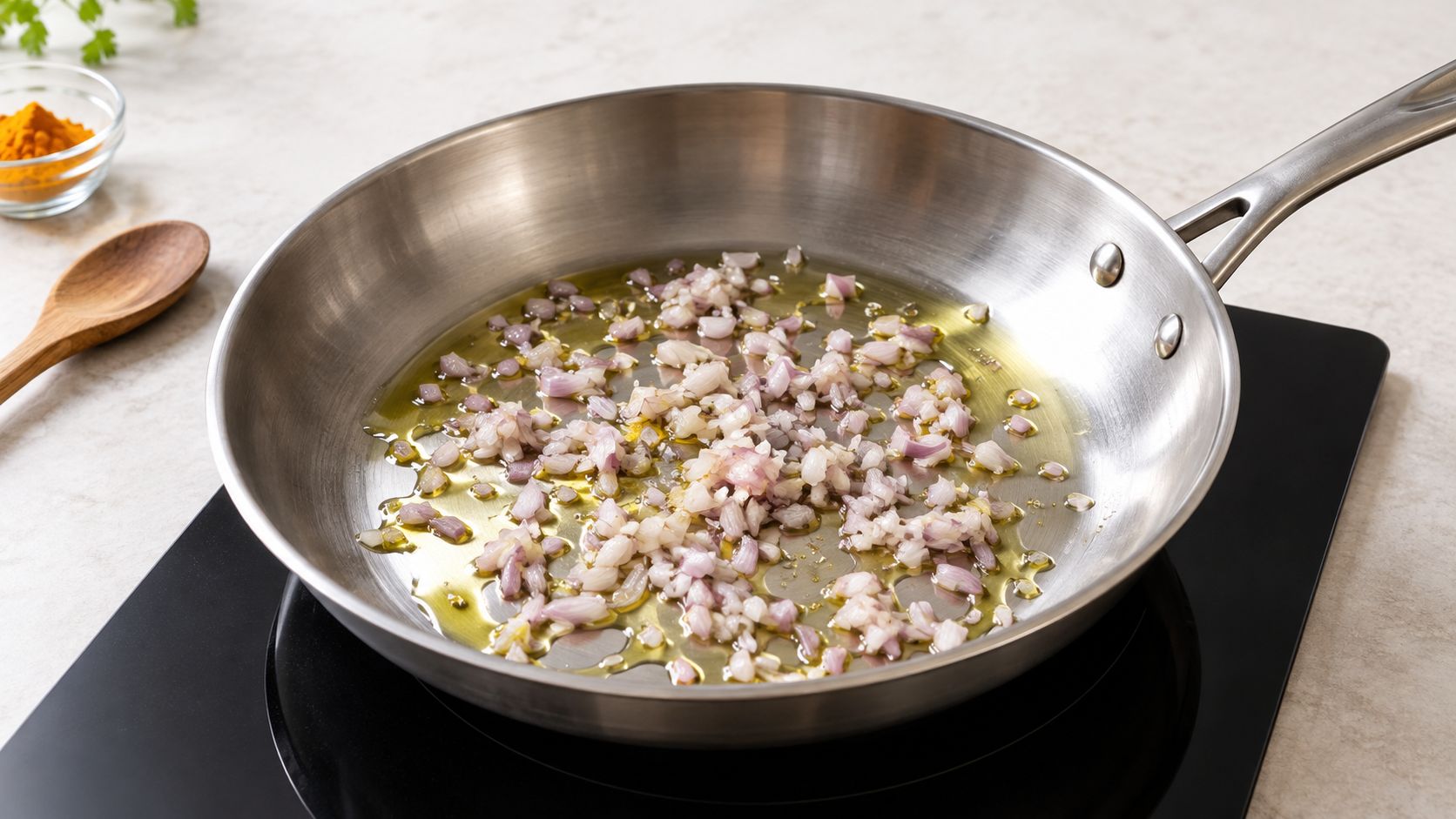
Start with a wide pan over low heat, a tablespoon of olive oil, and finely chopped shallot. Let it soften slowly until it loses its raw bite but doesn't colour, because that sweet base keeps the whole scramble rounded rather than sharp. Add crushed garlic for about thirty seconds, just long enough for the aroma to bloom, then tip in your crumbled tofu with a pinch of salt.
At that point, resist the urge to stir constantly. Let the tofu sit for a couple of minutes so the underside can set, then break it up with a spatula and turn the pieces over. That short pause gives the curds a little structure, which is why the scramble looks more cooked and less damp.
Seasoning works best in layers. Add nutritional yeast, ground turmeric and a crack of black pepper after the tofu has started to dry out a little, not before, because turmeric shows up better in the finished colour when it isn't scorched by hard heat. If you want extra creaminess, loosen the mixture with a spoonful of cashew cream or a splash of oat milk, but keep it modest. Too much liquid turns the scramble into a soft mash rather than a dish with curds.
A good scramble finishes in the pan, not on the hob. Take it off the heat when it still looks just a touch wetter than you want, because residual heat does the rest.
A lid helps if you want the top to steam briefly, especially when the curds are thick. Uncover it after a minute, turn the heat down if needed, and stop once the texture looks creamy but not sloppy. If you're using a softer tofu style, the clearspring silken tofu 300g is better treated gently, with less agitation and a shorter cook, so it stays smooth instead of breaking down into watery bits.
Flavour Variations from Smoky to Spicy
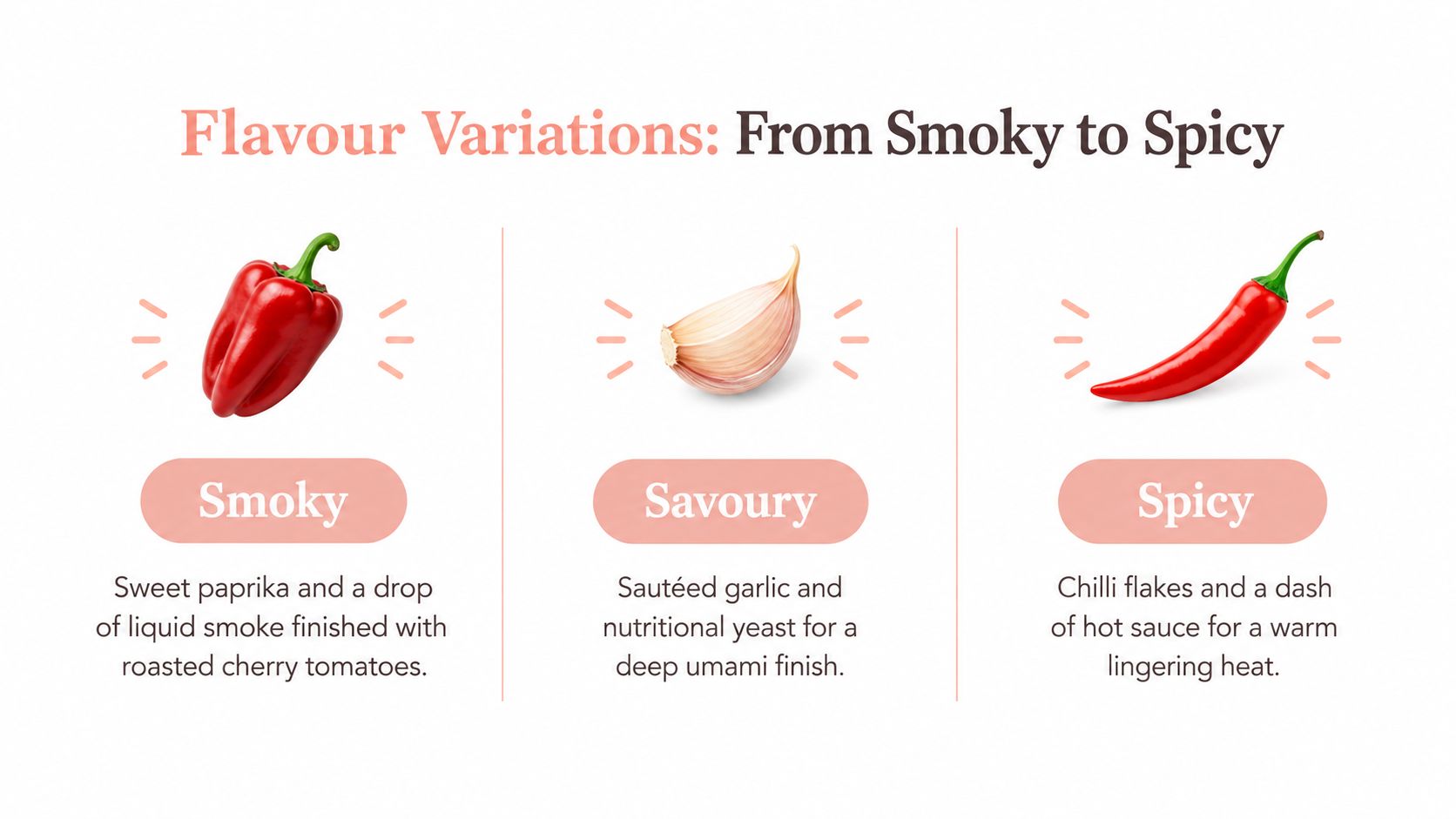
The base method stays the same, but the flavour can go in a few different directions depending on what's in your cupboard. I reach for these when I want the same brunch plate to feel new without changing the whole pan.
Smoky
Use sweet paprika with a tiny drop of liquid smoke, added after the tofu has started to dry out. If you've got roasted mushrooms or charred peppers, fold them in at the end so the smoke reads deeper rather than bitter. If you don't have liquid smoke, a little smoked paprika gives you a softer version of the same idea.
Savoury
Stir in sautéed garlic, chives and a spoon of nutritional yeast near the end, once the curds are already set. The green herbs stay brighter that way, and the yeast adds a deeper umami note without making the pan heavy. If you've only got spring onions, use those instead of chives for a fresher finish.
Spicy
Add chilli flakes or a little cayenne while the garlic is cooking, then finish with chopped fresh red chilli or a dash of hot sauce. If the heat starts to feel dry, balance it with a spoon of vegan cream cheese stirred through just before serving. Pickled jalapeños work well here too, especially if you want sharpness as well as fire.
The useful thing about these variations is that you don't need to commit to one mood for the whole batch. A smoky base can still take herbs at the end, and a spicy pan can still finish with something creamy. That flexibility is what makes the dish easy to repeat through the week.
Building a Saporia-Style Brunch Board
A pan of scrambled tofu becomes more generous the moment you give it company. Warm curds in a shallow dish, a few slices of toast, and a small cheeseboard turn breakfast into something that feels planned, even when it's easy. If you like the look of a fuller spread, the La Fauxmagerie bundle is a natural way to bring a few different plant-based cheese styles onto the table without overthinking the mix.
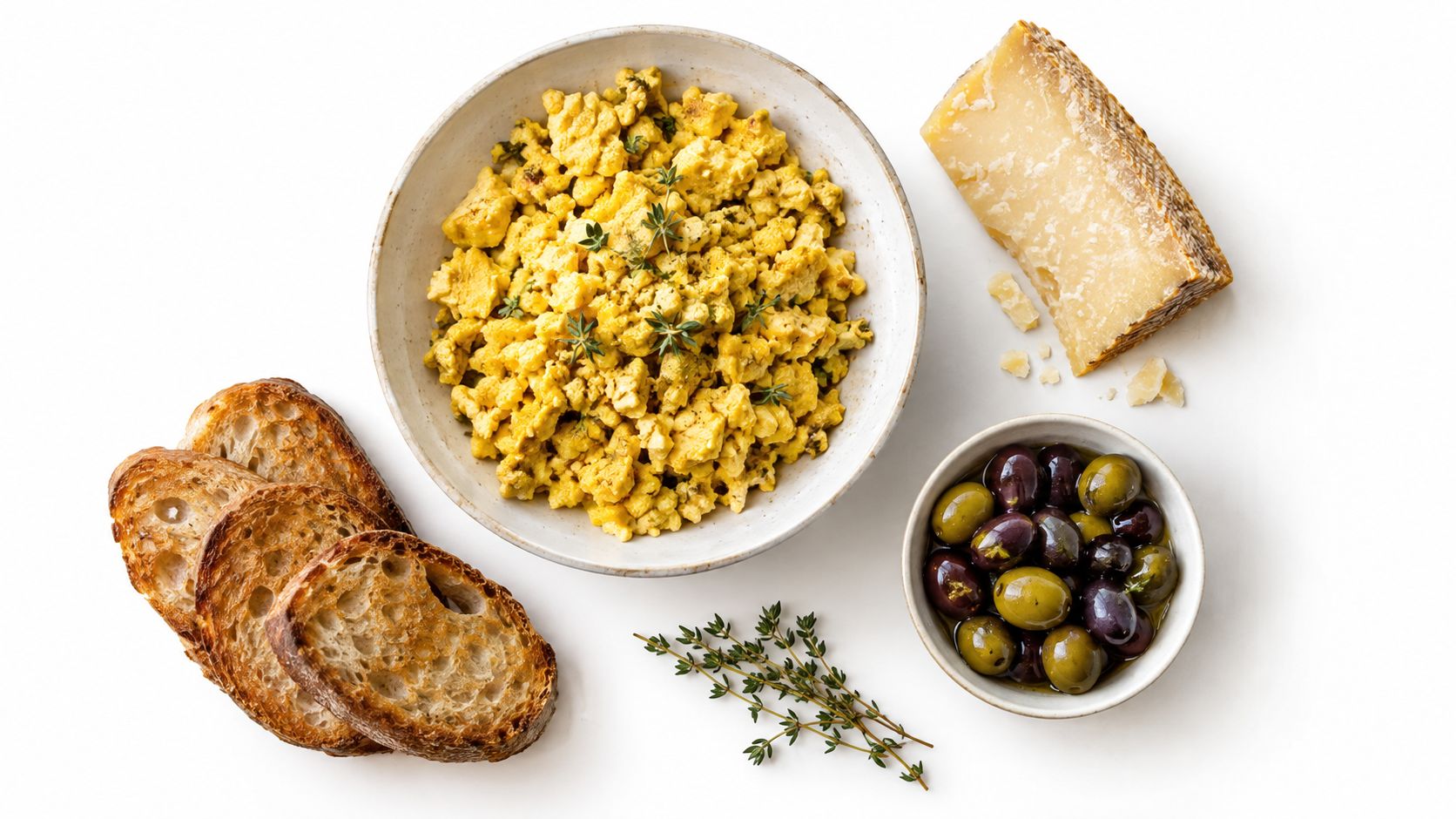
I like to build the board in layers. Put the scramble at one end of a wooden board lined with parchment, then add a wedge of aged vegan cheddar, a creamy garlic soft cheese, oatcakes, seeded crackers, a sharp tomato chutney, cornichons and a small bowl of olives. The aged cheese cuts through the turmeric warmth, the soft cheese echoes the creamy curds, and the chutney keeps every bite from feeling too rich.
Balance matters more than volume. A little acidity and salt beside the tofu makes the whole plate taste more complete.
You don't need huge portions for this to work. One modest bowl of scramble, a few crackers each, and small spoonfuls of chutney are enough for a relaxed brunch. If you're serving guests, swap in a blue-style vegan cheese or an herbed variety for a more grown-up flavour profile, then keep the rest of the board simple so nothing fights for attention.
Storage, Reheating and Common Fixes
Leftover scramble keeps well when you cool it quickly and store it in a sealed container. It's fine in the fridge for up to three days, and you can freeze it for up to one month if you pack it away separately from fresh herbs or chutney. When you reheat it, treat it gently, because hard heat makes the curds tougher.
A low pan with a splash of plant milk works best on the hob. Short microwave bursts with a damp cover also help keep the texture soft, and a brief oven reheat suits larger portions if you're serving several people. High heat is the thing to avoid, because it dries the tofu before the centre has warmed through.
Watery scramble usually means the tofu wasn't drained long enough, or the pan was overcrowded. Press it more firmly next time, cook in batches if needed, and give the moisture time to evaporate before you add anything creamy. If the result tastes bland, the fix is usually earlier salt, not more at the table, plus a squeeze of lemon at the end.
Dry or rubbery curds are almost always a heat problem. Drop the temperature, shorten the cook, and finish with a spoon of vegan soft cheese if you want the moisture back without turning the whole pan loose. Once you've made it a few times, those fixes become automatic.
Final Thoughts and Brunch Pairing Ideas
A reliable scrambled tofu recipe comes down to three habits, press the tofu well, cook over steady medium heat, and season in layers so the flavour builds as the curds set. Fresh herbs and a creamy finish help too, because they keep the dish tasting bright rather than flat. Once you've got that rhythm, the dish becomes easy to repeat without feeling repetitive.
The easiest pairings stay simple. Toasted sourdough, smashed avocado, roasted tomatoes and a plate of aged vegan cheese beside the scramble give you a brunch that feels complete without a lot of effort. Seeded crackers work nicely as the base for open-faced tartines, especially when you want something that's halfway between breakfast and a grazing plate.
For a richer table, a tangy miso wedge can be crumbled over warm curds, and a smoked almond cheese brings more depth to the side board. A small dish of fig or caramelised onion chutney bridges the savoury tofu and the cheese, which is why the whole spread tastes more joined up than a single pan ever could. If you want more ideas for quick meals that still feel properly put together, the quick plant based meals collection is a useful place to look for inspiration alongside your own brunch routine.
If this is now your kind of Saturday breakfast, browse Saporia for plant-based cheese, crackers, chutneys and deli-style accompaniments that fit right beside a pan of scrambled tofu. It's an easy way to turn one good recipe into a fuller brunch, a lighter lunch, or a relaxed supper when you want the table to look generous.