

Lactose Free Feta: A UK Guide to Dairy-Free Options
You're standing in front of the chilled aisle, comparing tubs marked lactose free, suitable for vegetarians and vegan feta-style. They may look similar, but they answer different dietary questions. One might be dairy with the lactose treated, another might be low in lactose, and a third contains no milk at all.
This guide will help you understand what lactose free feta means on UK shelves, how it differs from traditional low-lactose feta, and where plant-based feta-style cheese fits. You'll also find practical label-reading tips, options for lactose intolerance, vegan and gluten-free households, and serving ideas for everyday British meals.
Table of Contents
- What You Will Learn About Lactose Free Feta
- What “Lactose Free” Means in the UK
- Three Routes to a Lactose Free Feta
- How to Read UK Feta Labels With Confidence
- Matching Feta to Your Diet and Kitchen
- Feta Recipes and Pairings Worth Trying
- Trying Feta Styles Before You Buy
What You Will Learn About Lactose Free Feta
You are choosing between three different answers to one question: what do you need to avoid? Lactose-free addresses milk sugar. Dairy-free and vegan choices avoid milk ingredients altogether. A person may tolerate lactose-treated dairy but reject plant-based food for ethical reasons, while someone with a milk allergy needs to avoid dairy rather than rely on lactose reduction.
The clearest way to approach the chilled shelf is as a three-route decision tree. First, consider traditional dairy feta, with its familiar salty tang and crumbly texture. It remains a low-lactose option, so portion size and personal tolerance may matter. Second, look at lactase-treated dairy feta, where an enzyme is used during production to reduce lactose while preserving a milk-based character. Third, consider vegan feta-style cheese, which contains no milk and aims to provide a briny, tangy alternative.
These routes suit different shoppers. Traditional feta may fit someone who manages small amounts of lactose and wants the classic cheese. Lactase-treated feta can suit someone seeking dairy flavour with less lactose. Vegan feta-style products may be the better match for a plant-based or dairy-free kitchen, although their texture and melting behaviour can differ.
The word “feta” alone does not settle the question. In the UK, feta has rules covering its name and composition. The Cheese and Cream Regulations 1995 came into force on 1 January 1996 and specify a minimum milk fat content of 48% of dry matter for feta cheese. This helps explain why a dairy product may be labelled lactose-free feta, while a plant-based version is generally described as feta-style or an alternative.
The rest of this guide connects NHS guidance with the practical limits of UK labelling, then shows how to assess ingredients and choose a product for your digestion, ethics and cooking style. You'll also find ideas for salads, pasta and warm dishes, plus ways to taste different feta styles before committing to a full tub.
What “Lactose Free” Means in the UK
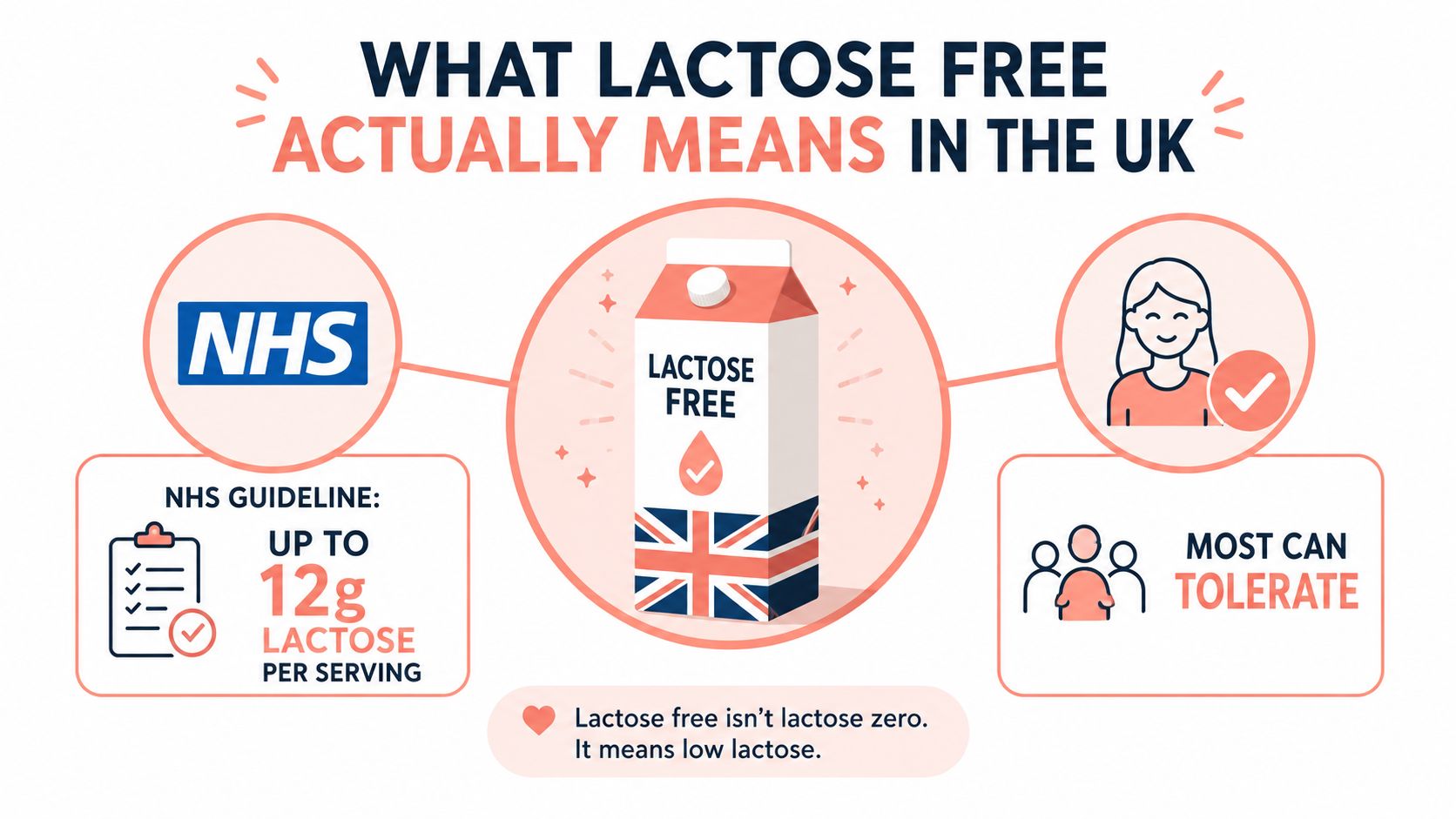
A shopper avoiding lactose may see two tubs labelled in ways that sound similar. Low lactose means the food contains a small amount. Lactose free signals a much lower level. UK NHS guidance places standard feta in the low-lactose category, at about 1.4 g per 100 g, while lactose-free cheese is defined as containing under 0.1 g per 100 g. These figures provide a helpful reference when packaging does not give a clear answer.
UK labelling still requires care. The Food Standards Agency explains that no single EU-wide rule governs every use of terms such as “lactose free”, “milk free” and “dairy free”. Its guidance on lactose claims therefore supports a practical approach: read the exact wording, inspect the ingredients and check the allergen information rather than treating similar phrases as identical.
The role of lactase
Lactose is the natural sugar in milk. Lactase performs this conversion by splitting the lactose molecule into glucose and galactose before digestion. Manufacturers can add the enzyme during production, reducing the amount of intact lactose while retaining a dairy-based feta character.
The method may preserve the familiar salty flavour and crumbly texture, though the finished result depends on how the cheese is made. Production also needs to maintain the curd structure and salt balance while reducing lactose, as explained by Lactofree on lactose-free feta production.
Dairy free means something else
A dairy-free product contains no milk ingredients. That makes it a broader avoidance category than lactose free: lactose-free dairy still comes from milk and can still contain milk proteins. A vegan feta-style cheese may suit someone avoiding dairy or choosing a plant-based diet, whereas lactase-treated dairy feta may suit someone who wants to avoid lactose but can eat milk proteins.
Practical rule: If you must avoid all dairy, look for a clear plant-based or dairy-free statement and check the allergen information. “Lactose free” alone does not confirm that a product contains no milk.
Three Routes to a Lactose Free Feta
You are choosing between three different answers to the same craving: the salty, tangy character of feta. One keeps the dairy tradition, one treats the milk to remove lactose, and one leaves dairy out altogether. Your best route depends on digestive tolerance, milk avoidance, vegan preferences and the texture you want in the kitchen.
Traditional low-lactose dairy feta
Traditional feta is made with dairy milk, then shaped and matured. Much of the milk sugar leaves with the whey during cheesemaking, so the finished cheese is generally low in lactose. It is not automatically lactose free. NHS guidance lists feta at 1.4 g per 100 g, so anyone who reacts to small amounts should treat ordinary feta as a cautious choice rather than a guaranteed solution. UK lactose guidance
Its appeal is the traditional dairy profile: salty, tangy and crumbly, with enough structure for a Greek-style salad or roasted vegetables. It remains unsuitable for vegans and for people avoiding milk because of an allergy. In practical terms, low lactose is like a nearly empty glass, while lactose free aims to leave no meaningful milk sugar behind. The two labels should not be treated as interchangeable.
Lactase-treated dairy feta
This method begins with milk but adds lactase, the enzyme that splits lactose into glucose and galactose. The cheese can therefore retain a dairy-based feta character while being made to an explicitly lactose-free formulation. It is a useful route for shoppers who want dairy flavour and texture, but need more certainty than traditional maturation alone can provide.
The trade-off is straightforward. It still contains milk proteins, so it is not dairy free, and availability may be narrower. It can also cost more than an ordinary block of feta.
Vegan feta-style cheese
Plant-based versions use ingredients such as coconut oil, almond, tofu or cashew, with salt, cultures or lactic acid to create a briny, tangy profile. Since they contain no milk lactose, they can suit vegan households and people avoiding dairy, provided the ingredients and allergen information match their needs.
Texture is the main variable. Some blocks crumble cleanly for salads and boards; others stay firm, soften when heated or behave more like a spread. For a plant-based option intended for salads, sharing boards and cooking, view Fetamorphosis and check the current product information before choosing how to use it.
| Route | Base ingredient | Typical lactose status | Pros | Cons |
|---|---|---|---|---|
| Traditional low-lactose feta | Dairy milk | Low lactose, not automatically lactose free | Authentic flavour and crumb | Not vegan or dairy free |
| Lactase-treated dairy feta | Dairy milk with lactase | Formulated to be lactose free | Dairy character with reduced lactose | Still contains milk and may cost more |
| Vegan feta-style cheese | Plant-based ingredients | No milk lactose | Dairy free and vegan | Texture, saltiness and melting vary |
How to Read UK Feta Labels With Confidence
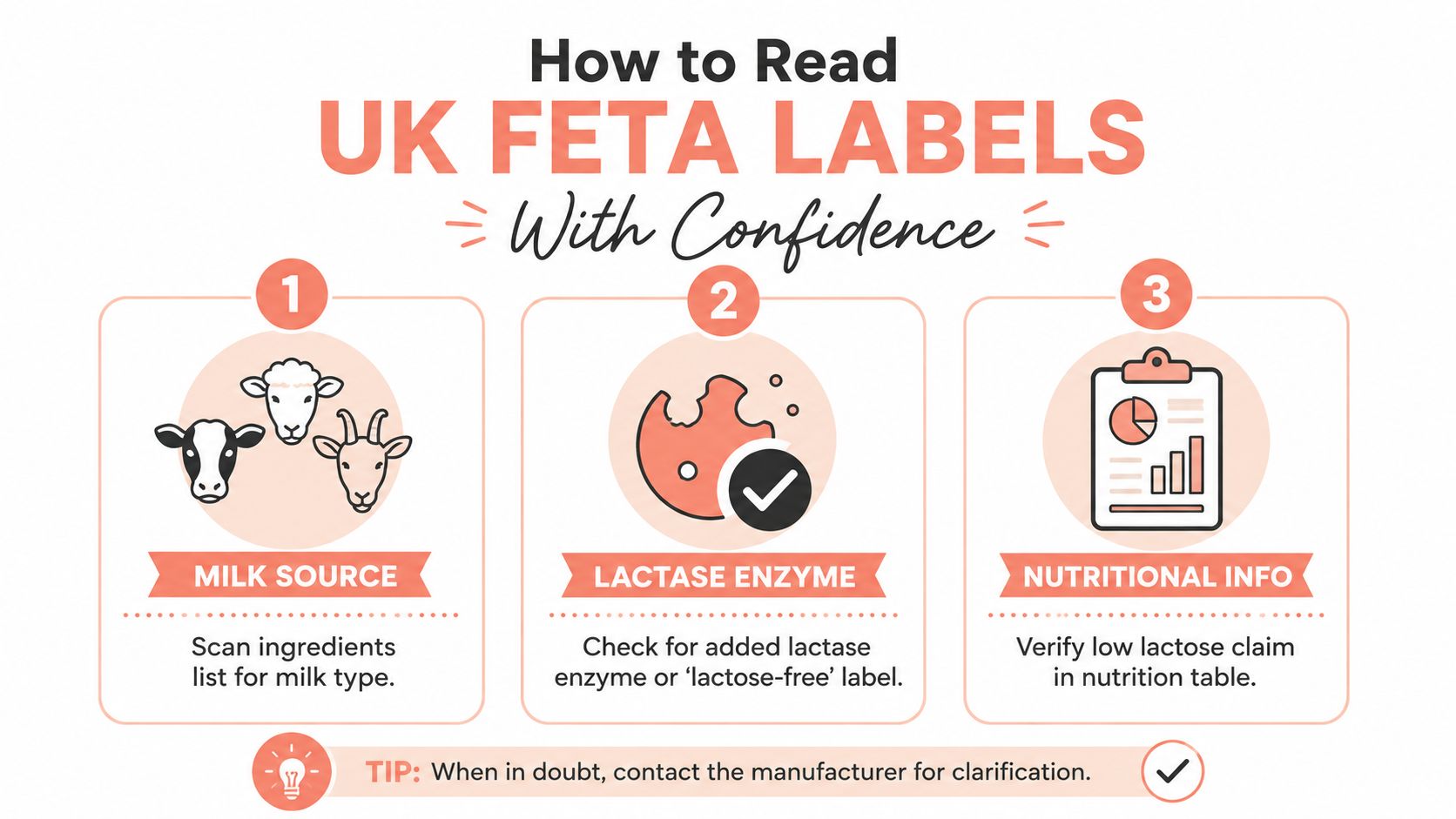
You are standing in the chilled aisle, comparing two crumbly white cheeses. One says low lactose. Another says lactose free. The quickest way to separate them is to read the pack in order: ingredients first, allergen and naming details second, then the nutrition panel.
First pass through the ingredients
Look for cow, sheep or goat milk. If milk appears, the product is not dairy free, even when the pack says lactose free. Then search for lactase or a clear lactose-free statement. That wording shows the maker has addressed the milk sugar, rather than relying only on cheesemaking or ageing.
FSA guidance allows very low lactose wording at under 0.5 g per 100 g. Lactose-free wording is used when residual lactose is effectively absent. The FSA also notes that there is no single harmonised EU-wide rule for every lactose claim, so read the full label and follow the maker's storage or serving instructions.
Second pass for allergens and protected names
Milk should stand out in the allergen declaration. Feta PDO identifies a protected dairy cheese designation. It is not plant based, and maturation alone does not make it reliably lactose free.
Words such as “style of”, “alternative” and “plant-based” usually point to a vegan block or crumb rather than traditional cheese. For a familiar example, check the product details for Greek-style vegan cheese.
Also check the ingredients for milk derivatives if you need to avoid dairy completely. A product can resemble feta in appearance while having a different base, texture and melting behaviour.
Third pass through the nutrition panel
Lactose is counted within the sugar figure on the carbohydrate line, so the nutrition table can provide a useful clue. It cannot replace a clear product claim or allergen check, but it may help distinguish a fresh dairy product from one with very little residual milk sugar.
Ask two questions in the aisle:
- Does this contain milk, and is that acceptable for my diet?
- Does the pack make a clear lactose-free claim, or does it only describe the product as low lactose?
Those answers reduce the common mistake of treating every crumbly white cheese as interchangeable.
Matching Feta to Your Diet and Kitchen
The best feta route changes according to the person eating it and the job it needs to do. Someone managing lactose intolerance may be comfortable with a low-lactose dairy portion, while a vegan household needs an entirely different base. Gluten-free shoppers also need to inspect coated, stuffed or seasoned versions rather than assuming every format is automatically suitable.
Match the cheese to the person
For lactose-intolerant adults, traditional aged feta or lactase-treated dairy feta may be appropriate, depending on personal tolerance. Anyone who reacts to small amounts or wants to avoid uncertainty may find a plant-based alternative simpler. Lactose intolerance isn't the same as a milk allergy, so a healthcare professional can help if symptoms continue or the diagnosis is unclear.
Strictly vegan households should choose a plant-based block and check that no milk derivatives appear in the ingredients or allergen statement. Gluten-free diners can often use plain feta styles, but wheat-based coatings, fillings and flavour mixes deserve a closer look.
Those watching salt or comparing fat profiles should use the nutrition panel rather than relying on the style name. Dairy and vegan products can differ in their fat and salt composition, so compare like for like and consider how much cheese your recipe needs.
For a mixed household, a dual-feta board works well. Put a low-lactose dairy wedge on one side and a clearly dairy-free block on the other, with separate knives and serving areas if anyone needs to avoid milk strictly.
| Dietary need | Best feta route | Watch out for |
|---|---|---|
| Lactose intolerance | Low-lactose dairy or lactase-treated dairy | Individual tolerance and portion size |
| Vegan diet | Plant-based feta-style cheese | Milk derivatives in the allergen statement |
| Gluten-free diet | Plain dairy or plant-based feta styles | Coatings, fillings and seasoned mixes |
| Lower-salt eating | Compare dairy and vegan nutrition panels | Brine, added salt and serving size |
| Mixed-diet household | Separate dairy and plant-based options | Cross-contact and shared utensils |
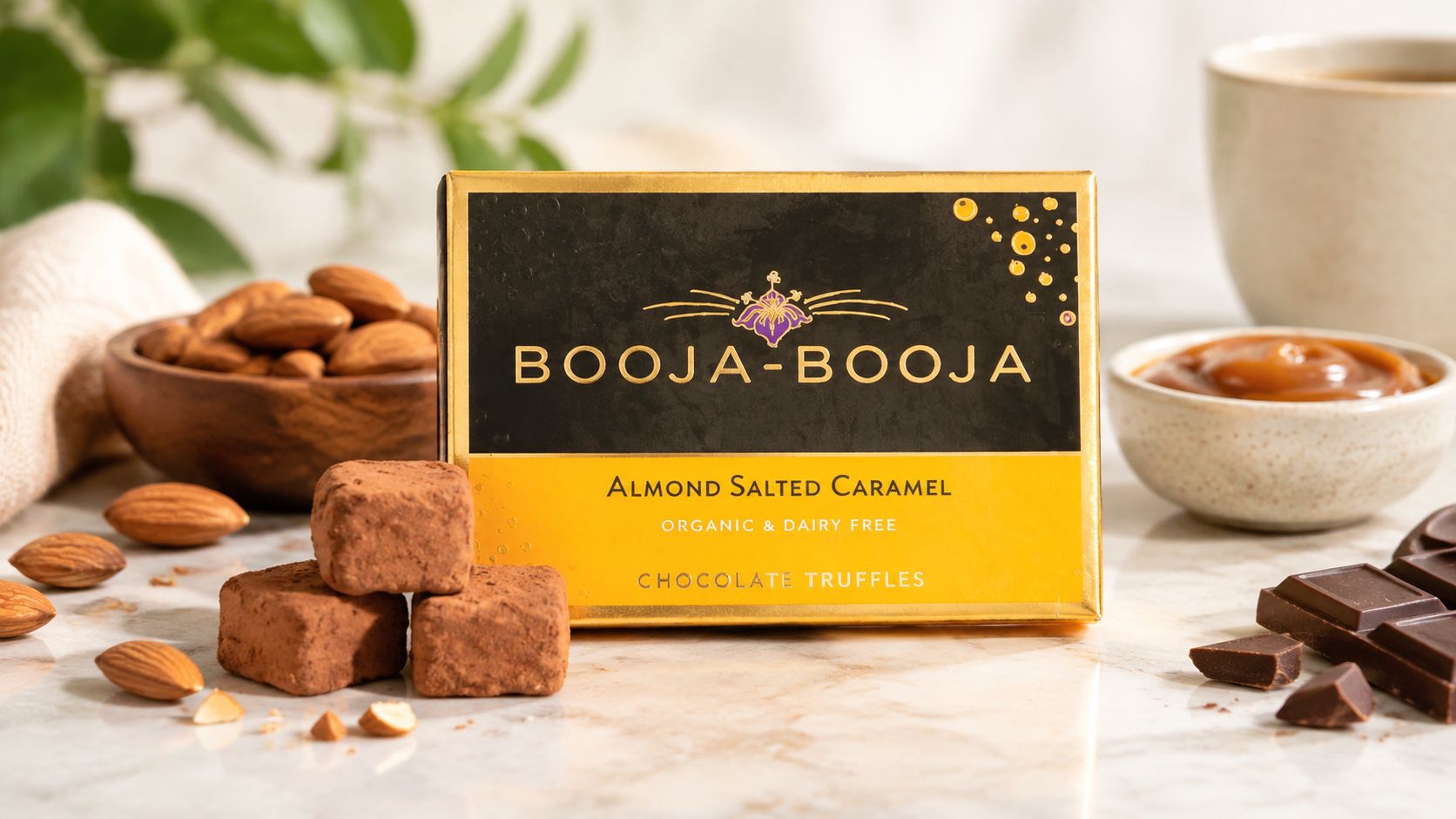
If you're planning a wider plant-based meal around the cheese, a guide to where to eat vegan in Manchester can offer useful inspiration for flavours and formats. For a sweet addition to a dairy-free spread, Almond Salted Caramel Chocolate Truffles 92g combine a rich centre, dark chocolate and savoury almond crunch, and are described as gluten-free.
Feta Recipes and Pairings Worth Trying
Feta earns its place in the kitchen because it can be used cold, crumbled, baked or folded through a finished dish. Choose the format according to the meal. A soft block may crumble neatly over salad, while a firmer plant-based version may hold its shape better in a roasting tin.
Four easy serving ideas
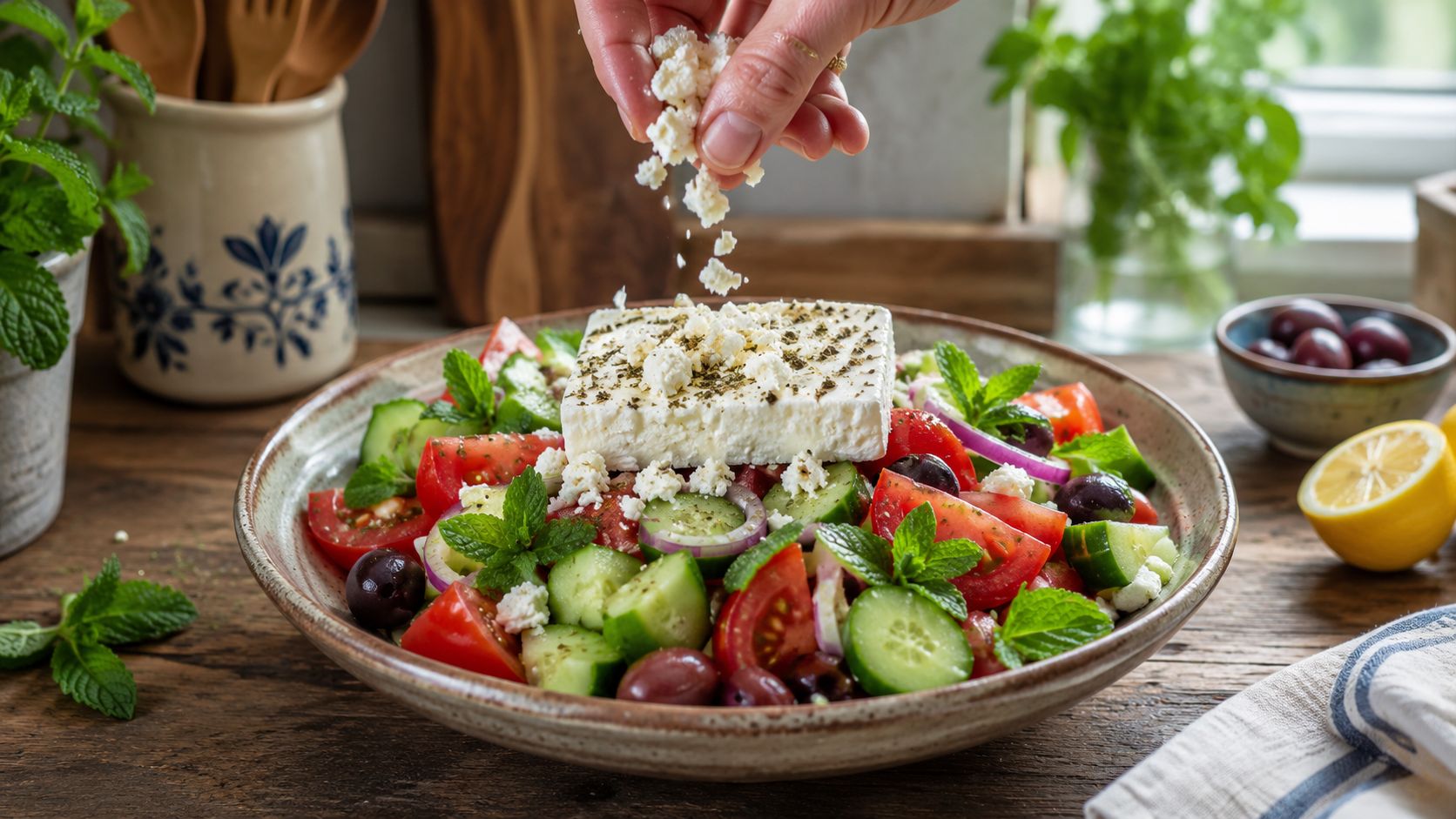
- Summer salad: Combine cucumber, tomatoes, olives and mint, then crumble dairy or vegan feta over the leaves. The crumb format spreads salty flavour through the salad instead of leaving you with large, uneven chunks.
- Roast vegetable tray: Roast beetroot, red onion and courgette with thyme, then scatter feta-style cubes over the vegetables near the end. The contrast between sweet roasted roots, savoury onion and sharp cheese works as a side for a Sunday lunch.
- Baked feta pasta: Roast a whole block with cherry tomatoes, garlic and olive oil, then toss the softened mixture with penne. A vegan block can follow the same method, although its melting and softening behaviour may differ from dairy.
- Cheeseboard pairing: Serve aged dairy feta with fig chutney and walnut crackers, then give the vegan feta-style cheese its own plant-based accompaniments. Olives, pickles, spreads and a sharp chutney help balance the salt.
For a fruit-led variation, this refreshing watermelon feta salad recipe offers a useful starting point. Watermelon's gentle sweetness gives the briny element plenty of contrast, and a vegan feta-style block can make the idea suitable for a dairy-free table.
Build the rest of the plate
A lactose-conscious meal shouldn't stop at the cheese. Saporia's categories can help you source a plant-based feta-style block alongside crackers, chutneys, olives, pickles, sauces and spreads, so the final board or meal has contrast rather than one dominant salty note. You can also explore Sheese Greek Style 200g when you want a plant-based option for salads, boards or warm dishes.
Serve cheese at a temperature where its flavour is easy to notice, and taste it with the accompaniment rather than alone. A sharp pickle may make a mild block seem brighter, while a sweet chutney can soften the impression of salt.
Trying Feta Styles Before You Buy
Buying a full block can feel like a gamble when you don't yet know whether you prefer a clean crumble, a creamy centre or a firmer cube. An in-person tasting gives you a chance to compare those differences before you plan a board or recipe around them.
At Purezza Camden, guests can book a tasting at the Camden Town venue and work through a guided flight of plant-based cheeses. Ask about the ingredients, texture and salt level of each style, particularly if you're choosing between a salad cheese and one intended for cooking.
What to notice during a tasting
Start with texture. Does the cheese crumble under light pressure, slice cleanly, or hold together as you bite? Then consider flavour. A feta-style cheese might lead with salt, acidity, cultured notes or a mild creaminess, and those differences affect whether it works better with tomatoes, roasted vegetables or fruit.
The fondue experience is a separate way to explore how plant-based cheese behaves when heated. Melted vegan cheese doesn't always act like melted dairy, so try it with sturdy dippers such as roasted new potatoes, sourdough and charred courgette. Those foods give you a clearer sense of whether the texture suits your usual cooking.

Take a few notes while you taste. Record which cheese crumbles cleanly, which one tastes most balanced with a sweet accompaniment, and which one softens in a way you'd enjoy in pasta. Check booking details in advance, ask about group size and allow enough lead time, particularly if you're arranging the visit around an event.
Afterwards, you can use those tasting notes when placing an online order, rather than choosing from packaging alone. It's a practical way to match a feta-style cheese to your digestion, household and favourite recipes.
Saporia brings together plant-based cheeses, feta-style options, crackers, chutneys, olives, pickles and other deli accompaniments for lactose-conscious boards and meals. Visit Saporia to browse the current vegan cheese range, explore pairing ingredients and choose a style that suits your table.